
Screening method and application of gene marker for predicting treatment response of Crohn's disease
A technology of gene marker and screening method, which is applied in the field of gene marker screening for predicting the response to anti-TNF-α inhibitor therapy in Crohn's disease, can solve the problem of large impact, poor response to anti-TNFα drugs, inaccurate prediction effect, etc. problems, to avoid ineffective drugs, good predictive value, and avoid the effects of disease delay
- Summary
- Abstract
- Description
- Claims
- Application Information
AI Technical Summary
Problems solved by technology
Method used
Image

Examples
Embodiment 1
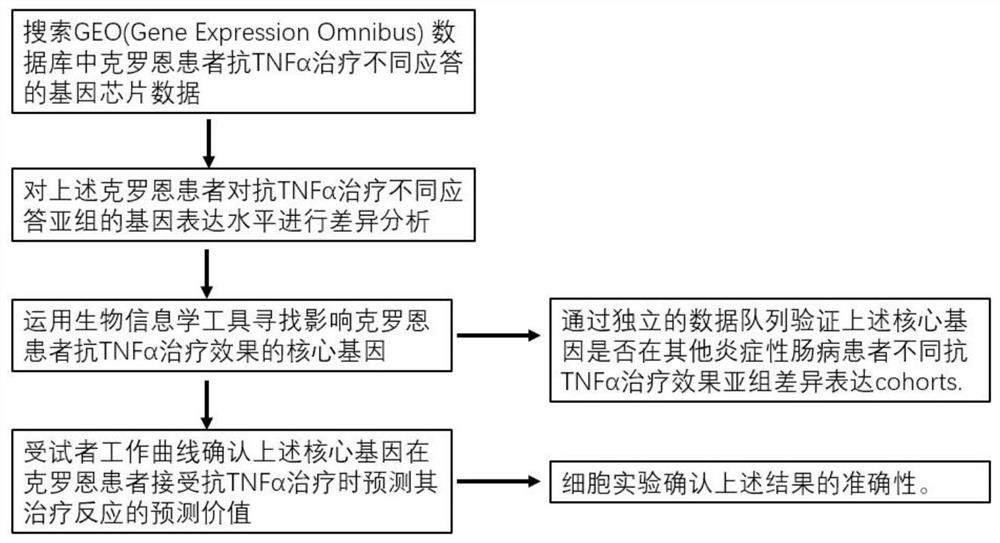
[0029] A screening method for predicting Crohn's disease treatment response gene markers, characterized in that it comprises the following steps:
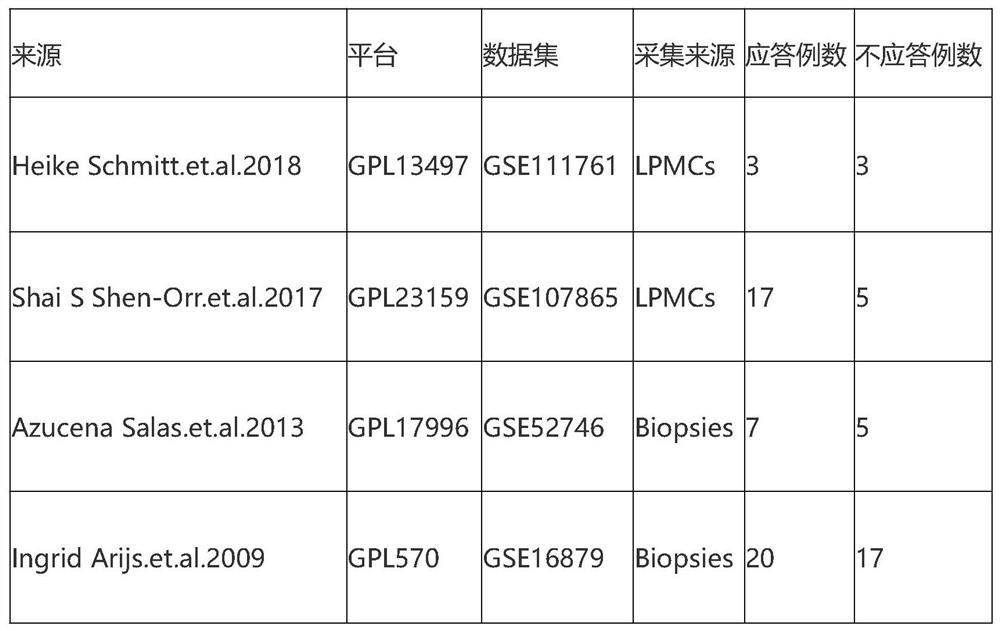
[0030] S1: By searching the public GEO (Gene Expression Omnibus) database for gene chip data sets related to intestinal tissue and peripheral blood samples from clinical Crohn's disease patients, which contain the outcome data of these patients' treatment effects of anti-TNF-α inhibitors ;
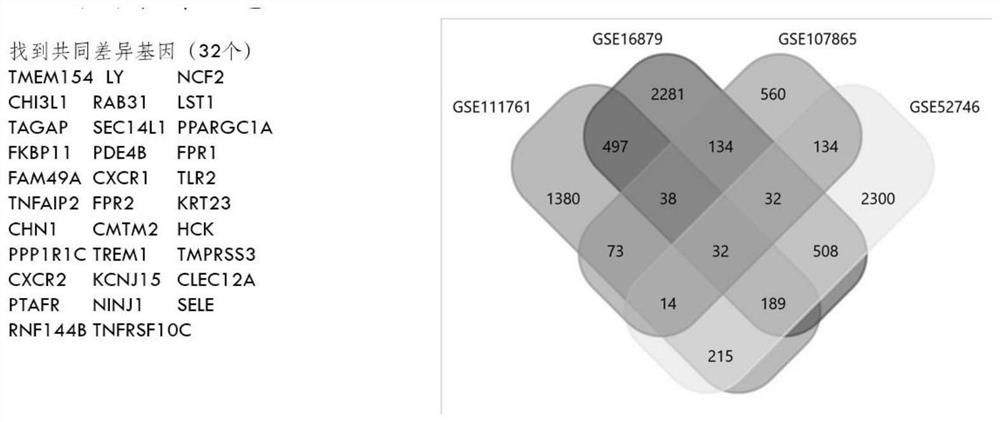
[0031] S2: The genes of patients with different drug responses in the S1 discovery cohort were analyzed by R language tools for differential genes;
[0032] S3: Then the interaction network of differential genes is obtained through the String database, and the key genes that affect the efficacy of anti-TNFα drugs are further obtained through the Degree algorithm of Cytoscape software;
[0033] S4: Through the gene expression of patients with effective and ineffective anti-TNF-α inhibitors in other independent verification cohorts, confirm the ...
Embodiment 2
[0038] For TLR2, TREM1, CXCL1, FPR1, and FPR2 genes to predict the efficacy of anti-TNFα therapy in Crohn's patients, ELISA kits and qPCR kits can be designed to determine the efficacy of anti-TNFα therapy in Crohn's patients by determining the high and low expression of TLR2.
PUM
 Login to View More
 Abstract
Description
Claims
Application Information
 Login to View More