
Passive radiator and sound production device
A passive radiator and sound-emitting device technology, applied in sensors, sensor parts, frequency/directional characteristic devices, etc., can solve the problems of difficult to push the diaphragm, distortion, sensitivity reduction, etc., to achieve fast vibration recovery, reduce distortion risk, The effect of improving stable performance
- Summary
- Abstract
- Description
- Claims
- Application Information
AI Technical Summary
Problems solved by technology
Method used
Image

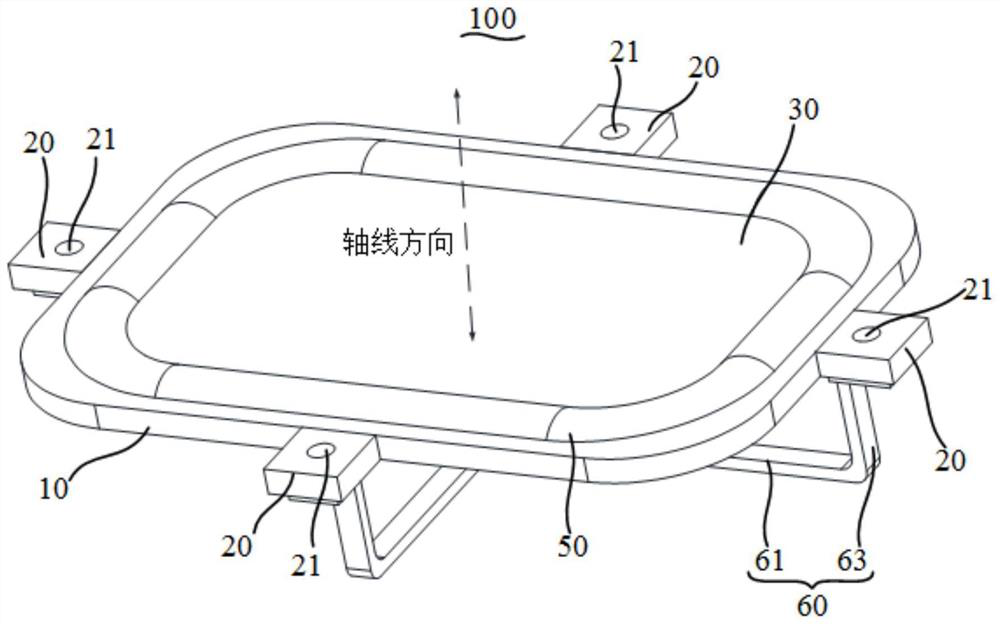
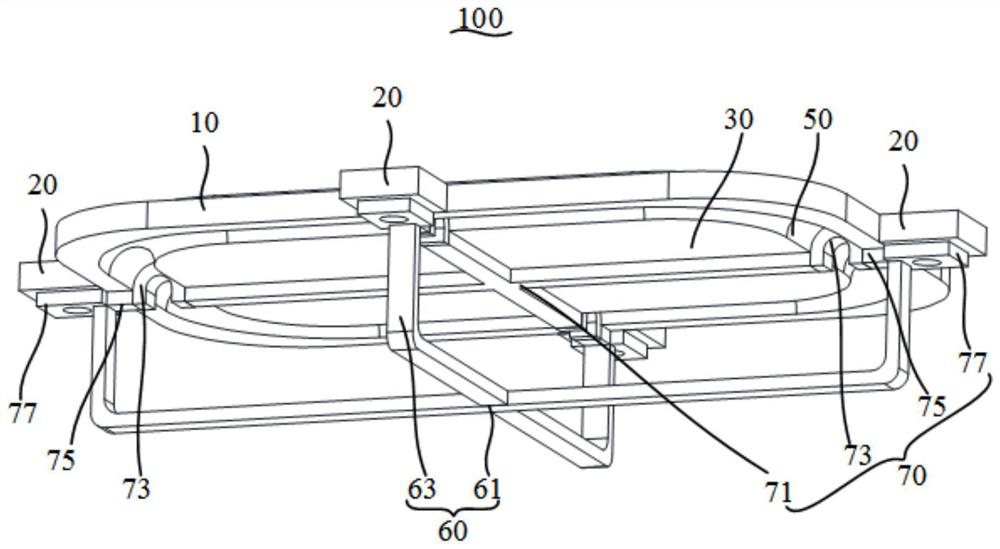
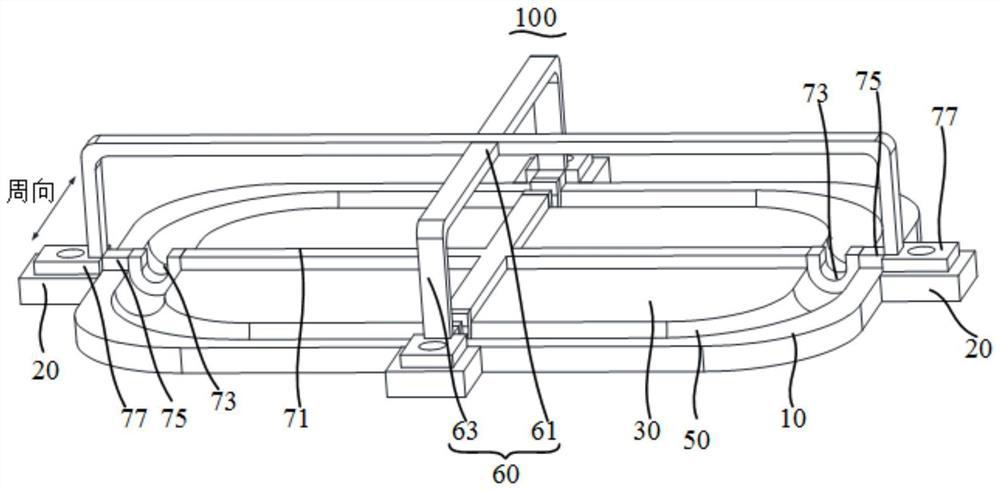
Examples
Embodiment Construction
[0029] The following will clearly and completely describe the technical solutions in the embodiments of the present invention with reference to the accompanying drawings in the embodiments of the present invention. Obviously, the described embodiments are only some of the embodiments of the present invention, not all of them. Based on the embodiments of the present invention, all other embodiments obtained by persons of ordinary skill in the art without creative efforts fall within the protection scope of the present invention.
[0030] It should be noted that all directional indications (such as up, down, left, right, front, back...) in the embodiments of the present invention are only used to explain the relationship between the components in a certain posture (as shown in the accompanying drawings). Relative positional relationship, movement conditions, etc., if the specific posture changes, the directional indication will also change accordingly.
[0031] At the same time,...
PUM
 Login to View More
 Abstract
Description
Claims
Application Information
 Login to View More