Additive manufacturing method, equipment, device, storage medium and metallurgical bonding part

A technology for additive manufacturing and storage media, applied in the fields of storage media and metallurgical joints, additive manufacturing methods, devices, and equipment, it can solve the problems of poor torsion resistance and bending resistance, easy damage and failure, etc., to reduce cracking, Reduce the effect of stress concentration and solve the effect of easy damage and failure

CN114749680APending Publication Date: 2022-07-15WUHAN POLYTECHNIC UNIVERSITY
0 Cites 0 Cited by

Patent Information

Authority / Receiving Office
CN · China
Patent Type
Applications(China)
Current Assignee / Owner
Publication Date
2022-07-15

Smart Images

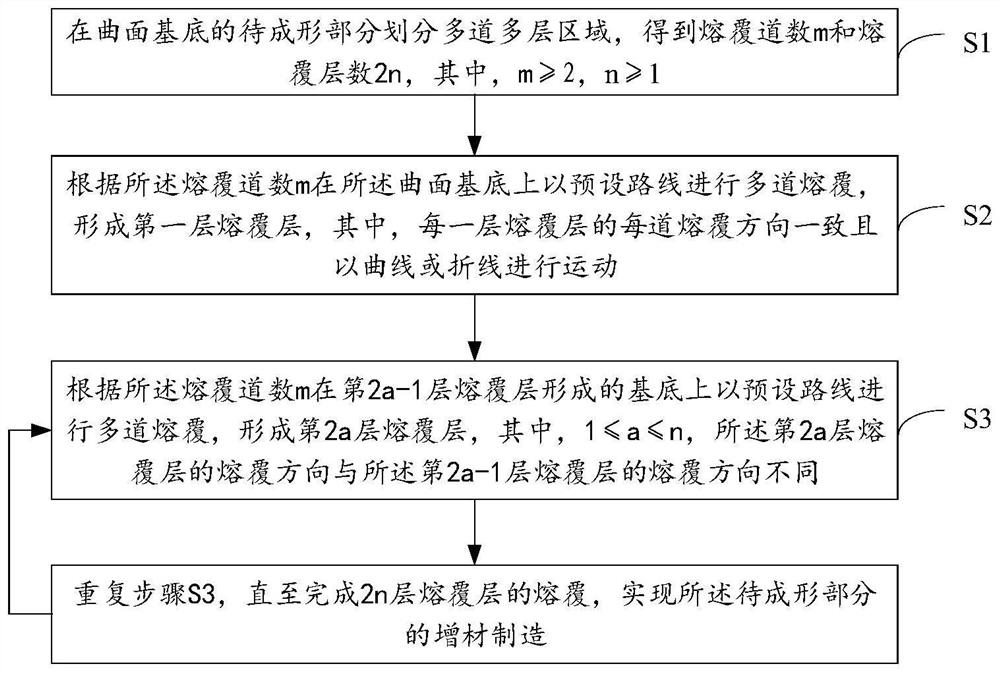
  • Figure 1
    Figure 1
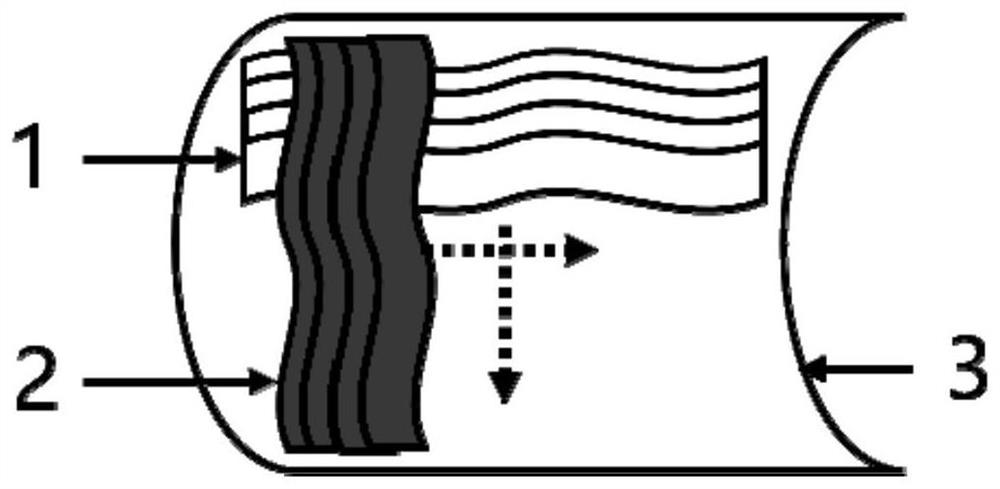
  • Figure 2
    Figure 2
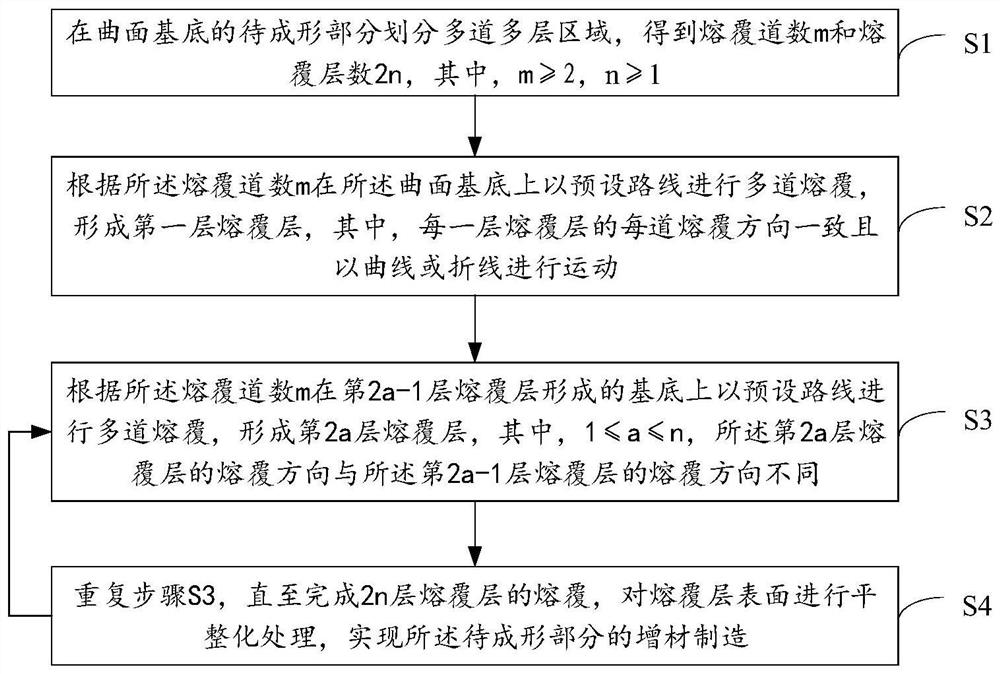
  • Figure 3
    Figure 3
Patent Text Reader

Abstract

The invention belongs to the technical field of laser processing, and discloses an additive manufacturing method, equipment and device, a storage medium and a metallurgical bonding part. Comprising the following steps: dividing a to-be-formed part of a curved-surface substrate into a plurality of multi-channel and multi-layer areas to obtain the number of cladding channels and the number of cladding layers; according to the number of cladding channels, multiple cladding channels are carried out on the curved-surface substrate, a first cladding layer is formed, the cladding directions of all the cladding channels of all the cladding layers are consistent, and all the cladding channels move in a curve or broken line mode; according to the number of cladding channels, multiple cladding is conducted on the substrate formed by the (2a-1) th cladding layer, a (2a) th cladding layer is formed, and the cladding direction of the (2a-1) th cladding layer is different from that of the (2a-1) th cladding layer; and the steps are repeated until cladding of the multiple cladding layers is completed. According to the invention, the cladding directions of two adjacent layers are different, so that the stress distribution states are different, the stress can be counteracted mutually, the problems that a prepared forming part is extremely easy to damage and lose efficacy, and the torsion resistance and the bending resistance are poor are solved, and the overall performance of a metallurgical bonding part is improved.
Need to check novelty before this filing date? Find Prior Art

Description

technical field

[0001] The present invention relates to the technical field of laser processing, in particular to an additive manufacturing method, equipment, device, storage medium and metallurgical joint. Background technique

[0002] Laser cladding is a typical additive manufacturing technique that deposits a coating of material on a substrate. It utilizes minimal and controllable heat input to create a metallurgical bond between the cladding layer and the matrix with low dilution and negligible deformation. However, in the process of laser cladding, the heating and cooling speed is extremely fast, the quality of the cladding layer is difficult to guarantee, and it is unstable; due to the difference in temperature gradient and thermal expansion coefficient between the cladding layer and the base material, the A variety of defects are generated in the laser cladding technology, which leads to the formation of parts prepared by laser cladding technology, which is extremely...

Examples

no. 1 example

[0057] Based on the above-mentioned first embodiment, the additive manufacturing method of this embodiment further includes:

[0058] Step S4: After the cladding of the 2n-layer cladding layer is completed, the surface of the cladding layer is flattened to realize the additive manufacturing of the part to be formed.

[0059] It can be understood that in this embodiment, two adjacent cladding layers adopt cladding methods with different cladding directions to form a cladding layer similar to a curved network structure. The surface of the cladding layer is flattened, so that the surface of the cladding layer is flat, avoiding cracking caused by uneven surface force when the formed parts prepared by the laser cladding technology are put into use.

[0060] Specifically, performing the flattening treatment on the surface of the cladding layer includes: performing milling, wire cutting and grinding treatment on the surface of the cladding layer according to the preset surface qualit...