Chalcone derivatives and their use to treat diseases
What is AI technical title?
AI technical title is built by Patsnap AI team. It summarizes the technical point description of the patent document.
A technology of compound, alkyl, applied in the field of new chalcone derivatives
Inactive Publication Date: 2005-03-16
ATHEROGENICS INC
View PDF56 Cites 7 Cited by
Summary
Abstract
Description
Claims
Application Information
AI Technical Summary
This helps you quickly interpret patents by identifying the three key elements:
Problems solved by technology
Method used
Benefits of technology
Problems solved by technology
It has been shown that VCAM-1 is upregulated 24 hours after nasal allergen challenge in patients with seasonal allergic rhinitis (Braunstahl, G.J. et al., J. Allergy Clin. Immunol., 107:469-476, 2001), but not in normal objects
Method used
the structure of the environmentally friendly knitted fabric provided by the present invention; figure 2 Flow chart of the yarn wrapping machine for environmentally friendly knitted fabrics and storage devices; image 3 Is the parameter map of the yarn covering machine
View more
Image
Smart Image Click on the blue labels to locate them in the text.
Viewing Examples
Smart Image
Click on the blue label to locate the original text in one second.
Reading with bidirectional positioning of images and text.
Smart Image
Examples
Experimental program
Comparison scheme
Effect test
Embodiment approach 6c
[0603] Embodiment 6c. Amide Moiety
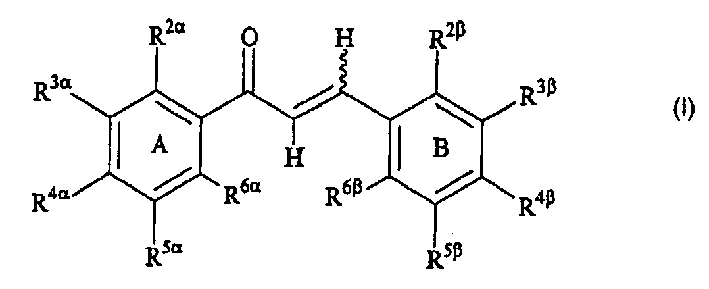
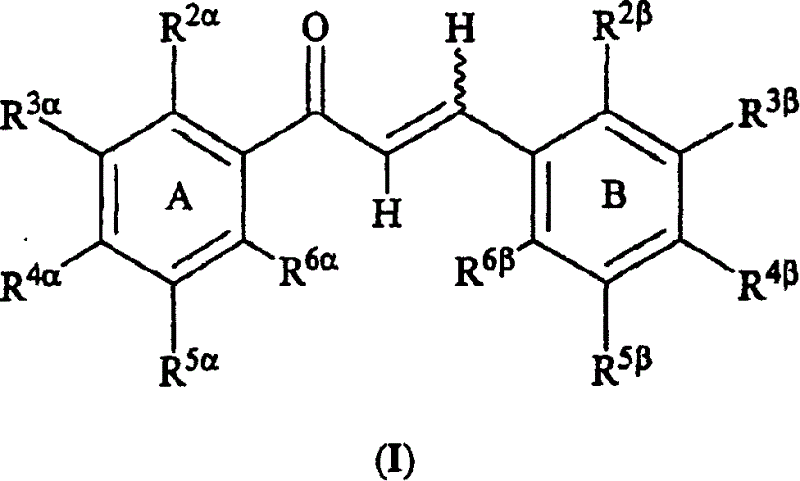
[0604] In a 61st embodiment, the invention is represented by Formula I or a pharmaceutically acceptable salt or ester thereof, wherein:
[0605] R 2β , R 3β , R 4β , R 5β , R 6β , R 2α , R 3α , R 4α , R 5α and R 6α independently selected from hydrogen, halogen, nitro, alkyl, lower alkyl, alkenyl, alkynyl, carbocycle, cycloalkyl, cycloalkylalkyl, haloalkyl, aryl, aralkyl, heteroaryl group, heteroaryl-lower alkyl, heterocycle, heterocycle-lower alkyl, alkylthioalkyl, cycloalkylthioalkyl, arylthio-lower alkyl, aralkyl-lower-thioalkyl, hetero Arylthio-lower alkyl, heteroaralkyl-lower thioalkyl, heterocyclic thio-lower alkyl, heterocycloalkyl-lower thioalkyl, lower alkyl S(O)-lower alkyl, lower alkyl -S(O) 2 -lower alkyl, arylsulfinyl lower alkyl, arylsulfonyl lower alkyl, -C(O)R 2 , R 2 C(O)alkyl, aminoalkyl, cycloalkylaminoalkyl, arylamino lower alkyl, heteroarylamino lower alkyl, heterocyclic amino lower alkyl, hydroxyl, hydroxy...
[0862] Ex-1A: Catechol (2.2 g, 20 mmol) was dissolved in acetone. Diethyl dibromomalonate (7.0 g, 22 mmol) and potassium carbonate (2.76 g) were added, and the mixture was stirred at room temperature overnight. The solvent was separated under reduced pressure, and water was added to the residue. The residue was extracted with dichloromethane, the organic phase was washed with brine, dried over magnesium sulfate and evaporated. Chromatography (hexane / ethyl acetate, 4:1) gave 3.9 g of diethyl benzo[1,3]dioxole-2,2-dicarboxylate. 1 H-NMR (CDCl 3 ) δ6.90-6.97 (m, 4H), 4.37 (q, J = 7Hz, 4H), 1.32 (t, J = 7Hz, 6H).
[0863] Ex-1B: [bis(ethoxycarbonyl)methyldenedioxy]benzene (3.9 g, 14.7 mmol) obtained from Ex-1A was dissolved in THF (100 mL) and cooled with ice water. Lithium aluminum hydride (1M in THF, 44 mL) was added dropwise, and the mixture was stirred ov...
[0870] Ex-2A: 4-(thiophen-2-yl)benzaldehyde was obtained from 4-bromobenzaldehyde following a similar procedure as described in Ex-ID. 1 H-NMR (CDCl 3 )δ10.00(s, 1H), 7.88(d, J=9Hz, 2H), 7.77(d, J=9Hz, 2H), 7.46(d, J=4Hz, 1H), 7.39-7.41(m, 1H ), 7.12-7.15 (m, 1H).
[0871] Diethyl 5-acetylbenzo[1,3]dioxol-2,2-dicarboxylate from Ex-1C and 4-(thiophen-2-yl)benzaldehyde from Ex-2A Condensation was carried out in a similar manner as described in Ex-1 to obtain the title compound. Yellow solid, mp 166-168°C, 23.6% yield. 1 H-NMR (CDCl 3 )δ7.77(d, J=15Hz, 1H), 7.60-7.65(m, 5H), 7.51(d, J=2Hz, 1H), 7.45(d, J=15Hz, 1H), 7.37-7.38(m , 1H), 7.32 (d, J=5Hz, 1H), 7.09 (dd, J=4, 5Hz, 1H), 6.88 (d, J=8Hz, 1H), 3.96 (d, J=7Hz, 4H). MS m / z=394 ([M] + , 50%), 363 (100%). HRMS (EI) calculated value C 22 h 18 o 5 S: 394.0875. Measured value: 394.0869.
the structure of the environmentally friendly knitted fabric provided by the present invention; figure 2 Flow chart of the yarn wrapping machine for environmentally friendly knitted fabrics and storage devices; image 3 Is the parameter map of the yarn covering machine
Login to View More
PUM
Login to View More
Abstract
The invention relates to compounds, pharmaceutical compositions and methods of using compounds of the general formula or its pharmaceutically acceptable salt or ester, wherein the substituents are defined in the application.
Description
[0001] This patent application claims priority to US Provisional Patent Application Serial No. 60 / 342,034, filed December 19, 2001, and US Provisional Patent Application Serial No. 60 / 386,482, filed June 5, 2002. [0002] The present invention relates to novel chalcone derivatives, pharmaceutical compositions and methods for the treatment of various diseases and conditions including inflammation and cardiovascular disease. Background of the invention [0003] Adhesion of leukocytes to the endothelium represents a fundamental early event in a variety of inflammatory conditions, autoimmune diseases, and bacterial and viral infections. The recruitment of leukocytes to the endothelium is mediated in part by the induced expression of adhesion molecules on the surface of endothelial cells that interact with counter-receptors on immune cells. Endothelial cells determine which types of leukocytes to recruit by selectively expressing specific adhesion molecules,...
Claims
the structure of the environmentally friendly knitted fabric provided by the present invention; figure 2 Flow chart of the yarn wrapping machine for environmentally friendly knitted fabrics and storage devices; image 3 Is the parameter map of the yarn covering machine
Login to View More
Application Information
Patent Timeline
Application Date:The date an application was filed.
Publication Date:The date a patent or application was officially published.
First Publication Date:The earliest publication date of a patent with the same application number.
Issue Date:Publication date of the patent grant document.
PCT Entry Date:The Entry date of PCT National Phase.
Estimated Expiry Date:The statutory expiry date of a patent right according to the Patent Law, and it is the longest term of protection that the patent right can achieve without the termination of the patent right due to other reasons(Term extension factor has been taken into account ).
Invalid Date:Actual expiry date is based on effective date or publication date of legal transaction data of invalid patent.



 Login to View More
  Login to View More