
Methods for immunomodulation of cancer and infectious disease therapy
an immunomodulation and cancer technology, applied in the field of immunomodulation of cancer and infectious disease, can solve the problems of reducing the ability to mount an effective immune response against infection, weakened anti-cancer effects of chemotherapy, and reducing the ability to fight infection effectively, so as to enhance the immune response of the subject, improve the t cell response, and enhance the immune response
- Summary
- Abstract
- Description
- Claims
- Application Information
AI Technical Summary
Benefits of technology
Problems solved by technology
Method used
Image

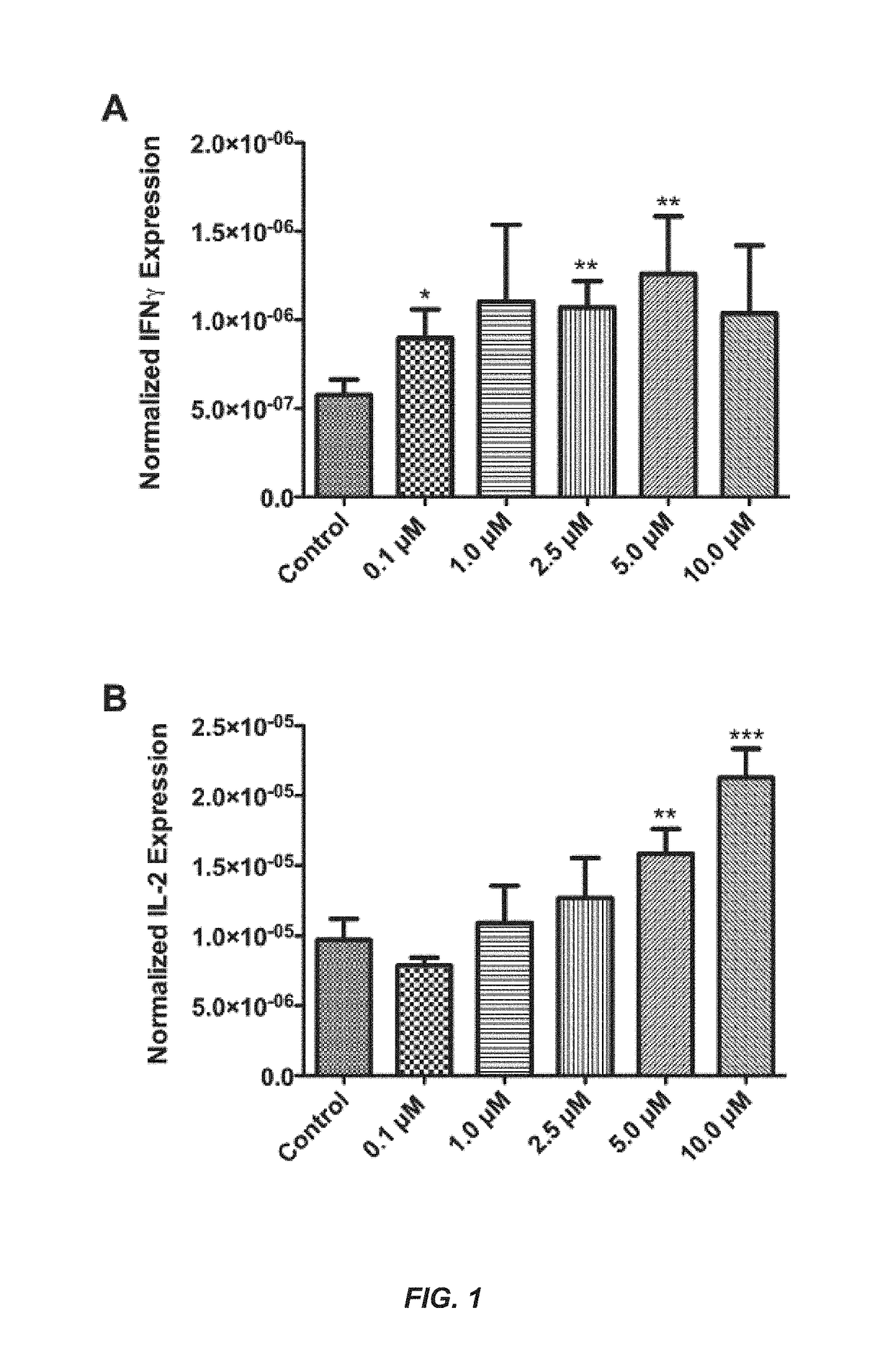
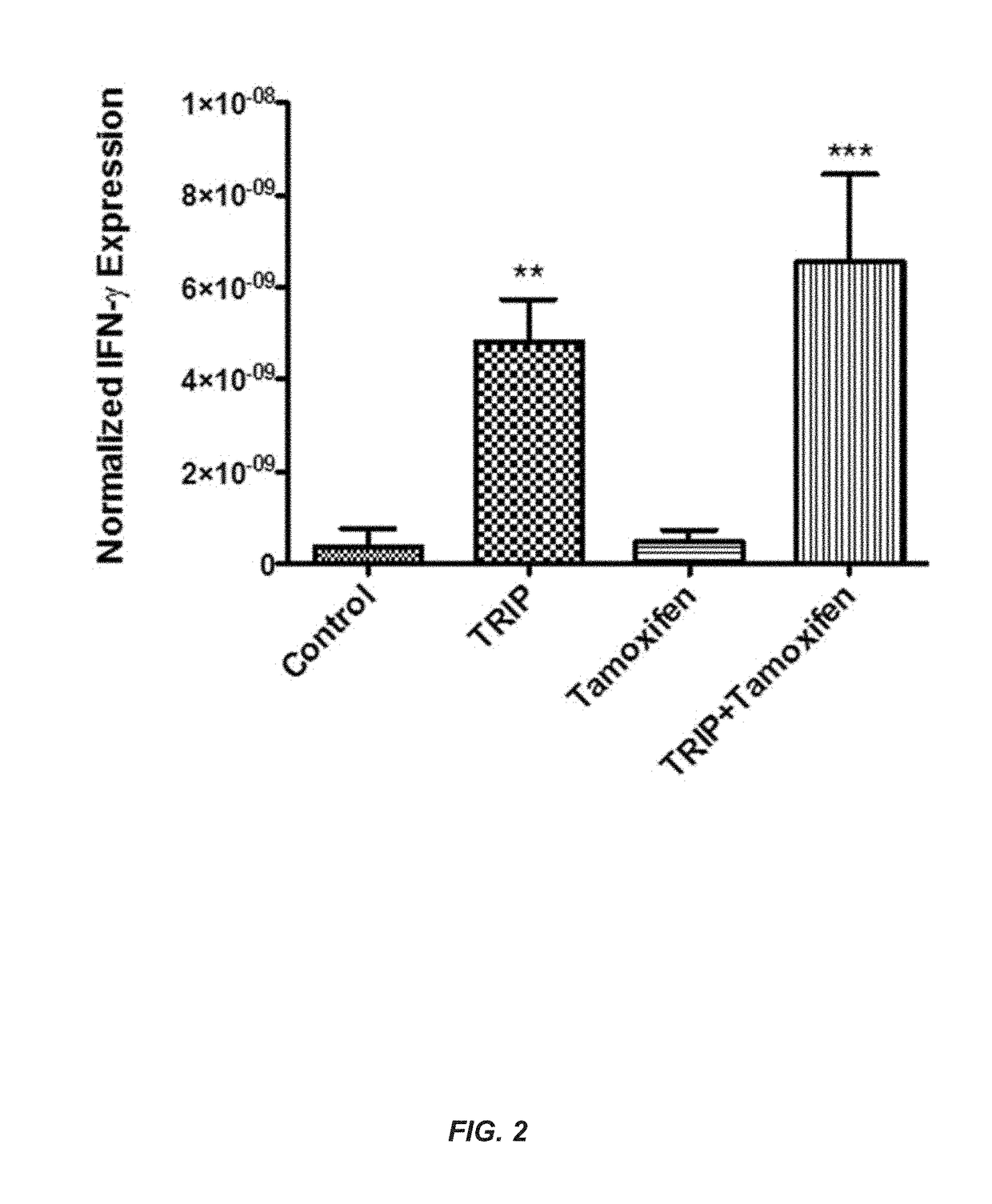
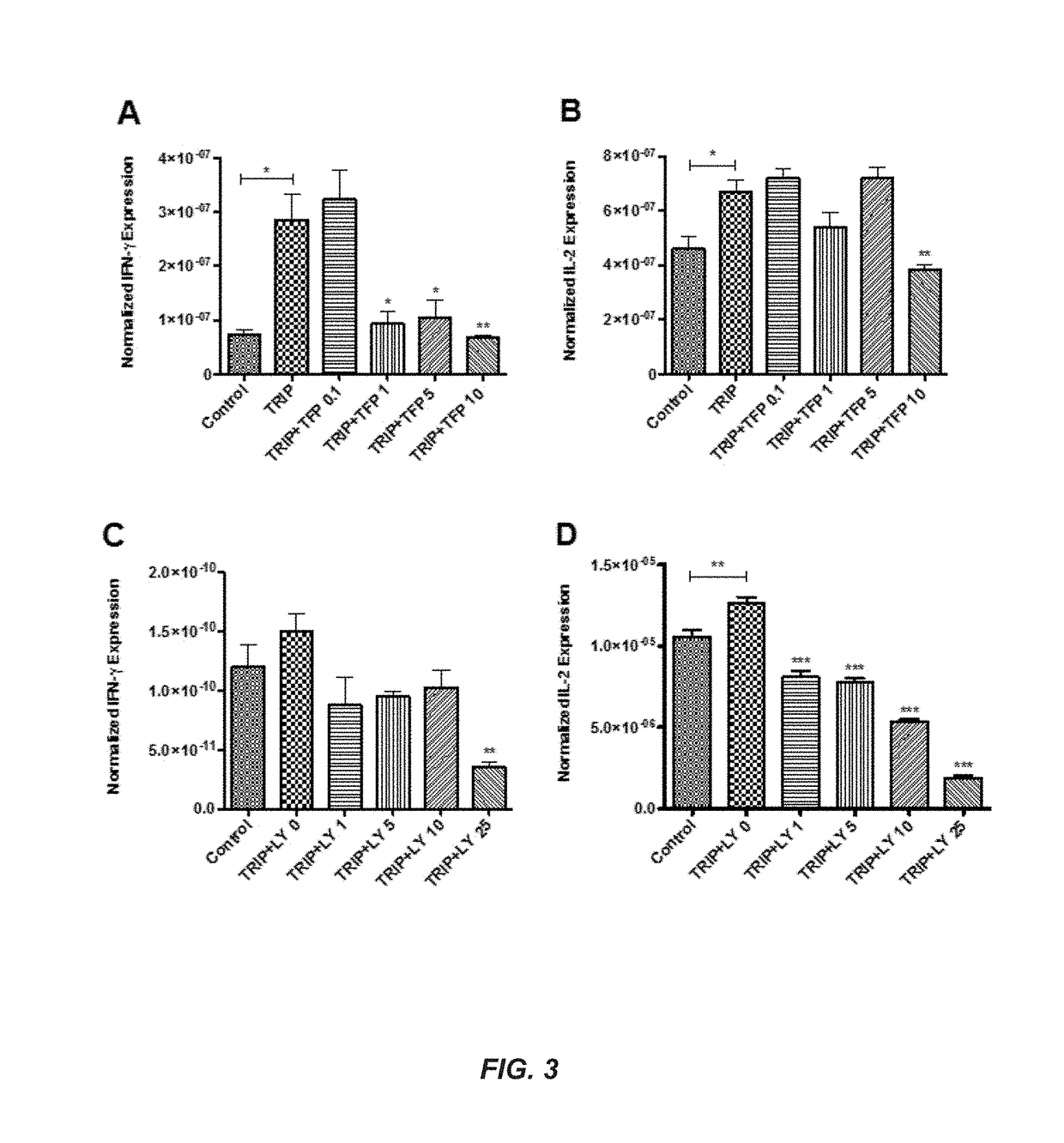
Examples
example 1
of Z-2-[4-(4-chloro-1,2-diphenyl-but-1-enyl)-phenoxy]ethanol (ospemifene)
[0248]Z-1-[4-(2-benzyloxyethoxy)-phenyl]-4-chloro-1,2-diphenyl-but-1-ene (36 g, 0.08 mol) is dissolved in a mixture of ethyl acetate (350 ml) and ethanol (350 ml). Then add palladium on carbon (5%, 0.28 g) and flush the solution with hydrogen gas until no starting material remains. Reaction progress is monitored using thin layer chromatography. Once the reaction is complete, the palladium on carbon is then filtered off through siliceous earth, followed by evaporation of the filtrate. The residue is then crystallized from a mixture of ethanol (155 ml) and water (65 ml). The crystals formed are ospemifiene.
[0249]
example 2
of Z-2-{2-[4-(4-chloro-1,2-diphenyl-but-1-enyl)-phenoxy]-ethoxy}-ethanol (fispemifene)
[0250]{2-[4-(4-Chloro-1,2-diphenyl-but-1-enyl)-phenoxy]-ethoxy}-acetic acid ethyl ester is dissolved in tetrahydrofuran at room temperature under a nitrogen atmosphere. Then add lithium aluminum hydride to the solution in small portions until the reduction reaction is complete. Reaction progress is monitored by thin layer chromatography. The completed reaction is quenched with a saturated aqueous ammonium chloride solution. The product is then extracted into toluene, which is then dried and evaporated under vacuum. The residue is purified with flash chromatography using toluene / triethylamine (9.5:0.5) as the eluent. The purified compound is fispemifene. Fispemifene is an example of a prodrug. In this instance, fispemifene is principally metabolized into ospemifene.
[0251]
example 3
ethylene (TRIP) Compounds as Immunomodulators of Vaccine Immune Response Targeted for Cancer and Infectious Diseases
[0252]Six experiments were conducted demonstrating that TRIPs are effective immunomodulators of vaccine immune response targeted for cancer and infectious disease.
PUM
| Property | Measurement | Unit |
|---|---|---|
| time | aaaaa | aaaaa |
| body weight | aaaaa | aaaaa |
| weight | aaaaa | aaaaa |
Abstract
Description
Claims
Application Information
 Login to View More