Unlock instant, AI-driven research and patent intelligence for your innovation.

Enrichment and characterization of human corneal endothelial cells (hCENC) with novel monoclonal antibody

a technology monoclonal antibodies, which is applied in the field of molecular biology, can solve the problems of corneal edema and corneal blindness, corneal edema, and the density of human corneal endothelial cells (hcencs) shows an inverse relationship, and achieves the effect of increasing the antibody binding signal

Active Publication Date: 2019-05-14
SINGAPORE HEALTH SERVICES PTE +1
View PDF1 Cites 3 Cited by
  • Summary
  • Abstract
  • Description
  • Claims
  • Application Information

AI Technical Summary

Problems solved by technology

Human corneal endothelial cells (hCENC), however, have very limited proliferative capacity in vivo and the density of hCENC in the cornea shows an inverse relationship with age.
Damage to the corneal endothelium layer by accidental or surgical corneal trauma and diseases such as Fuchs' dystrophy often result in corneal edema and corneal blindness.
However, the success of the treatment is limited by the scarcity of transplant-grade corneas from suitable donors.
However, directed differentiation of hPSCs is often not an efficient process, hence the ability to enrich for the cells of interest will be necessary.
Furthermore, the lack of characterization tools has so far deterred the use of cultured hCENC for transplantation.
However, these markers are not hCENC-specific and are found ubiquitously expressed in many other cell types.
Therefore, both ZO-1 and Na+K+ ATPase are not ideal markers for cell isolation and enrichment.

Method used

the structure of the environmentally friendly knitted fabric provided by the present invention; figure 2 Flow chart of the yarn wrapping machine for environmentally friendly knitted fabrics and storage devices; image 3 Is the parameter map of the yarn covering machine
View more

Image

Smart Image Click on the blue labels to locate them in the text.
Viewing Examples
Smart Image
  • Enrichment and characterization of human corneal endothelial cells (hCENC) with novel monoclonal antibody
  • Enrichment and characterization of human corneal endothelial cells (hCENC) with novel monoclonal antibody
  • Enrichment and characterization of human corneal endothelial cells (hCENC) with novel monoclonal antibody

Examples

Experimental program
Comparison scheme
Effect test

example 1

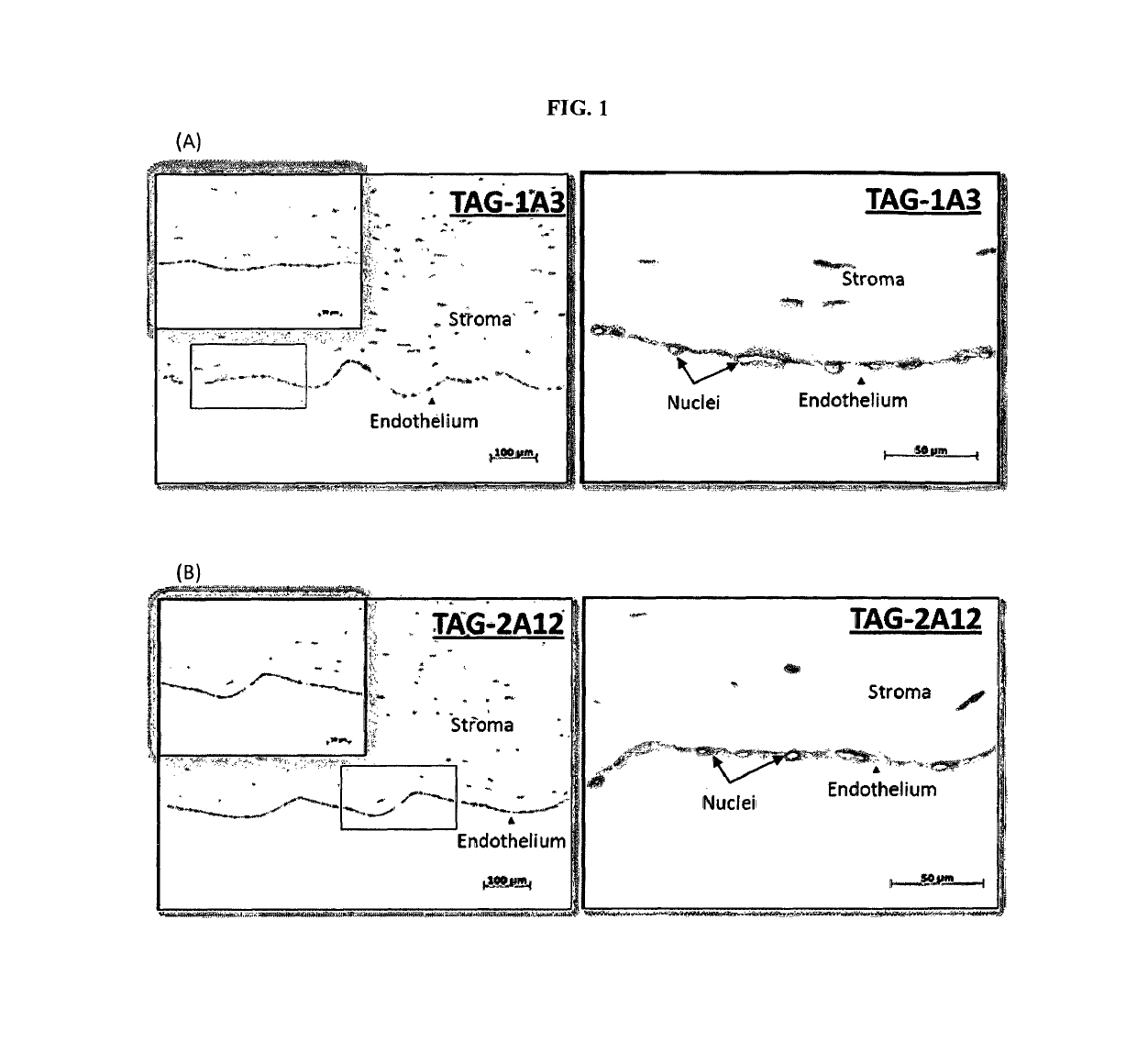
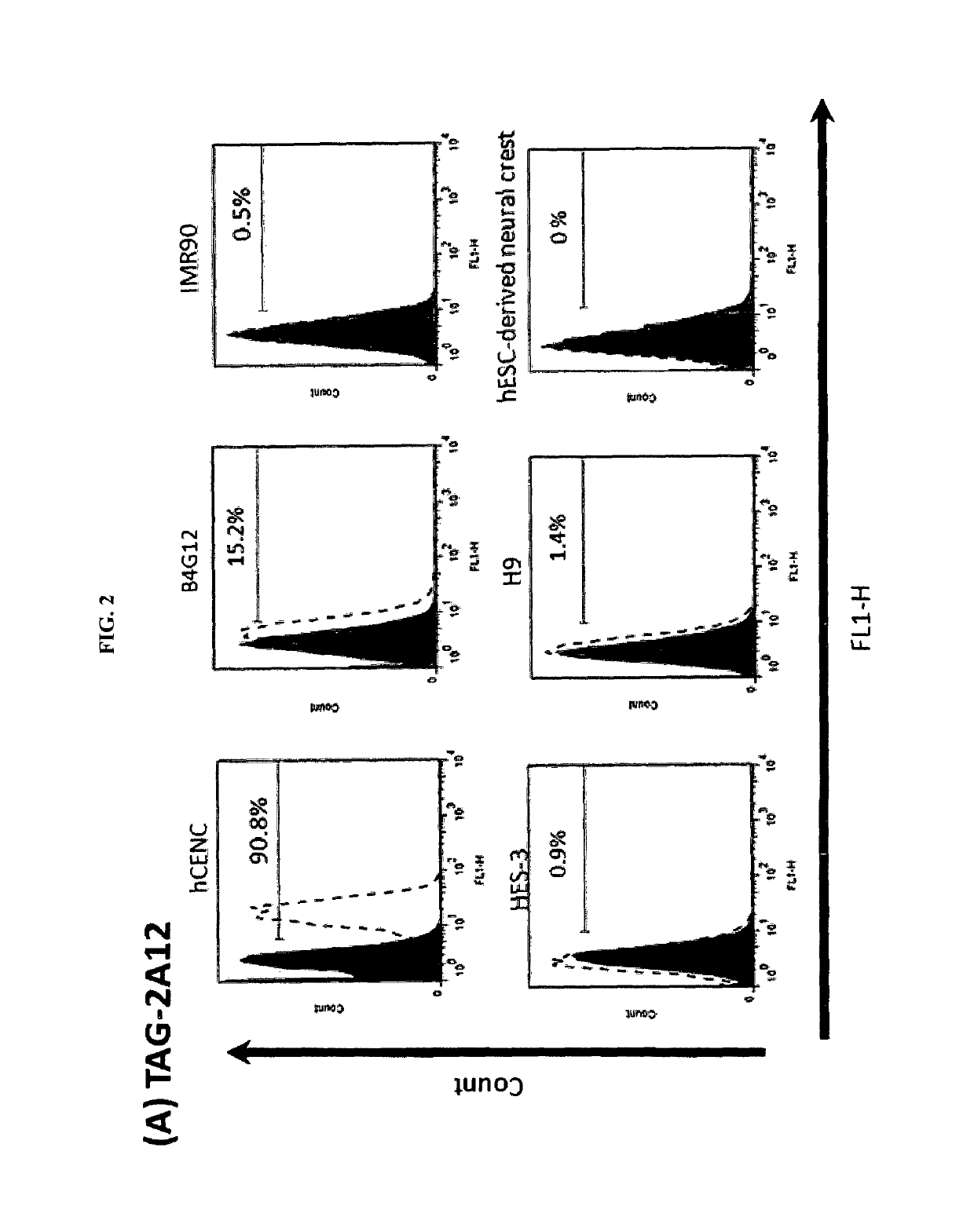
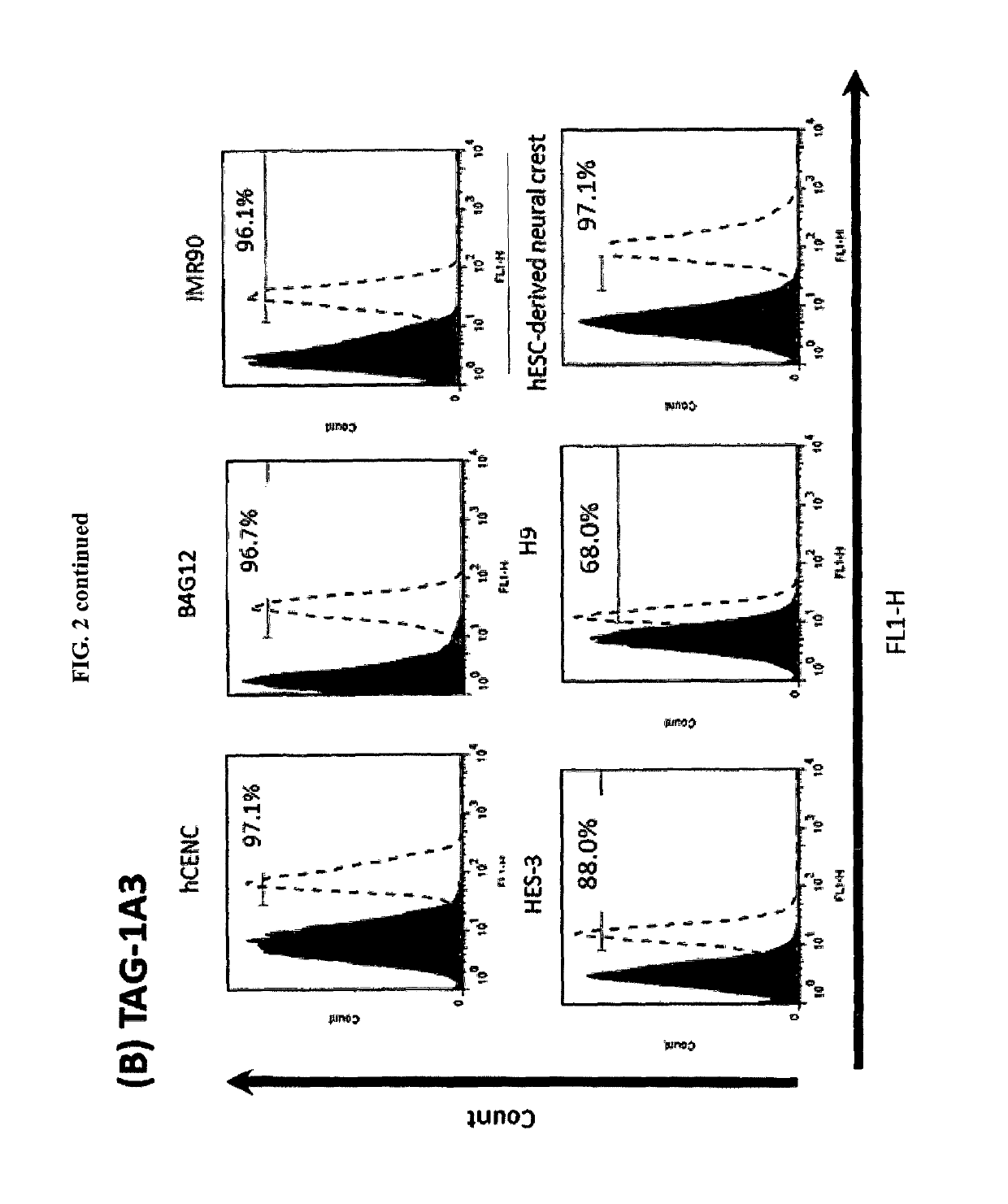
Generation of hCENC Specific Monoclonal Antibodies (mAbs)

[0063]As known in the art, the isolation of human corneal endothelial cells occurs via a two-step process of peeling off the Descemet's membrane-endothelial layer off the donor cornea and then exposing the isolated cells to enzymatic digestion using collagenase, dispase or trypsin / EDTA. A drawback of this method is that stromal keratocytes may be present in the sample which, due to the slow proliferative nature of the hCENCs, will become fibroblastic and overtake the culture. hCENCs in culture tend to become more heterogeneous over time, as a more fibroblastic morphology can found among cultured cells with high passage numbers. Furthermore, it is known in the art that hCENC cultures established from older donors proliferate slower and to a lesser extent, as well as displaying a higher heterogeneity compared to hCENC cultures established from younger donors.

[0064]The availability of validated hCENC markers allows investigators ...

example 2

Characterization of Antigen Targets

[0070]In order to identify the antigen target of TAG-1A3 and TAG-2A12 on hCENCs, a series of experiments involving estimating the molecular weight of the cell surface protein by Western blotting, immunoprecipitation (IP), silver-staining, mass spectrometry, and finally validation with known mAbs were carried out.

[0071]By Western blotting, TAG-1A3 and TAG-2A12 were found to bind to protein bands corresponding to approximately 90 kDa and 28 kDa respectively (FIGS. 3A and 3C, Panel 2). Immunoprecipitation using TAG-1A3 and TAG-2A12 successfully enriched for the antigen targets (FIGS. 3A and 3C Panel 2). The immunoprecipitation products of TAG-1A3 and TAG-2A12 were excised from a duplicate silver stained gel and sent for identification using LC / MS-MS. After database search using the MS data, the putative antigen target that TAG-1A3 enriched for was ALCAM / CD166, while peroxiredoxin-6 (Prdx6) was detected by TAG-2A12. To validate the antigen targets, kno...

example 3

Quantitative Assessment of Cultured hCENC

[0077]Currently, cultured hCENC are typically characterized by their “cobblestone-like” morphology and its ZO-1 and Na+K+ ATPase markers expression. It had been previously suggested in the art that differences in both the proliferative response and the protein expression had been observed in samples from different donors. Hence, the establishment of a reliable panel of mAbs against hCENC is critical for quality assessment of these cells prior to transplantation, especially to address issues of donor to donor variations.

[0078]Samples from different donor-derived hCENC were plated and graded visually based on their morphology; “cobblestone-like” morphology was given a grade 1 and “fibroblastic-like” morphology were given a grade 3 (FIG. 6A). Expression levels of the cell surface antigens recognized by TAG-1A3 and TAG-2A12 were examined. It was found that while both mAbs were binding to cultured hCENC derived from different donors, each antibody...

the structure of the environmentally friendly knitted fabric provided by the present invention; figure 2 Flow chart of the yarn wrapping machine for environmentally friendly knitted fabrics and storage devices; image 3 Is the parameter map of the yarn covering machine
Login to View More

PUM

PropertyMeasurementUnit
strengthaaaaaaaaaa
sizeaaaaaaaaaa
corneal transparencyaaaaaaaaaa
Login to View More

Abstract

This invention refers to an antibody or an antigen binding portion thereof, that binds specifically to human corneal endothelial cells (hCENCs), wherein the target of the monoclonal antibody, or antigen binding portion thereof, is essentially cell surface-expressed Peroxiredoxin-6 (Prdx6), as well as to methods for determining suitability of a cell sample for corneal transplantation, for quantitative enrichment of human corneal endothelial cells from a mixture of cells, and for isolating human corneal endothelial cells from a mixture of cell.

Description

CROSS-REFERENCE TO RELATED APPLICATION[0001]This patent application is a U.S. National Phase Application under 35 U.S.C. § 371 of International Application No. PCT / SG2014 / 000161, filed Apr. 11, 2014, entitled ENRICHMENT AND CHARACTERIZATION OF HUMAN CORNEAL ENDOTHELIAL CELLS (HCENC) WITH NOVEL MONOCLONAL ANTIBODY.INCORPORATION BY REFERENCE[0002]This patent application incorporates by reference the material (i.e., Sequence Listing) in the ASCII text file named Sequence_Listing.txt, created on Oct. 6, 2016, having a file size of 5,827 bytes.FIELD OF THE INVENTION[0003]The present invention relates generally to the field of molecular biology. In particular, the present invention relates to novel monoclonal antibodies for detecting human corneal endothelial cells (hCENCs).BACKGROUND OF THE INVENTION[0004]The human corneal endothelium is the most important monolayer of cells in the cornea. It plays a significant role in maintaining corneal transparency by regulating the leaky barriers be...

Claims

the structure of the environmentally friendly knitted fabric provided by the present invention; figure 2 Flow chart of the yarn wrapping machine for environmentally friendly knitted fabrics and storage devices; image 3 Is the parameter map of the yarn covering machine
Login to View More

Application Information

Patent Timeline
no application Login to View More
Patent Type & Authority Patents(United States)
IPC IPC(8): C12N5/12C07K16/28C12N5/079C07K16/18C07K16/40
CPCC12N5/0621C07K16/18C07K16/2803C07K16/40C07K16/28C07K2317/33
Inventor DING, MEI YEE VANESSACHOO, BOON HWA ANDRECHIN, CHUI PING ANGELAMEHTA, JODHBIR SINGHPEH, GARY
Owner SINGAPORE HEALTH SERVICES PTE