
Obfuscation of an address space layout randomization mapping in a data processing system
randomization mapping technology, applied in the field of obfuscation of address space layout randomization mapping in can solve the problems of gaining unauthorized access to a system, compromising computing system, and attackers gaining some degree of unauthorized control over the computing system on which the process executes, so as to achieve the effect of mitigating the vulnerability of a data processing system
- Summary
- Abstract
- Description
- Claims
- Application Information
AI Technical Summary
Benefits of technology
Problems solved by technology
Method used
Image

Examples
Embodiment Construction
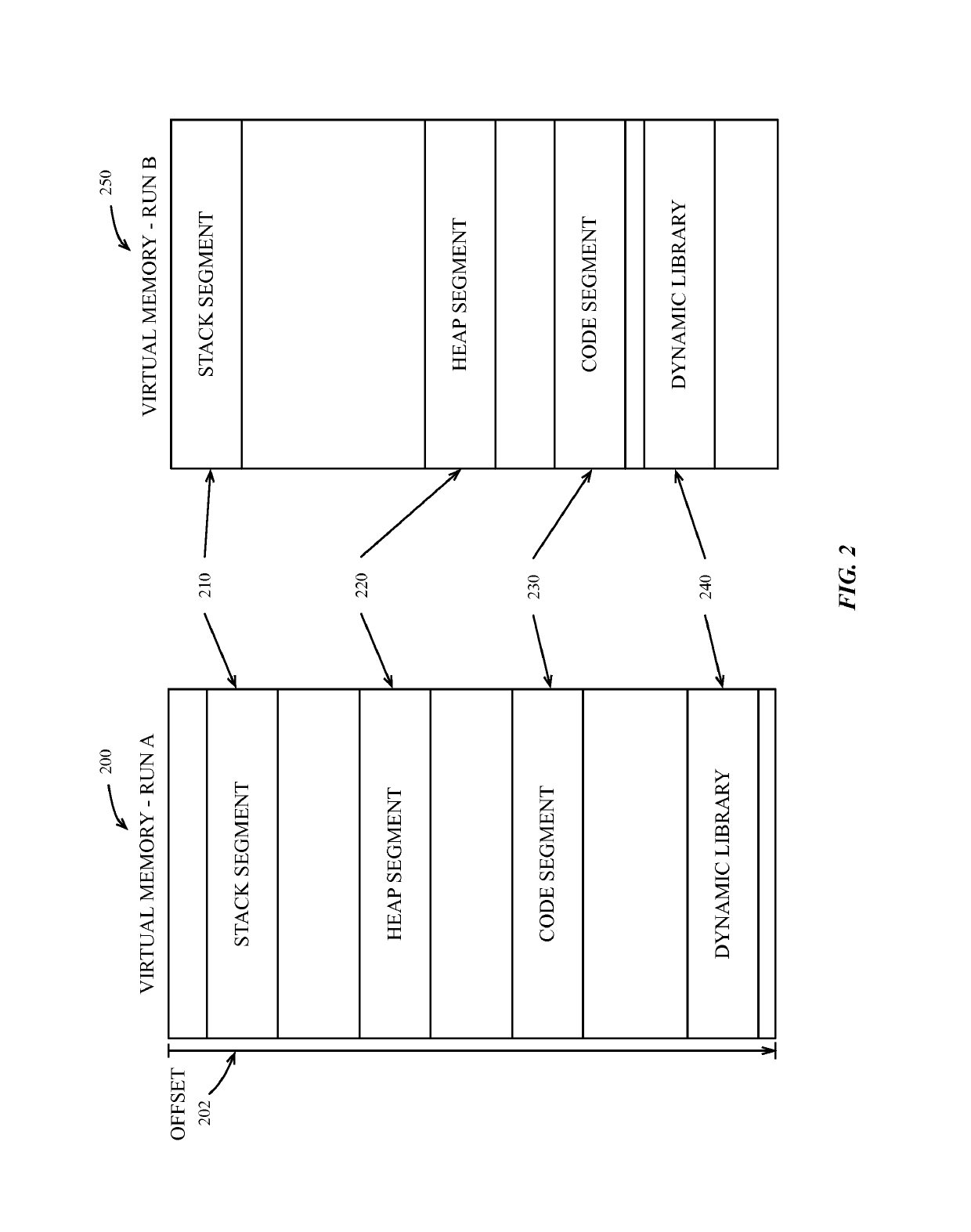
[0027]Address Space Layout Randomization (ASLR) is one countermeasure against potential system exploits that makes it difficult for an attacker to predict the address of various program segments in memory. One method of implementing ASLR uses base address randomization for one or more segments of a library or application when the library or application is loaded into memory. The base address of the randomized segments can be randomized by a ‘slide’ value each time the process is loaded into memory. However, sliding the entire segment by a single offset can leave instructions in the segment vulnerable if the slide value of the segment is discovered.
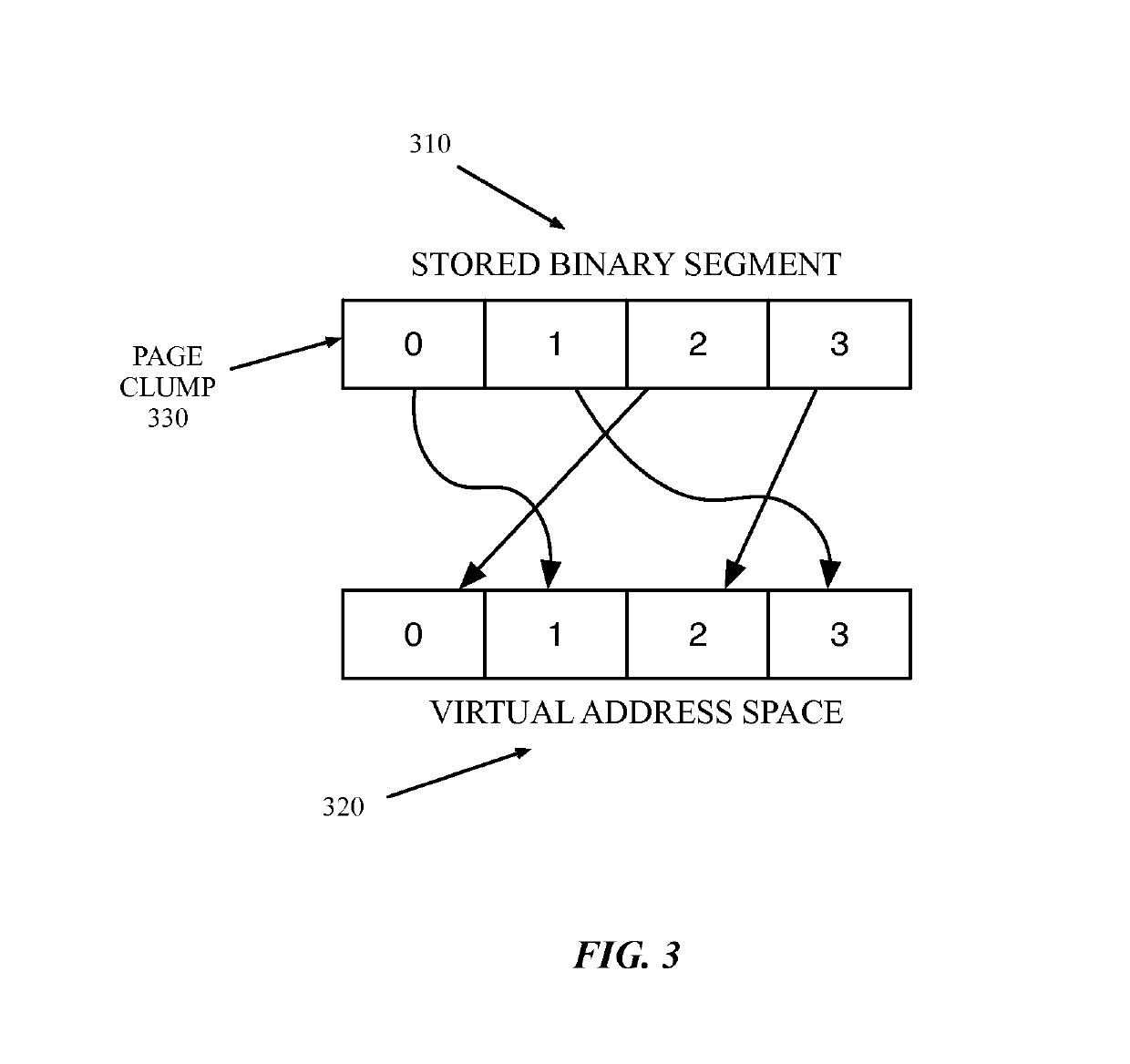
[0028]Described herein, in various embodiments, is a system and method of enhanced ASLR, which uses fine-grained address layout randomization to mitigate a data processing system's vulnerability to security exploits. A data processing system can use embodiments of the method to mitigate the system's vulnerability to ROP security exploits. ...
PUM
 Login to View More
 Abstract
Description
Claims
Application Information
 Login to View More