
Method for authenticating a user device during the process of logging into a server
a user device and server authentication technology, applied in the field of authentication methods, can solve the problems of high technical expenditure, user not only having to enter passwords, but still having to provide user ids, and process being considered too involved
- Summary
- Abstract
- Description
- Claims
- Application Information
AI Technical Summary
Benefits of technology
Problems solved by technology
Method used
Image

Examples
Embodiment Construction
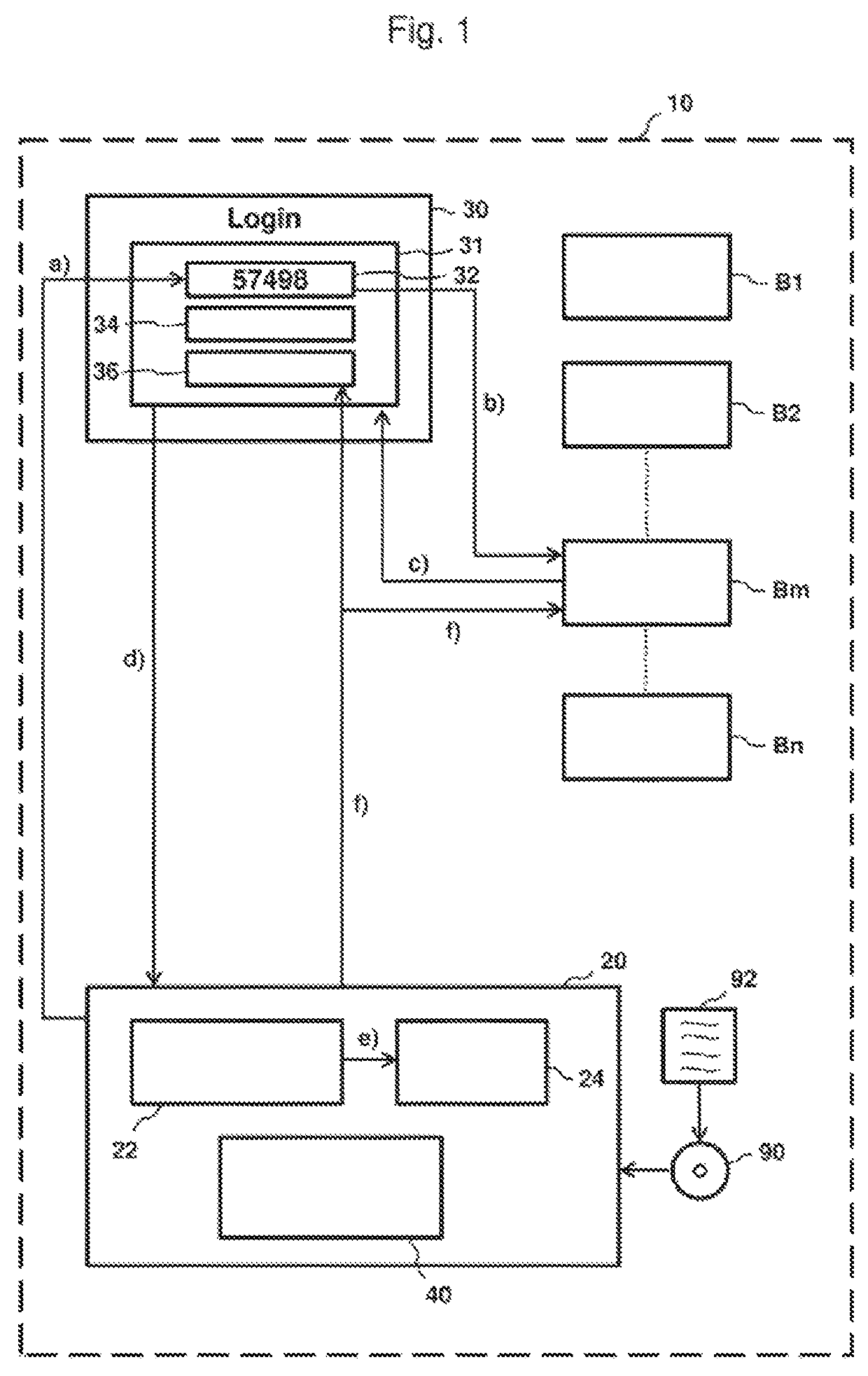
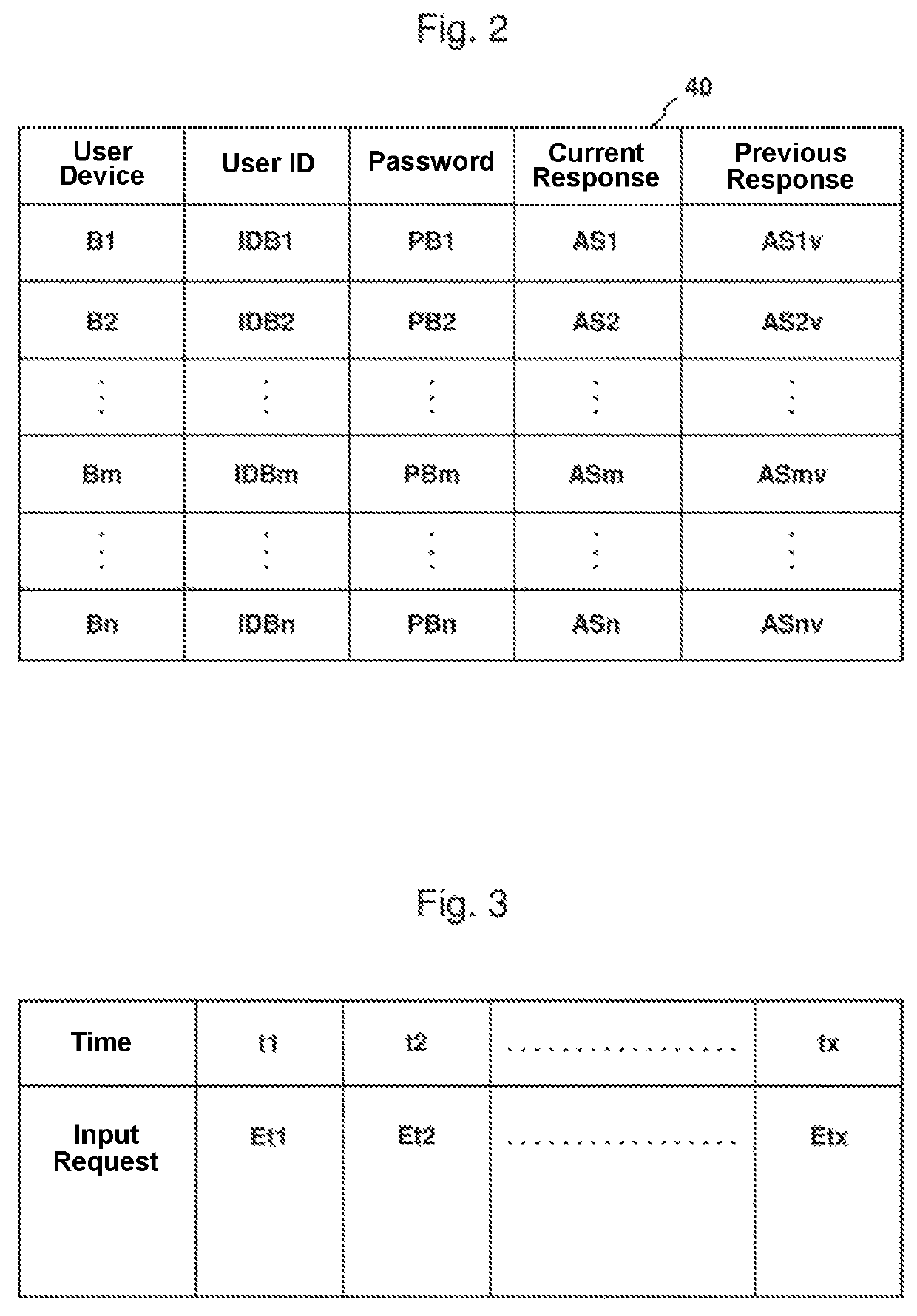
[0012]As noted above, embodiments provide authentication processes. Using the invented method, a user with a user device assigned to him can only log into a server and be authenticated if his user device is already known to the server, i.e., belongs to a user device group that is known to the server. In addition, both the user ID and the password of the user device in question or the entire group are known to the server. The procedure according to the invention is as follows: The server generates or produces input requests (also called challenges) that are only valid for a defined length of time, and displays these input requests in sequence, but only one at a time, on a login screen.
[0013]When a user device wishes to log in and be authenticated, it reads the input request displayed at the time of the login—by manual input through the user, for example—and calculates an answer—often also called a response—using this input request, its password, and the current time. Then the user de...
PUM
 Login to View More
 Abstract
Description
Claims
Application Information
 Login to View More