
Method for chromatography
a chromatography and method technology, applied in the field of chromatography, can solve the problems of many plasma proteins that cannot be purified, many proteins that lose their activity or gain unwanted activity, and achieve the effect of high activity and high purity
- Summary
- Abstract
- Description
- Claims
- Application Information
AI Technical Summary
Benefits of technology
Problems solved by technology
Method used
Image

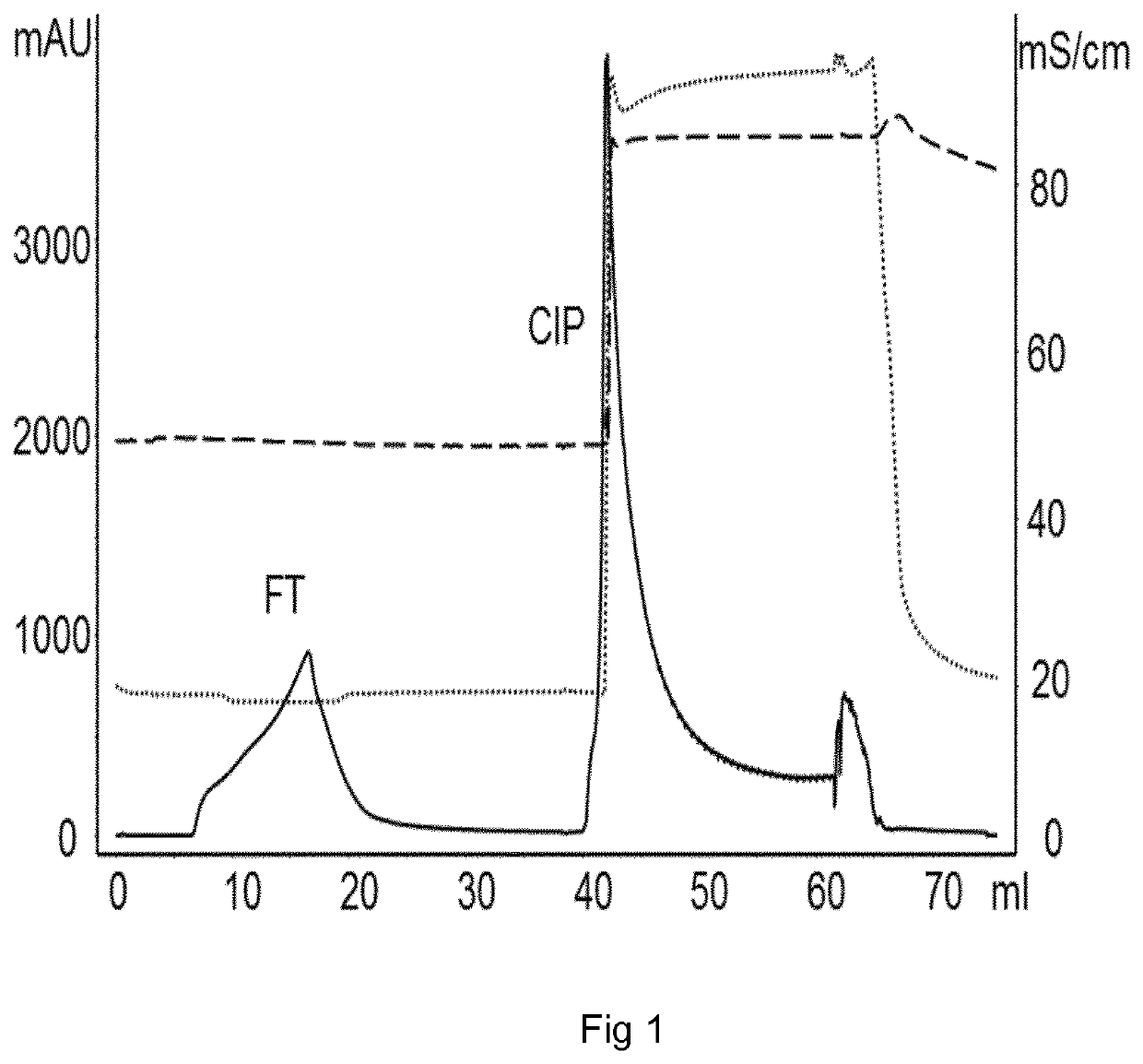
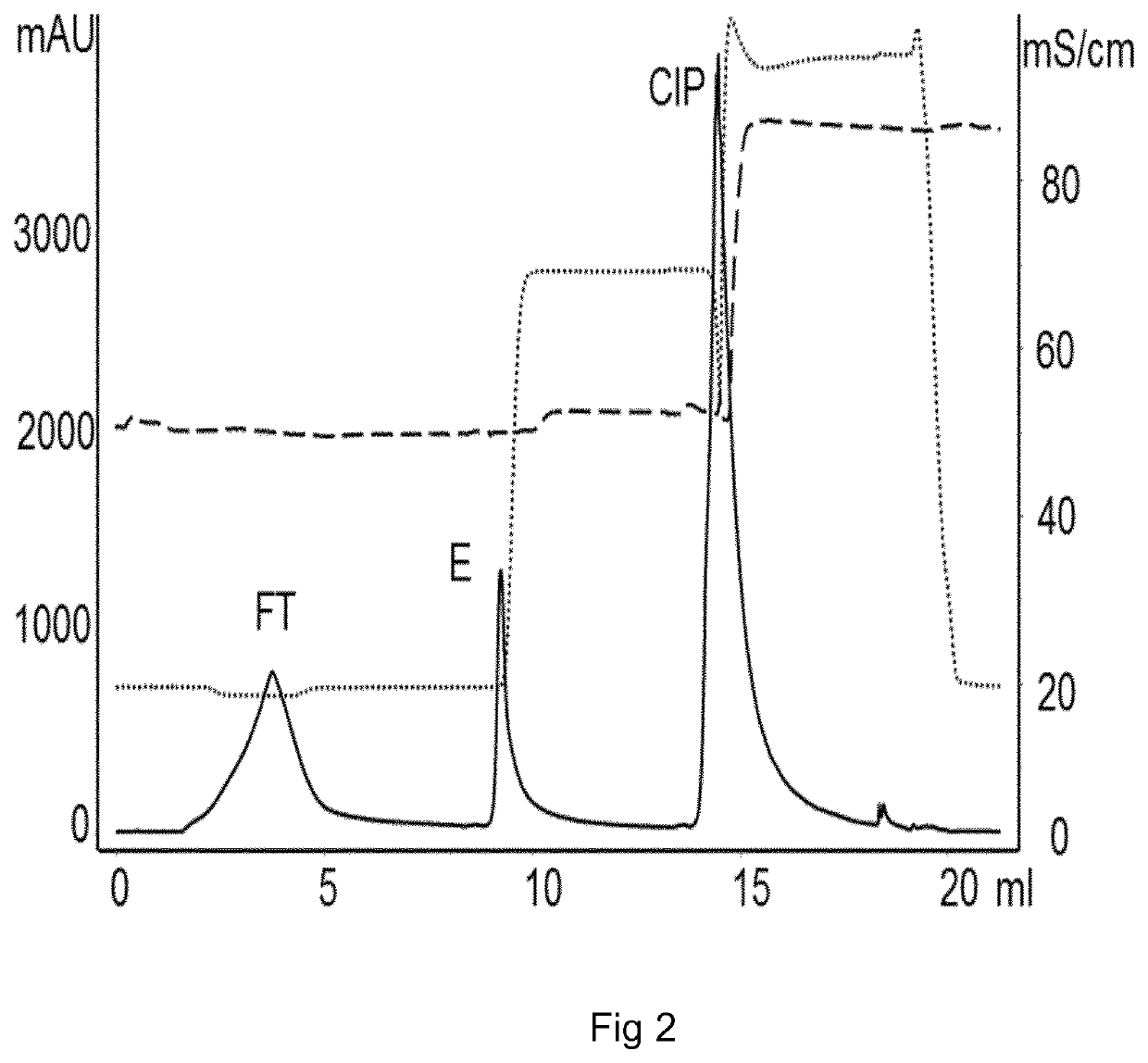
Examples
example 1
of Prototypes
[0029]Volumes of matrix refer to settled bed volume and weights of matrix given in gram refer to suction dry weight. For large scale reaction stirring is referring to a suspended, motor-driven stirrer since the use of magnet bar stirrer is prompt to damage the beads. Conventional methods were used for the analysis of the functionality and the determination of the degree of allylation, or the degree of ligand content on the beads.
[0030]The support particles used were highly crosslinked agarose beads, prepared according to the methods described in U.S. Pat. No. 6,602,990, which is hereby incorporated by reference in its entirety. The beads had a volume-weighted average diameter (D50,v) of 88 micrometers and a pore size distribution such that 69% of the pore volume was available to dextran molecules of Mw 110 kDa. This can also be expressed such that Kd for dextran 110 kDa on the beads was 0.69, when measured according to the methods described in “Handbook of Process Chrom...
PUM
| Property | Measurement | Unit |
|---|---|---|
| thickness | aaaaa | aaaaa |
| diameter | aaaaa | aaaaa |
| Mw | aaaaa | aaaaa |
Abstract
Description
Claims
Application Information
 Login to View More