There are various causes of tangling of the welding wire as it is being withdrawn from a wire stack or coils of welding wire within the supply container.
For instance, wire tangles can be caused by poor drive roll alignment in the feeder which can introduce a twist in the wire.
The twist in the wire can cause the wire to move back into the drum and subsequently cause premature popping out of
wire loop as it is being paid out from the container.
Tangling of the wire can also result from inconsistent loop
diameter of the wire in the container and inconsistent fan-out of the loops of wire in the container.
In both of these situations, the wire can prematurely pop up and subsequently form tangles as the wire is being paid out from the container.
Tangles can further be caused by the
settling of the wire during transportation, and abuse in handling the drum of wire.
Wire tangles can also be caused when a small amount of wire is left on the wire stack or coils in the drum or container and there is a long unsupported coil of the wire from the wire stack or coils toward the upper cover of the container.
In this instance, the wire can get ahead of itself and allow an extra turn to be released, thus becoming tangled.
Both of these structures are costly, and the rotating mechanism is rigid thus not adaptive as the stack is paid down when the wire is consumed.
The space between the guide and the top of the stack increases as the stack lowers, thus cannot prevent premature pop-outs of the welding wire.
The smaller
diameter of the opening in the top of the payout mechanism also makes it difficult for a free
convolution of wire to find its way to tangle from the outside by snapping over the top of a retaining ring.
Any e-script or twist can cause the welding wire to become jammed in a welding gun or wire feeder and / or cause an interruption in the uniform feeding of the welding wire through a wire feeder and / or welding gun.
As a result, these e-scripts or twists in the welding wire can cause the welding wire to jam in a wire feeder or welding gun, the
welding process must temporarily terminated to dislodge the jammed welding wire, thus resulting in interruption of the
welding process, which can be especially costly and
time consuming for automated welding processes.
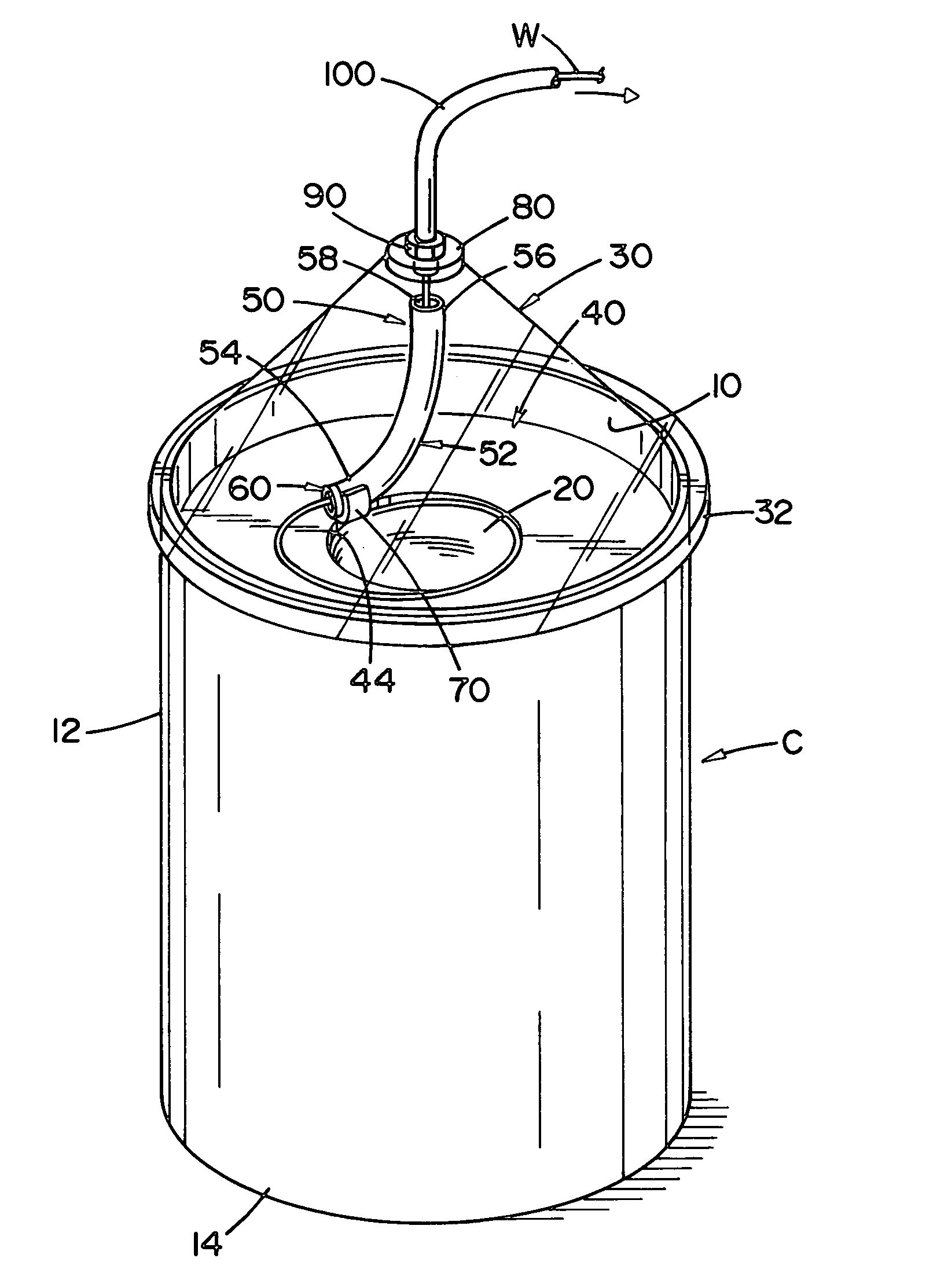
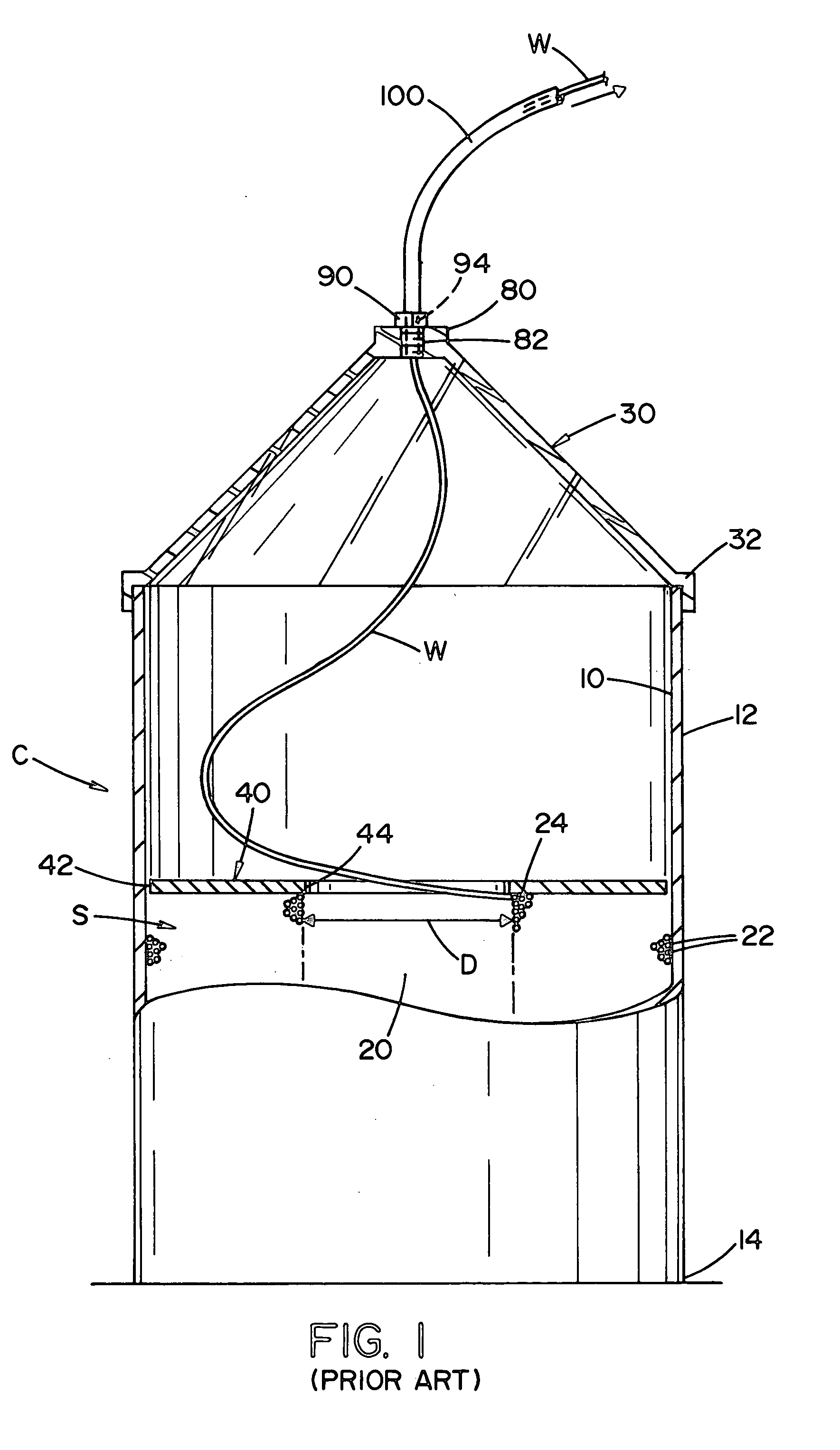
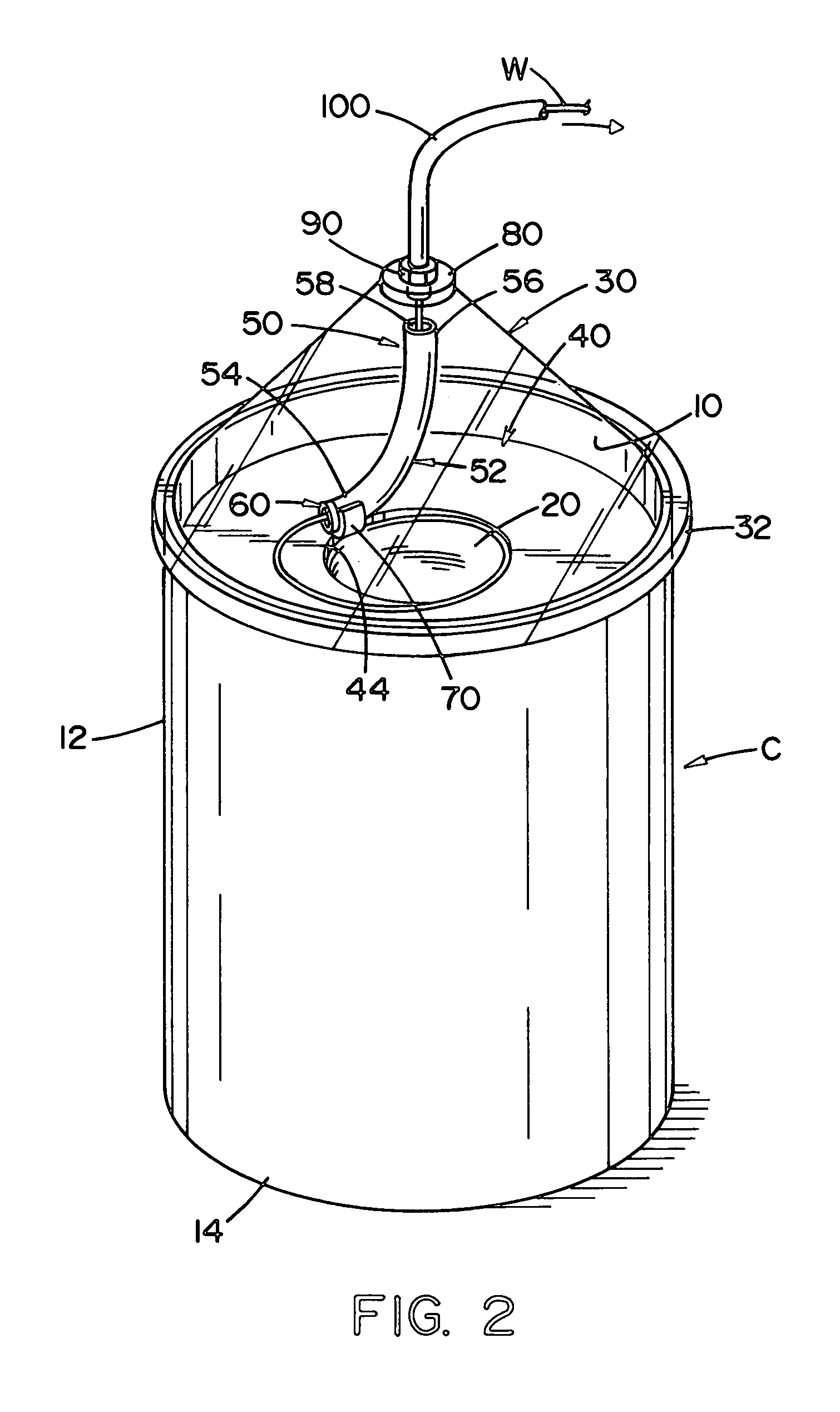
One or the primary defects of prior wire containers was the inability to deal with excess and unsupported wire between the top of the hat and the retaining ring.
After the wire left the top of the stack and escaped the constraint imposed by the retaining ring, the wire is essentially loose, unsupported and unstable until the wire reaches the top of the hat and enters the liner above the hat wherein the wire is once again supported.
During the payout of the wire, the welding wire becomes unbalanced and typically has a residual twist.
The premature popping out of the wire in turn can result in the formation of knots in the wire.
A surface of the passageway which creates high friction contact between the welding wire and the surface of the passageway could result in nonuniform and / or impeded movement of the welding wire through the floating liner thereby potentially impairing the feed speed and / or force fluctuation causing wire excursion and gun chatter.



 Login to View More