
Device for gripping and transferring a ring of electrical conductors which is used to produce a winding and a winding-productuion system employing one such device
a technology of electrical conductors and ringed wires, which is applied in the manufacture of dynamo-electric machines, electrical apparatus, dynamo-electric machines, etc., can solve the problems of pin heads and lever jamming, and achieve the effect of simplifying control devices, reducing the risk of lever sticking, and simplifying the lever
- Summary
- Abstract
- Description
- Claims
- Application Information
AI Technical Summary
Benefits of technology
Problems solved by technology
Method used
Image

Examples
Embodiment Construction
[0040] The invention will be described in its application to a system for producing a stator of a rotating electrical machine, such as an alternator for an automobile, which is equipped with a bearing annular element in the form of a stator body for mounting a winding formed by many conductors in the form of pins mounted in series. The pins contain two prongs connected by a curved head and are thus generally in the shape of a U. The pins cross with their prongs the body of the stator and form networks called chignons at the two ends of the body of the stator. One of the chignons is formed by the heads of the pins, and the other by the united (by welding, for example) free ends of the prongs of the pins connected to each other according to a specific configuration. The ring-shaped body of the stator is formed, by convention, by a packet of sheets equipped with axial notches for mounting the prongs of the pins.
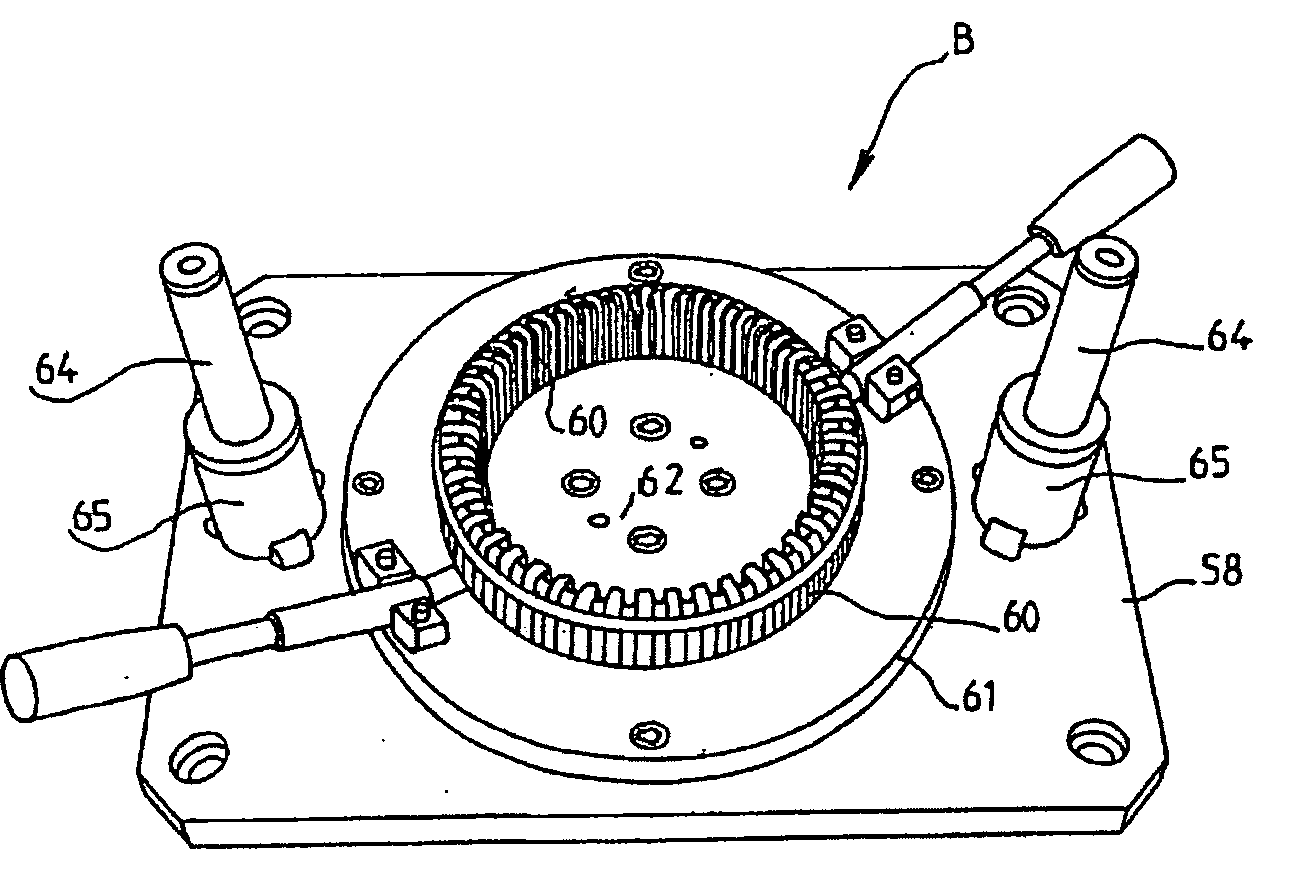
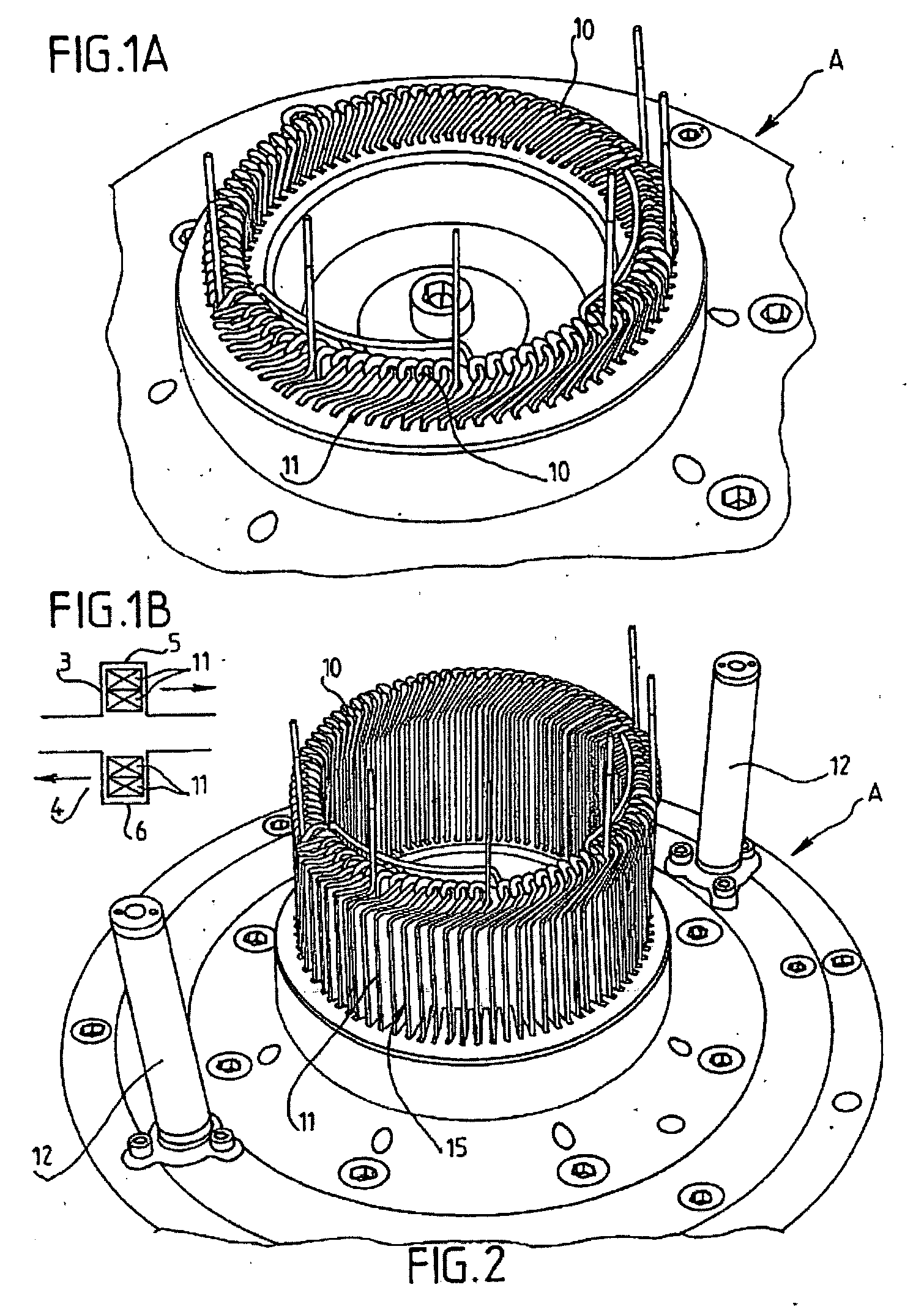
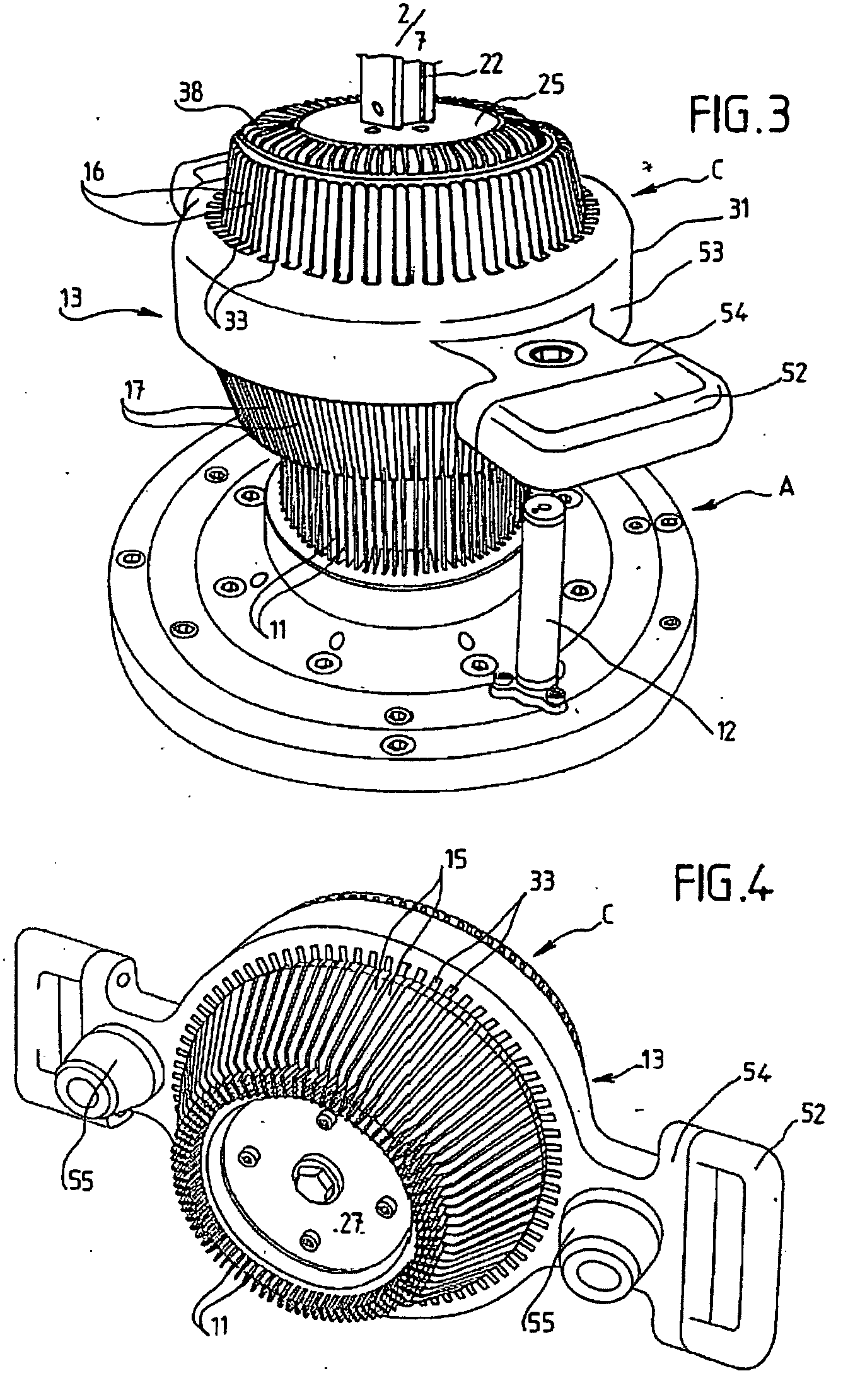
[0041] The system according to the invention contains a first station A in...
PUM
| Property | Measurement | Unit |
|---|---|---|
| electrical | aaaaa | aaaaa |
| axial movement | aaaaa | aaaaa |
| displacement | aaaaa | aaaaa |
Abstract
Description
Claims
Application Information
 Login to View More