Sternal closure device

a closure device and sternal technology, applied in the direction of ligaments, prostheses, osteosynthesis devices, etc., can solve the problems of inability to properly adapt the bracing device to the conditions of a particular patient, excessive time-consuming suturing techniques, and inability to bear localized stresses on the bone material,

US20070038218A1Active Publication Date: 2007-02-15GREVIOUS MARK
10 Cites 193 Cited by

Patent Information

Authority / Receiving Office
US · United States
Patent Type
Applications(United States)
Current Assignee / Owner
Publication Date
2007-02-15

Smart Images

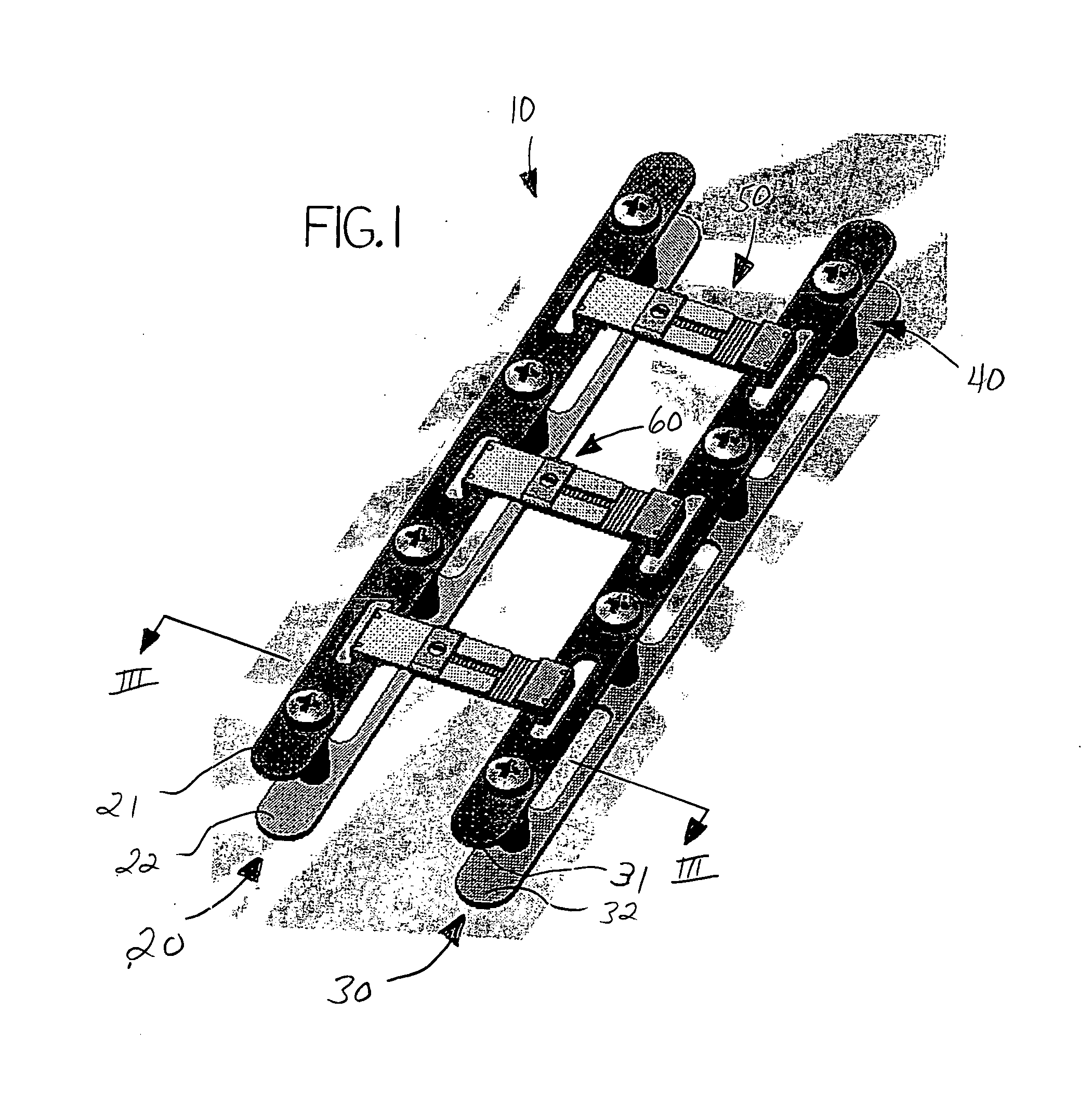
  • Figure 1
    Figure 1
  • Figure 2
    Figure 2
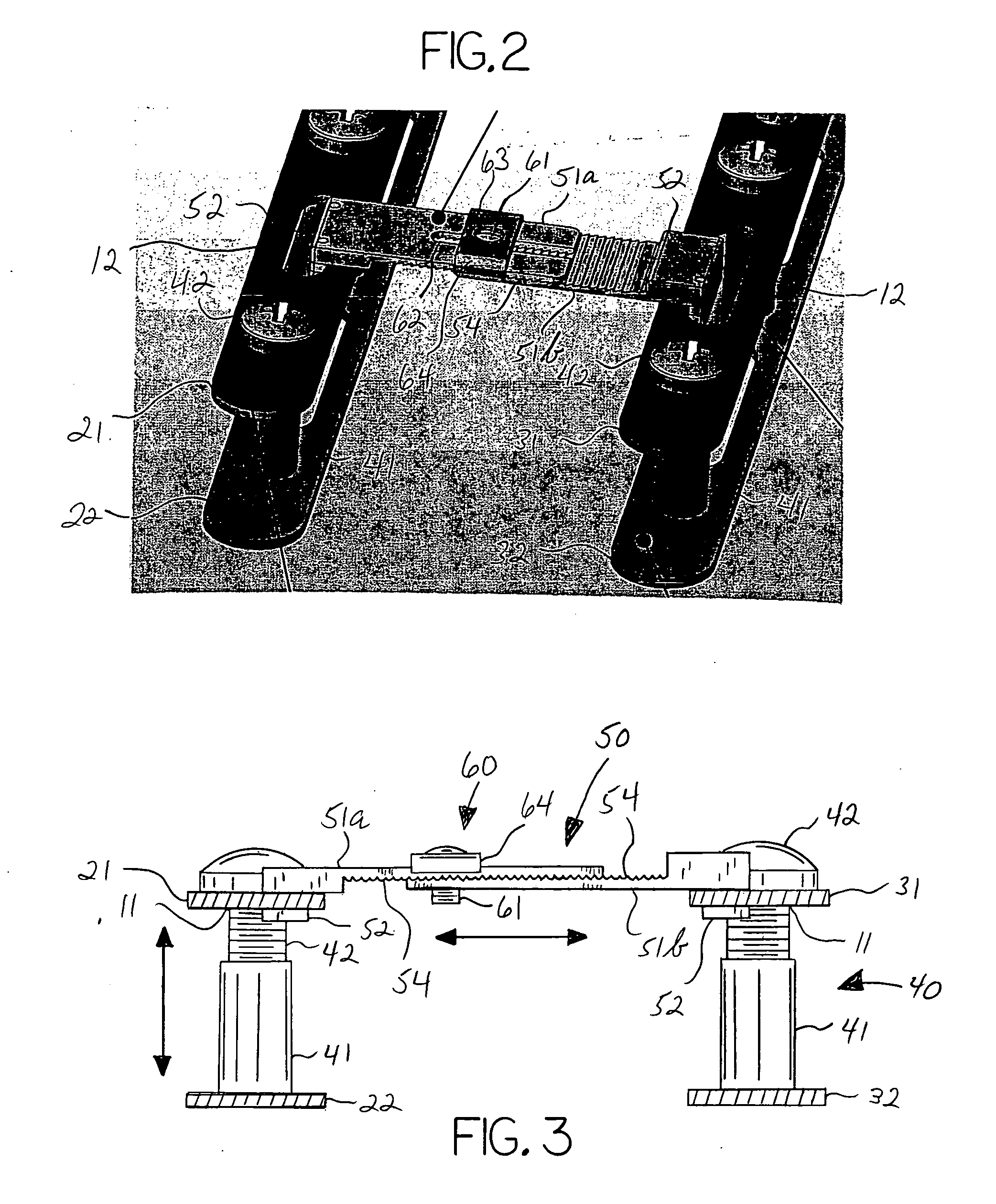
  • Figure 3
    Figure 3
Patent Text Reader

Abstract

A sternal closure device for securing and retaining longitudinally divided halves of a sternum, the device having two sets of anterior and posterior longitudinally extended brace members with brace joining mechanisms extending through the sternal halves to join the anterior brace members to the posterior brace members, such that the sternal halves are compressed between the anterior and posterior brace members, and transverse bridging members that laterally connect the two sets of brace members, with securing mechanisms to retain the two sets of brace members in a contracted configuration with the sternal halves in abutting relation.
Need to check novelty before this filing date? Find Prior Art

Description

[0001] This application claims the benefit of U.S. Provisional Patent Application Ser. No. 60 / 708,085, filed Aug. 12, 2005.BACKGROUND OF THE INVENTION

[0002] This invention generally relates to devices used to rejoin a human sternum that has been longitudinally severed, and more particularly relates to such devices that function in a clamping manner to retain the two severed sternum portions in a closed and abutting relationship post-operatively for an extended period of time such that healing of the sternum may occur.

[0003] It is often necessary in surgical operations to longitudinally sever the patient's sternum so that the ribs may be spread to provide access to internal organs such as the heart. It is then necessary to secure the bisected sternum halves together for post-operative recovery. Various closure techniques are used to accomplish this task. For example, holes may be drilled into the sternum halves and suture material passed through and tightened to cinch the sternum h...

Examples

Embodiment Construction

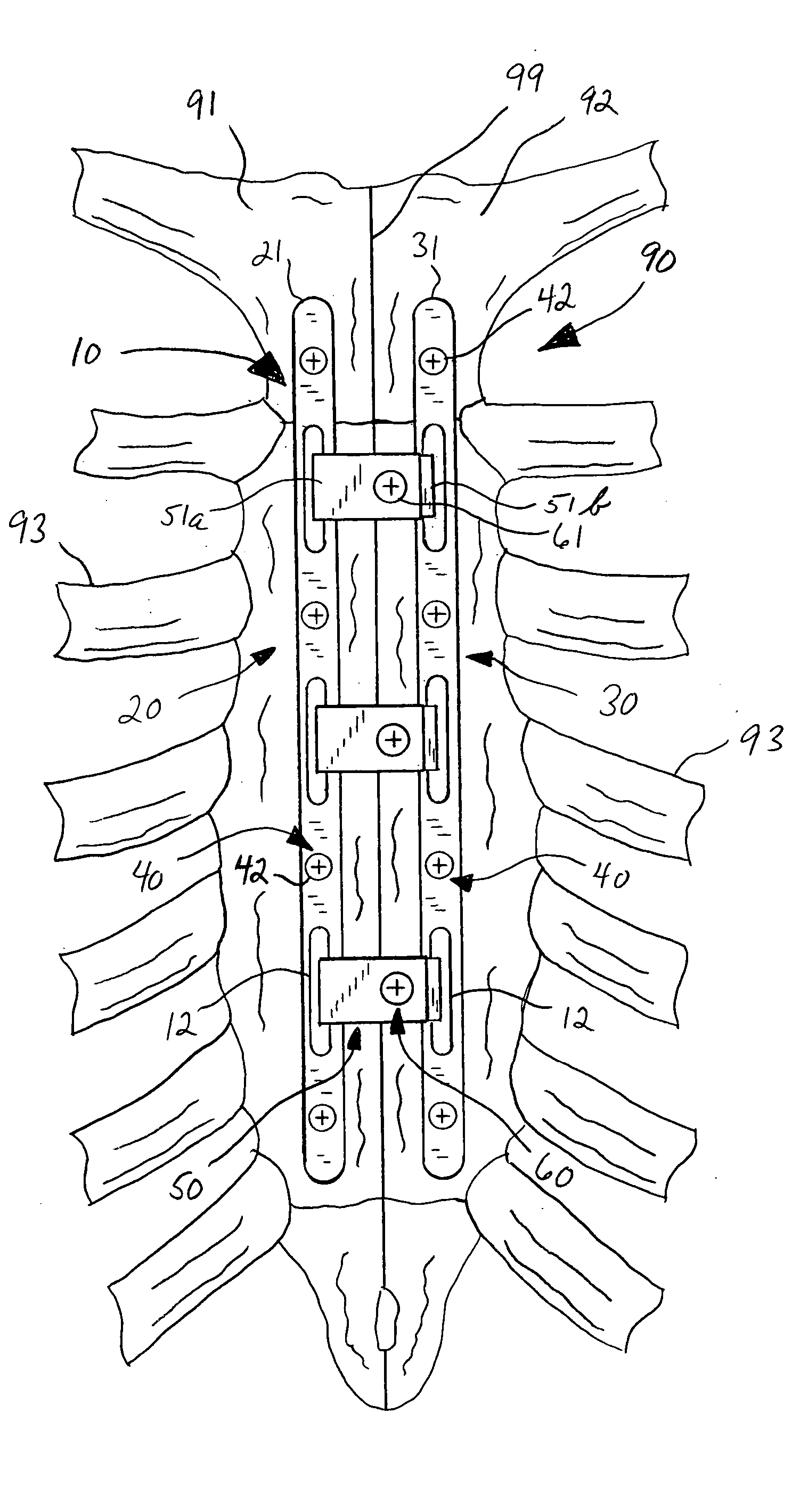
[0021] With reference to the drawings, the invention will now be described in detail with regard for the best mode and the preferred embodiment. The invention is in the most general sense a sternal closure device used to close, secure and support a sternum post-operatively, the sternum having been longitudinally severed or bisected into left and right lateral halves to provide access to the interior of the chest. For ease of reference, the terms left and right as used herein shall mean the directions as seen by an observer facing the sternum of the patient, such that the right brace assembly and the right sternal half are disposed to the patient's sinistral side, while the left brace assembly and the left sternal half are disposed to the patient's dextral side.

[0022] A first embodiment of the invention is illustrated in FIGS. 1 through 6. The sternal closure device 10 comprises two sets of laterally disposed brace assemblies 20 and 30, with left brace assembly 20 comprising a longi...