
Method and assembly for preventing the production of windborne debris
Patent Information
- Authority / Receiving Office
- US · United States
- Current Assignee / Owner
- Publication Date
- 2008-02-07
- Estimated Expiration
- Not applicable · inactive patent
Smart Images
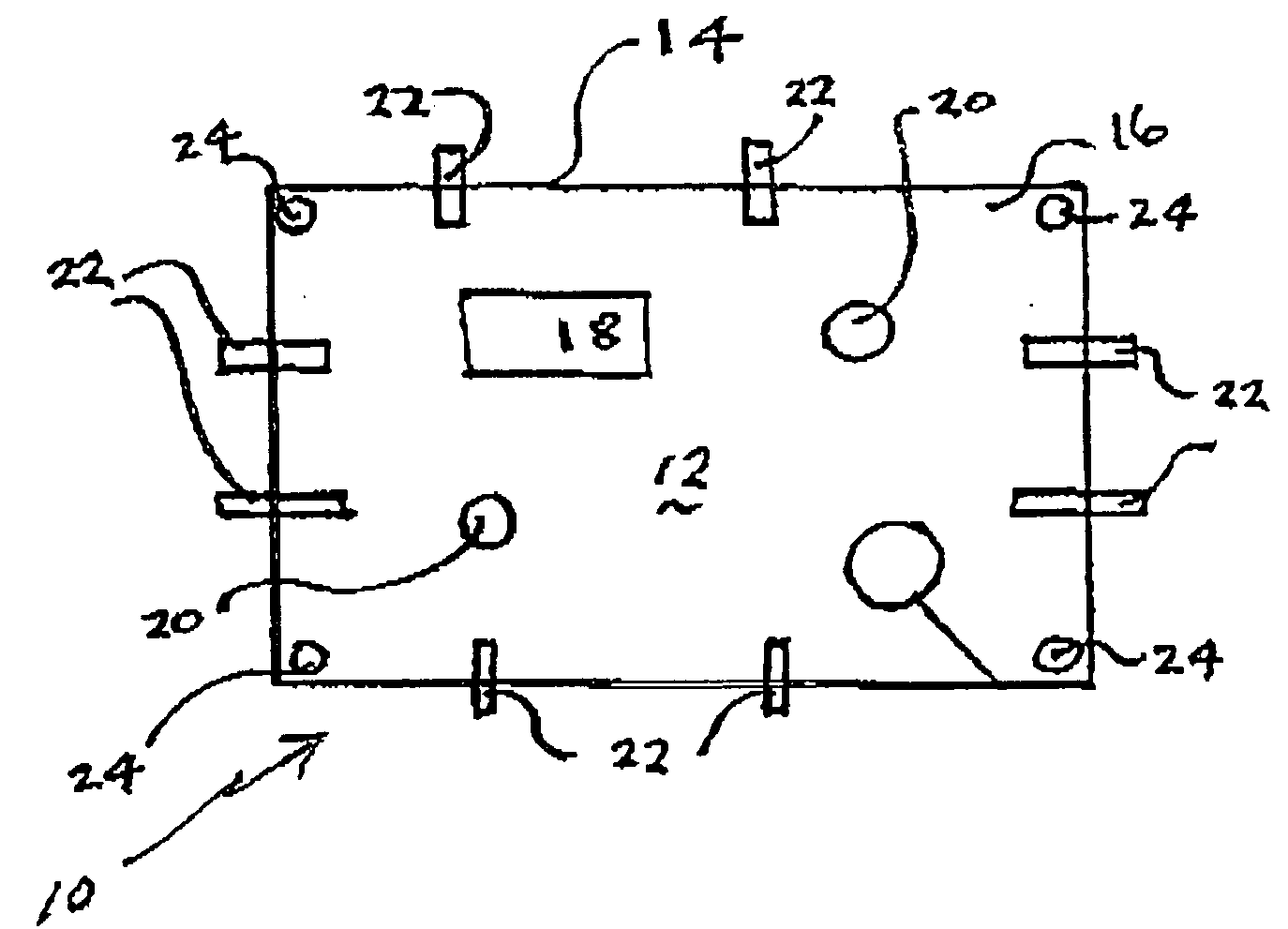
Figure 1 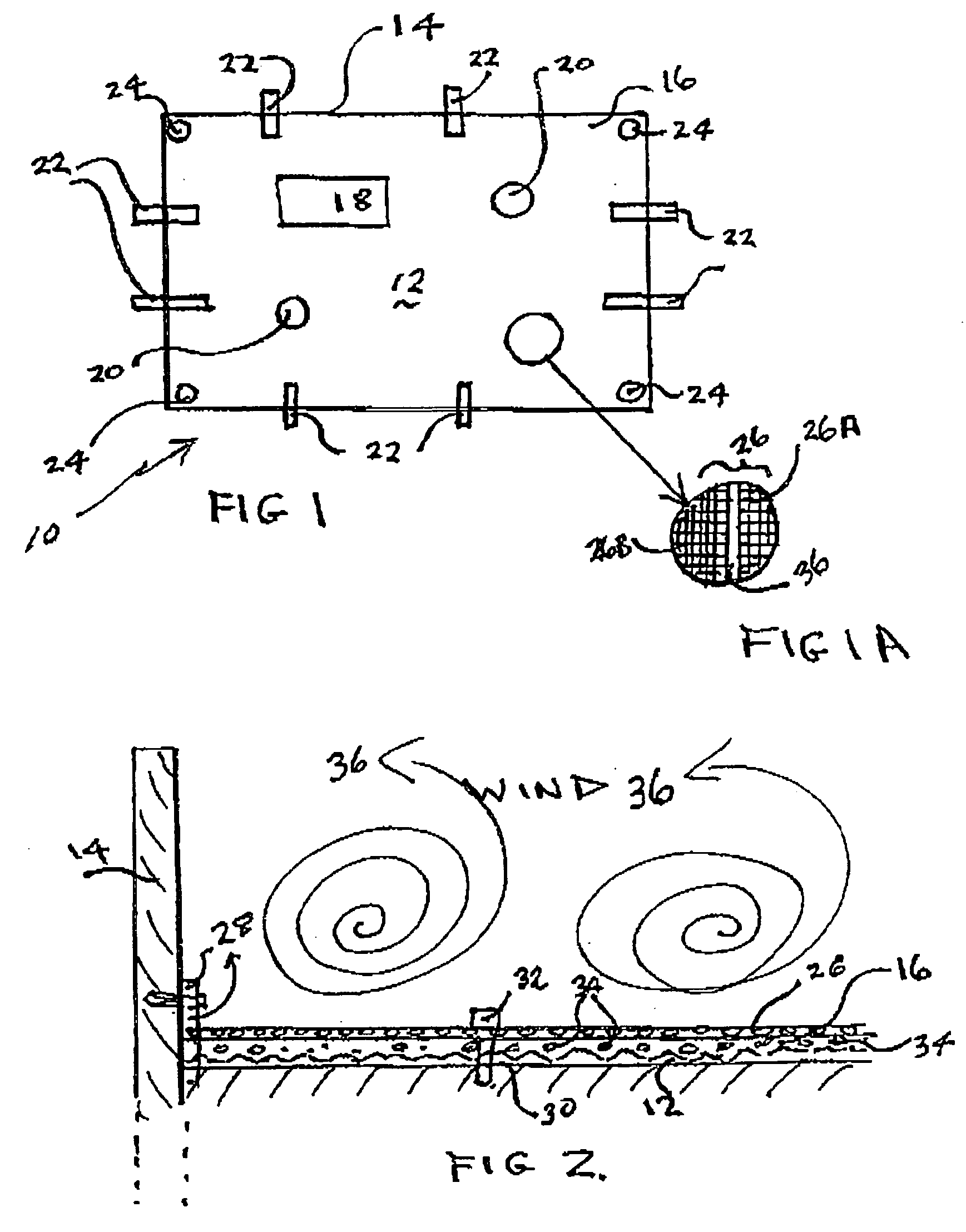
Figure 2
Abstract
Description
FIELD OF THE INVENTION
[0001] This invention relates to a method and assembly for preventing the production of windborne debris from a surface of an object, particularly a roof surface, having roof gravel, under the influence of gale-force winds; and to a method of making said assembly.BACKGROUND TO THE INVENTION
[0002] Reference is made to the seminal article by Minor, Joseph E., Journal of Wind Engineering and Industrial Aerodynamics, 53, (1994), 207-227, entitled “Windborne Debris and the Building Envelope”, for the damaging effects of windborne debris, particularly, roof gravel, in gale-force winds, particularly hurricanes.
[0003] The above reference reported field surveys of typical built-up roofs having conventional “tar and gravel” surfaces that established the average roof gravel size to be 0.6 g., and an average large size to be 5 g.
[0004] While the problem of addressing the damaging effects of flying debris, including roof gravel, on buildings and mobile houses, has been describe...
Examples
Embodiment Construction
[0040]With reference to FIG. 1, this shows, generally, as 10, a BIG-BOX retail store, having a flat roof 12 with a roof periphery 14 and having a “tar and gravel” surface 16. Upon roof 12 is a plurality of typical roof articles, namely, air conditioner unit 18, air vents 20, window cleaning equipment supports 22, and rain water run-off apertures 24 for water down-pipes (not shown).
[0041]With reference also to FIG. 1A and FIG. 2, located between aforesaid roof articles 18, 20, 22 and 24 and roof periphery 14 adjacent and 2-3 cm above surface 16 is a flexible, webbed netting 26, formed of a water resistant braided polyethylene. Netting 26 is attached to roof 12 and roof periphery 14 and by attachment bolts 28 and to a middle portion 30 by screw bolts 32. Netting 26 is at a distance of about 2 cm. above surface 16. Between netting 26 and surface 16 is loose particulate, B3 roof gravel 34, airborne by turbulent wind forces 36.
[0042]FIG. 1A shows netting 26 comprising two smaller portion...