
System for monitoring physiological characteristics
- Summary
- Abstract
- Description
- Claims
- Application Information
AI Technical Summary
Benefits of technology
Problems solved by technology
Method used
Image

Examples
embodiment 200
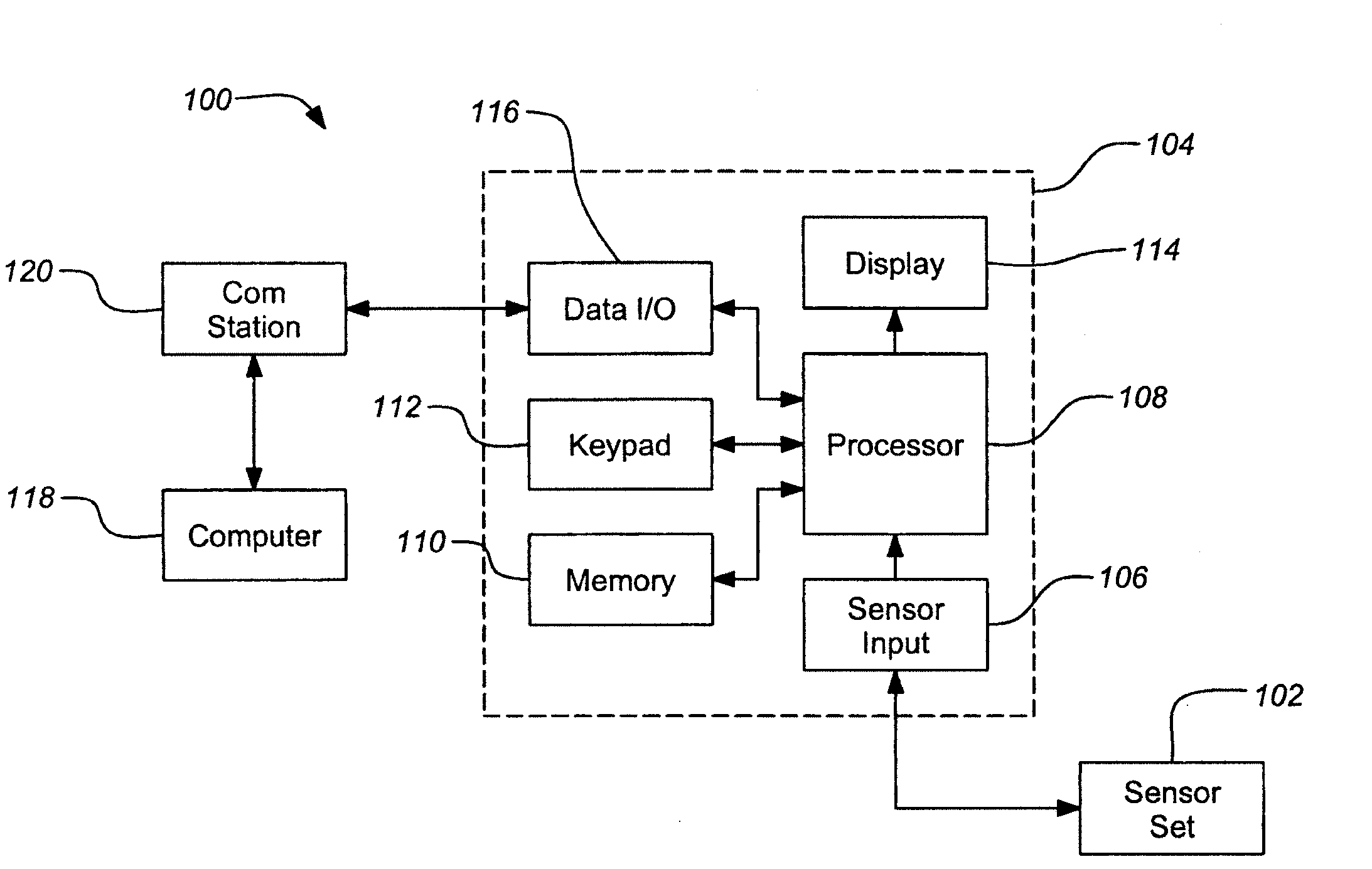
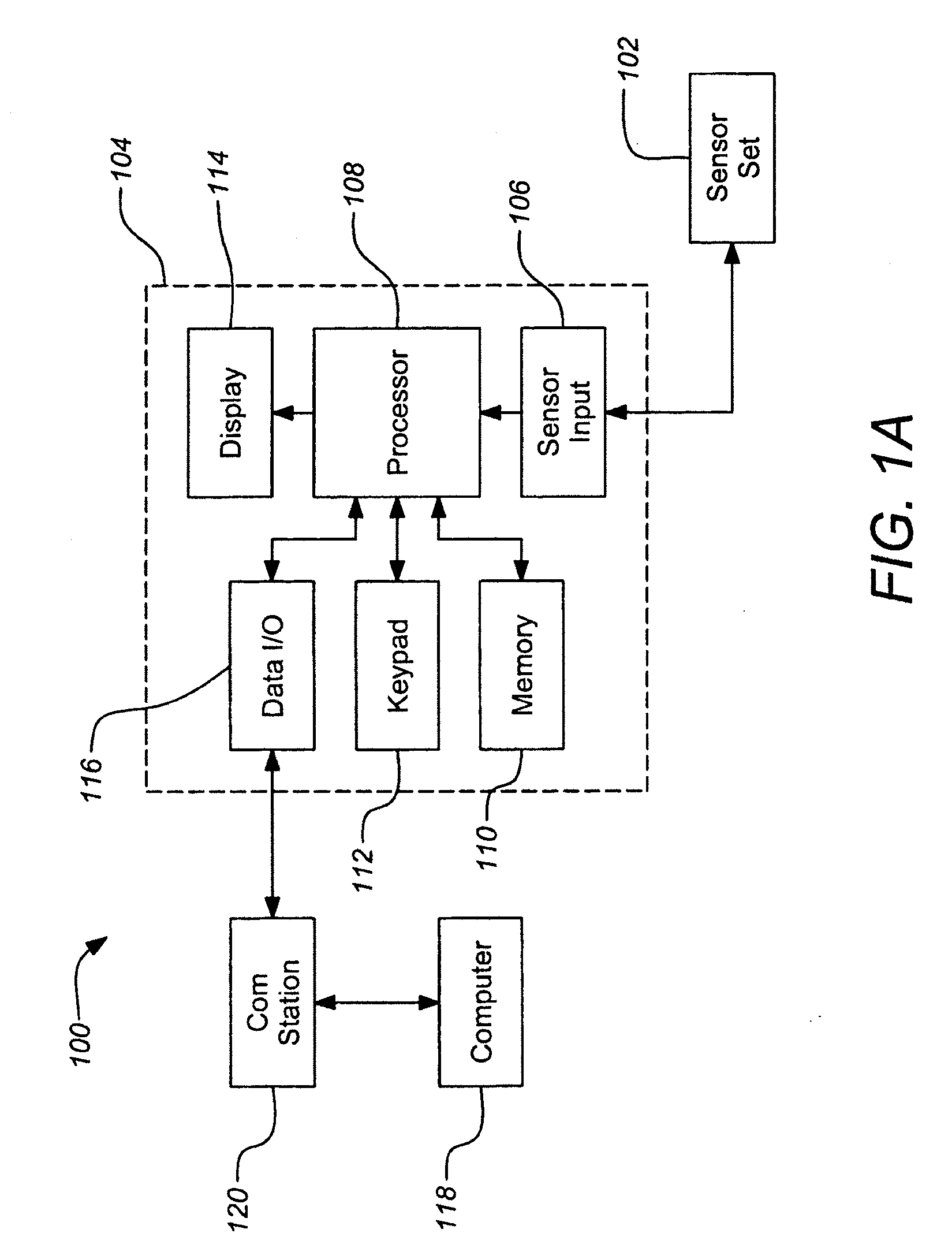
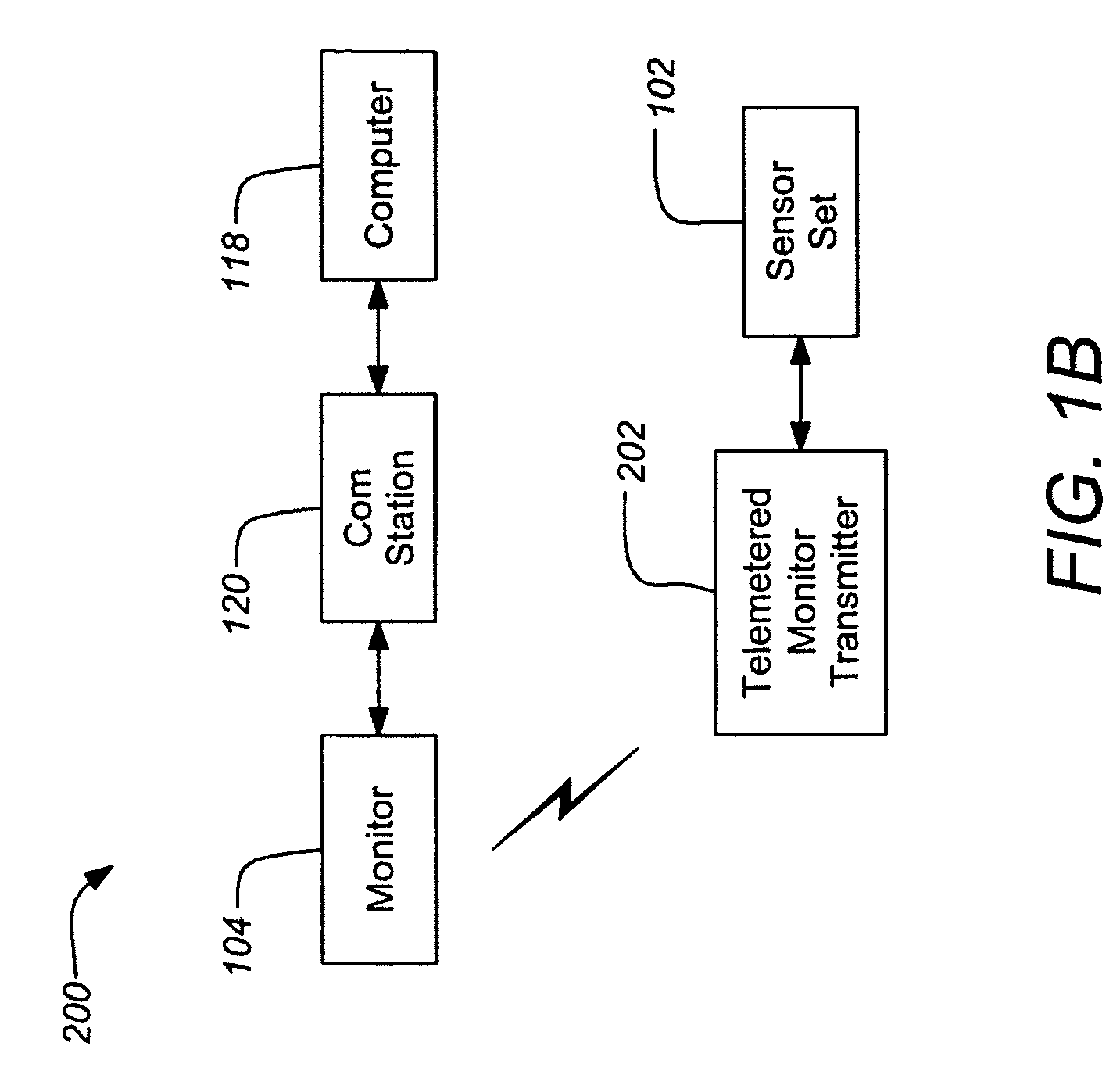
[0069]FIG. 1B is a block diagram of a telemetered characteristic monitoring system embodiment of the invention. In this system embodiment 200, the sensor input 106 of the monitor 104 is a wireless receiver, such as a radio frequency (RF) receiver. The sensor set 102 provides a signal via wired link to a telemetered monitor transmitter 202, where the signal is interpreted and converted to an RF signal. The wireless receiver sensor input 106 of the monitor 104 converts the signal to data understandable to the monitor processor. With some advantages, the telemetered characteristic monitoring system can perform any or all the functions of the characteristic monitoring system of FIG. 1A.
[0070]A characteristic monitoring system 100, in accordance with a preferred embodiment of the present invention, includes a sensor set 102 and characteristic monitor device 104. The sensor set 102 generally utilizes an electrode-type sensor. However, in alternative embodiments, the system can use other t...
second embodiment
[0150]In the second embodiment, the likelihood night disorientation can be reduced by providing an earlier warning to the user regarding a low blood glucose level. In some embodiments, this may be characterized a purpose driven application of the multiple alarm function described above. Different alarm thresholds may be set to be active at different times. For example, a higher low blood glucose alarm threshold is set for sleeping hours than for waking hours. Alternately, the night alarm level (e.g. a higher low blood glucose alarm threshold) can be manually activated upon retiring to sleep and cancelled upon waking as mentioned above. Multiple alarm thresholds (e.g. two levels of low blood glucose alarms) may also be applied within the night mode as well.
[0151]A typical example of this embodiment is a device comprising a sensor input capable of receiving a signal from a sensor, the signal being based on a sensed physiological characteristic value of a user; and a processor coupled ...
PUM
 Login to View More
 Abstract
Description
Claims
Application Information
 Login to View More