
Compositions and methods for diagnosis and treatment for type 2 diabetes
a type 2 diabetes and composition technology, applied in the field of compositions and methods for diagnosis and treatment of type 2 diabetes, can solve the problems of chronic infections, slow wound healing, blurred vision, etc., and achieve the effects of preventing, delay, and reducing the risk of complications
- Summary
- Abstract
- Description
- Claims
- Application Information
AI Technical Summary
Benefits of technology
Problems solved by technology
Method used
Image

Examples
example 1
Biomarker Identification in the Cohen Rat Model of Type 2 Diabetes
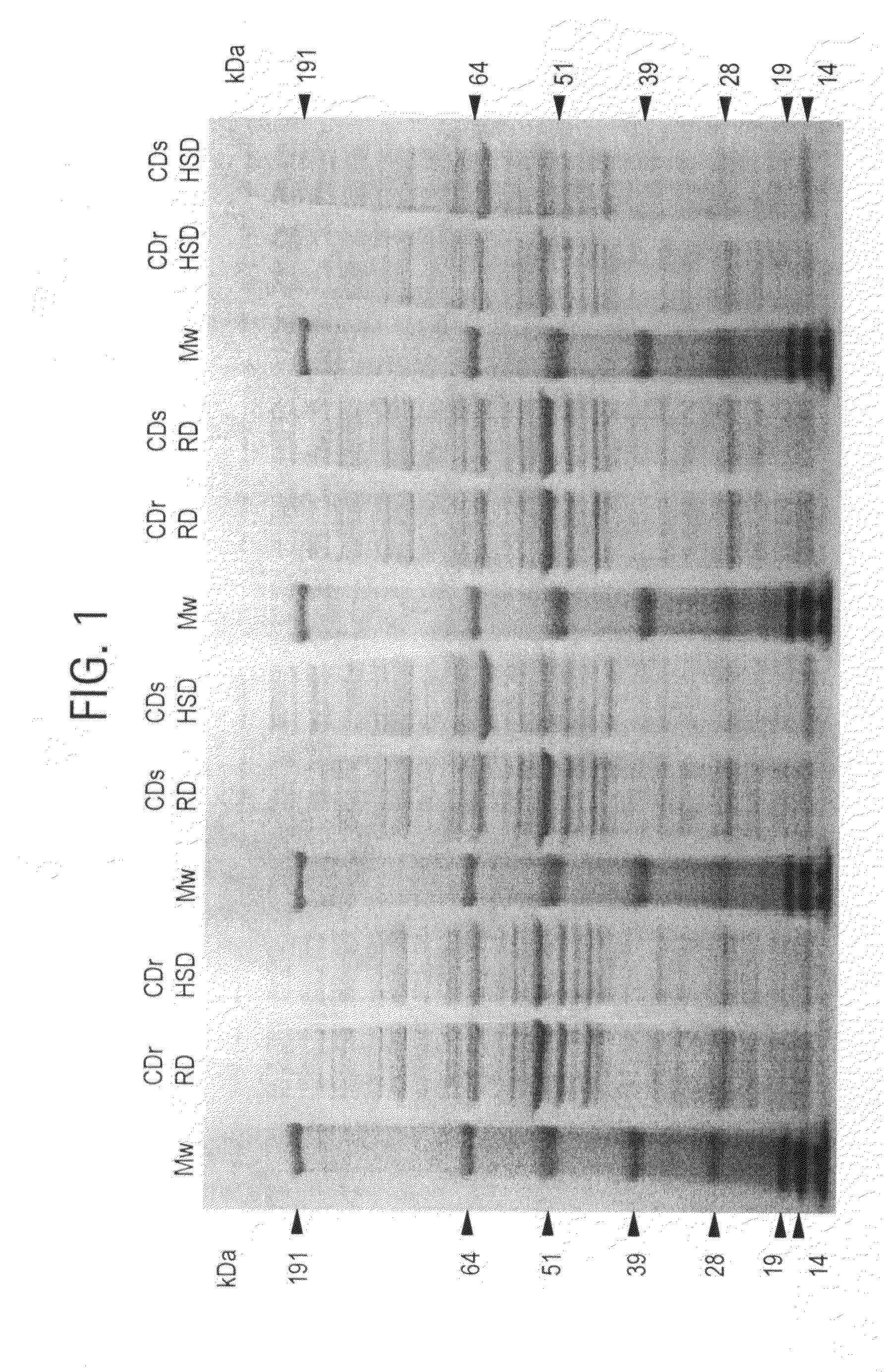
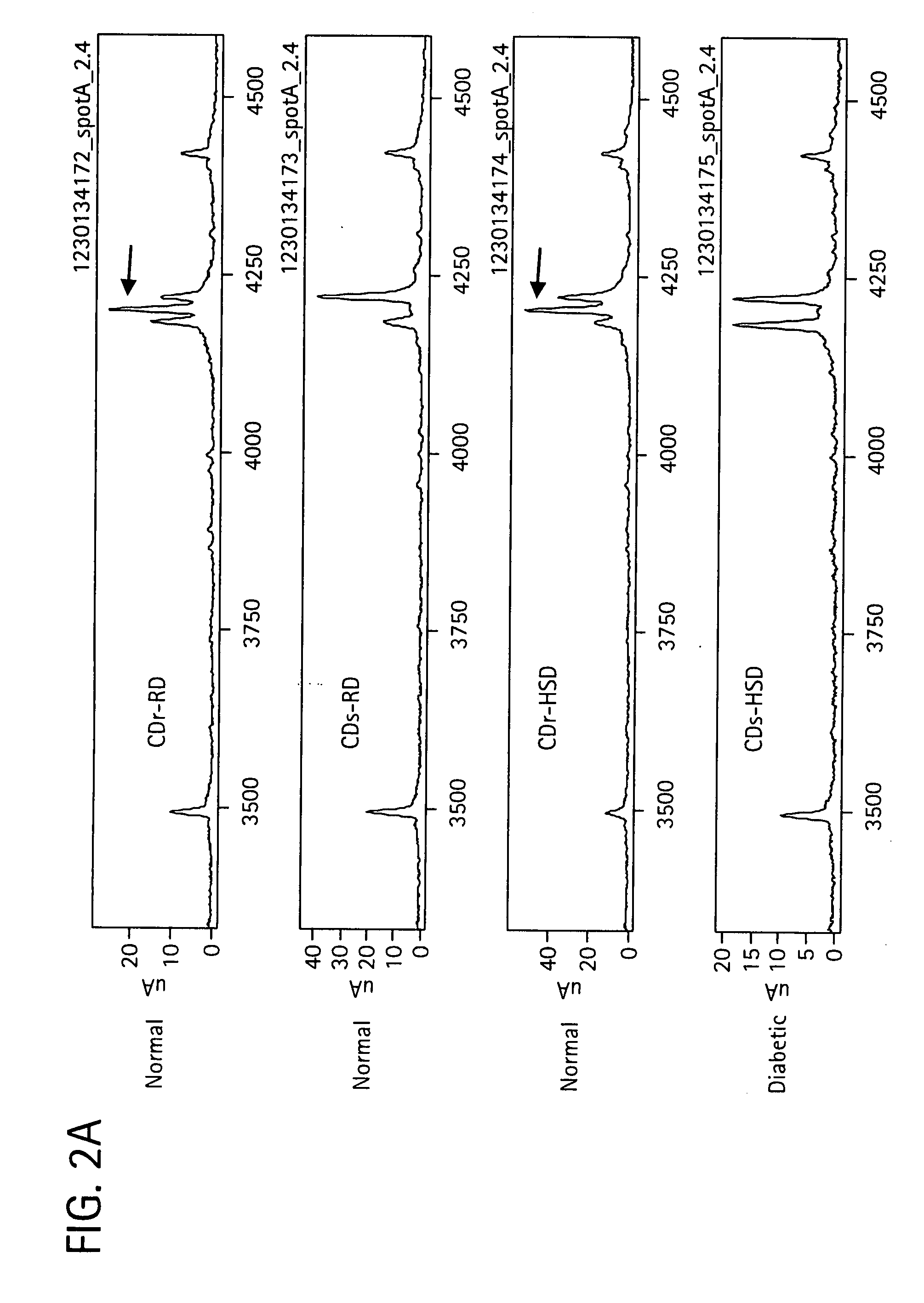
[0251]The Cohen diabetic (CD) rat is a well-known and versatile animal model of Type 2 Diabetes, and is comprised of 2 rodent strains that manifest many of the common features of Type 2 Diabetes (T2D) in humans. The sensitive strain (CDs) develops Diabetes within 30 days when maintained on a high sucrose / copper-poor diet (HSD), whereas the resistant strain (CDr) retains normal blood glucose levels. When maintained indefinitely on regular rodent diet (RD), neither strain develop symptoms of T2D.
[0252]Serum, urine, and tissue samples (including splenic tissue, pancreatic tissue, and liver tissue) were obtained from both CDr and CDs rats that were fed either RD or HSD for 30 days. The samples were flash-frozen and stored at −80° C.
[0253]Whole protein extracts were prepared for each of the 4 experimental conditions, utilizing 10 individual organs per group. Pancreatic tissues were processing using a mech...
example 2
Biomarker Identification in Human Sera
[0273]Analysis of human sera was performed using D3 hyper immune serum (rabbit; FIG. 11). The primary antibody used was rabbit polyclonal antibodies produced following immunization with D3 peptide. A protein with molecular weight of 20 kD (between the 14 kD and 28 kD markers) is expressed in human serum at a higher intensity in the normal individual as compared with Type 2 diabetic patient. A pair of proteins with MW of 60-80 kD appear to be present in both (normal and diabetic) samples. Interestingly, the intensity of the proteins in the doublet seemed to be inverted; an observation that was made using monoclonal antibodies derived from a subtractive immunization with CDr-HSD and CDs-HSD pancreas. FIGS. 12A and 12B show preparative gels containing 100 μg of CDr-HSD or CDs-HSD pancreatic extracts. The positive control was stained with 20 μg of anti-actin antibodies, and subclone lanes were stained with 600 μl of conditioned culture supernatant (...
example 3
Bi-Directional Immunological Contrasting and Generation of Monoclonal Antibodies
[0277]From the pancreatic extract protein profiles obtained by SDS-PAGE, obvious differences in the banding patterns were noted between CDr-HSD and CDs-HSD samples (FIG. 1). Bi-directional immunological contrast was performed between these two samples. This technique involves injecting two pancreatic extracts from the Cohen diabetic rats to be contrasted separately into the footpads of an experimental animal (e.g. a Balb / c mouse). Following uptake and processing of the antigen at the site of injection by antigen presenting cells (APCs), the activated APCs migrate to the local lymph nodes (popliteal) to initiate an immune response. As these lymph nodes are located in each leg, they are anatomically separated from each other, which prevents mixing of antigen-specific lymphocytes at this point. Later in the immune response, these activated lymphocytes migrate from the local lymph nodes to the spleen where t...
PUM
| Property | Measurement | Unit |
|---|---|---|
| concentration | aaaaa | aaaaa |
| concentration | aaaaa | aaaaa |
| concentration | aaaaa | aaaaa |
Abstract
Description
Claims
Application Information
 Login to View More