
Remote authentication and transaction signatures
- Summary
- Abstract
- Description
- Claims
- Application Information
AI Technical Summary
Benefits of technology
Problems solved by technology
Method used
Image

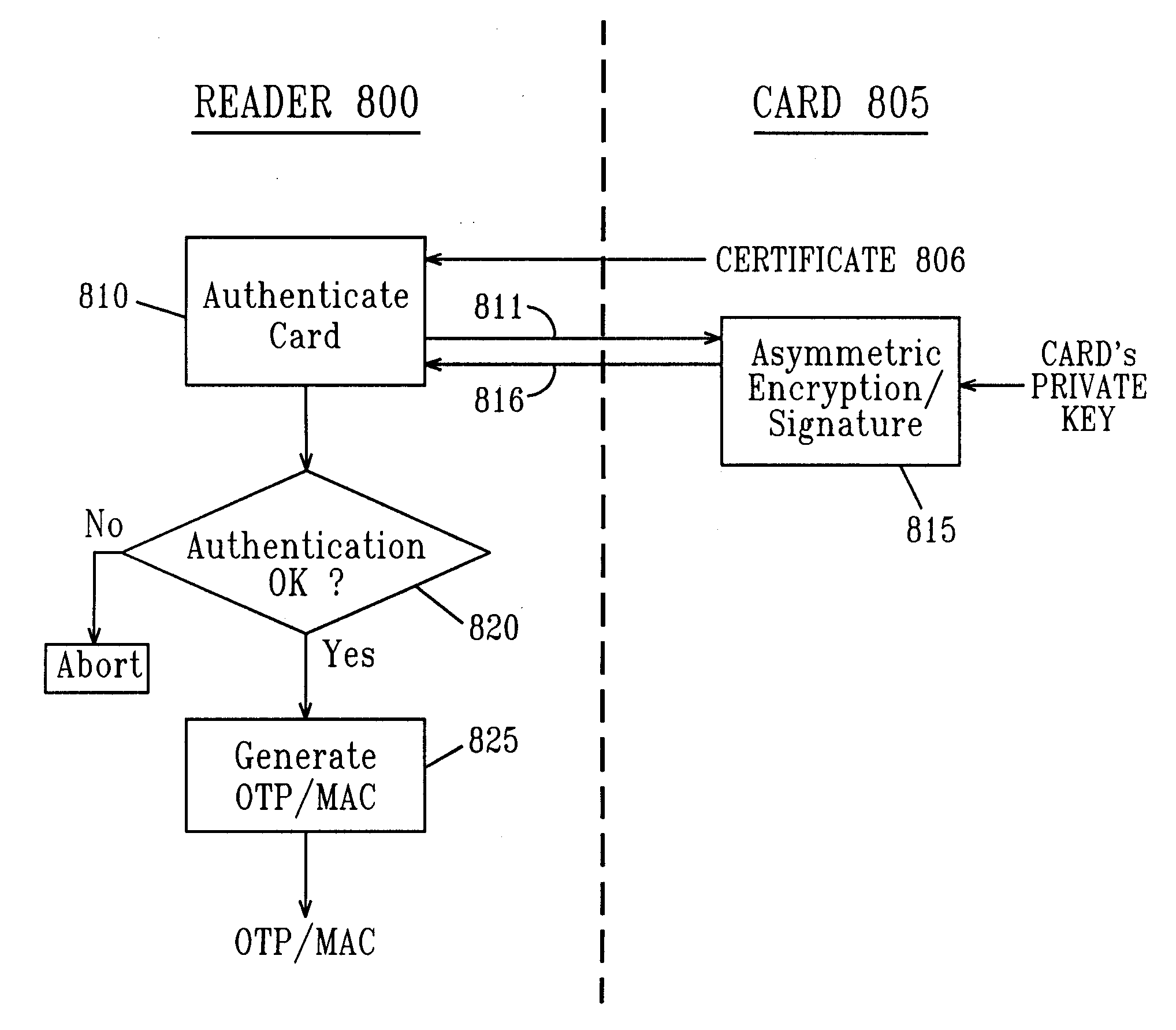
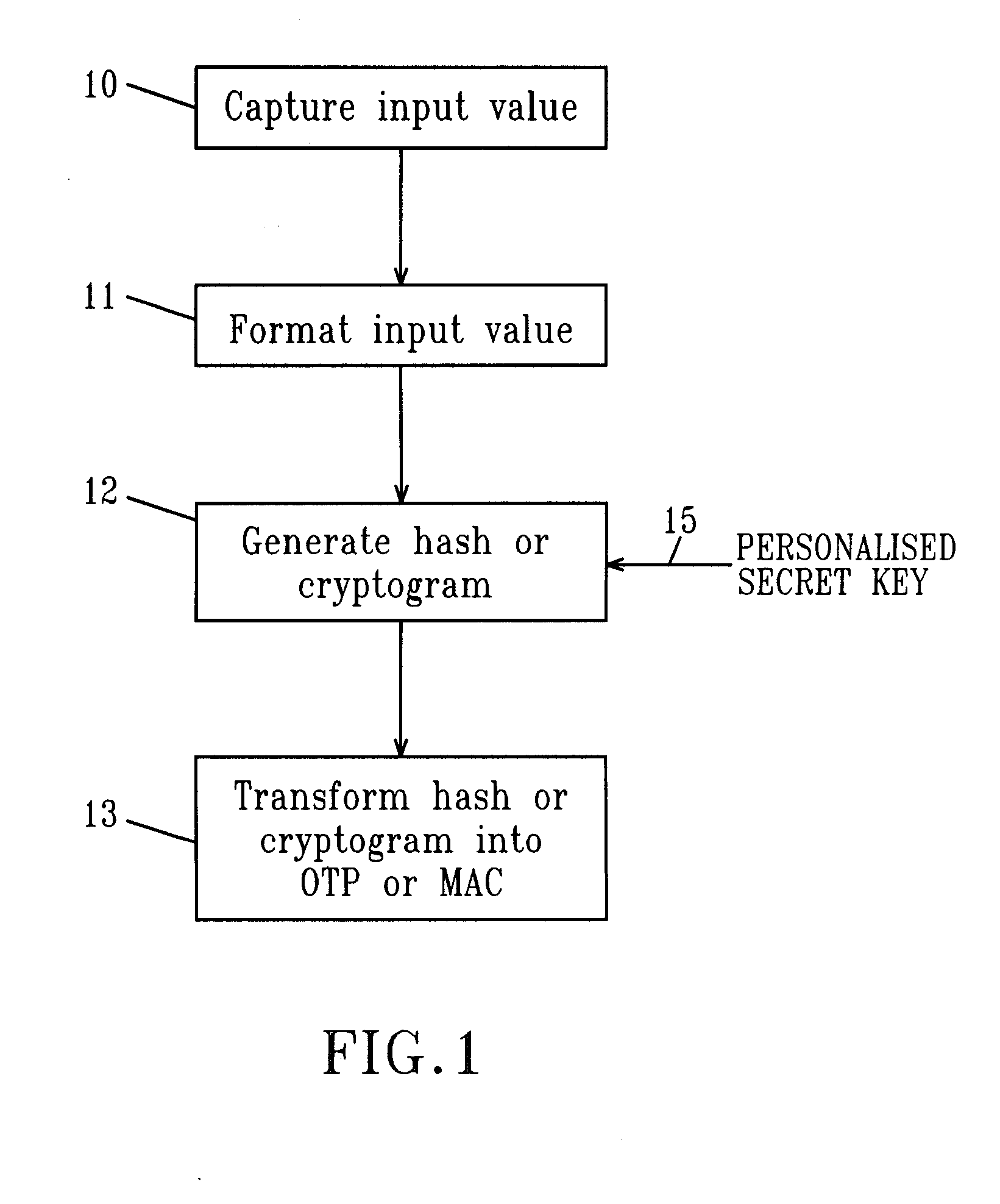
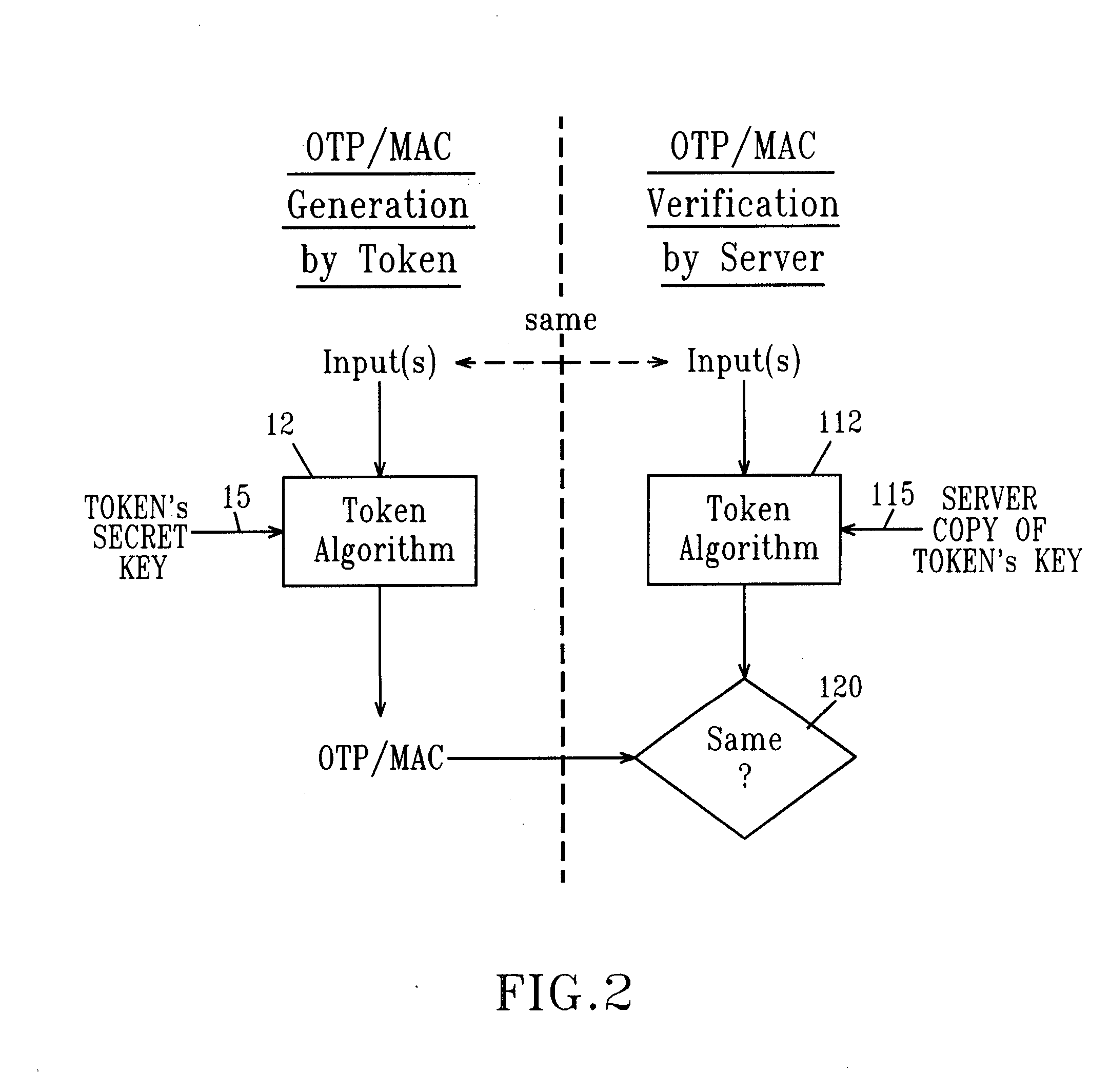
Examples
Embodiment Construction
[0129]Important components of embodiments of the invention are illustrated in FIG. 12 as including a smart card reader 20 (or simply reader) and an authentication server 30 (or simply server).
[0130]At a minimum the reader 20 includes an interface 28 to accept a smart card and a power supply 27. Some readers also include one or more user operable buttons or keys; this is represented in FIG. 12 by the keyboard 25. As used herein a user inserts a smart card into the smart card interface 28. As a consequence of some operation carried out by the reader 20, information is generated by the reader. That information may be a One-Time Password (OTP). If transaction data is input to the reader the information which is generated may include a signature such as a MAC. The output information may be presented on a display, such as the display 26. Alternatively the reader may be digitally connected to a network. In that event the information may be presented to another entity also connected to the ...
PUM
 Login to View More
 Abstract
Description
Claims
Application Information
 Login to View More