
Sheet material tensioning apparatus
a technology of tensioning apparatus and sheet material, which is applied in the direction of door/window protective device, instruments, transportation and packaging, etc., can solve the problems of material weakness, expensive repair work, deformation and weakness, etc., and achieve the effect of expanding the closed position
- Summary
- Abstract
- Description
- Claims
- Application Information
AI Technical Summary
Benefits of technology
Problems solved by technology
Method used
Image

Examples
Embodiment Construction
[0023]The beneficial features of the present invention will be illustrated by way of a canvas stretcher frame, often referred to in the field of artistic painting as a “stretcher bar”. It is to be understood that the present invention is not limited to such specific application and that numerous implementations of the present invention may be realized. The stretcher bar, however, presents an apposite example for enabling a skilled artisan to practice the inventive concept.
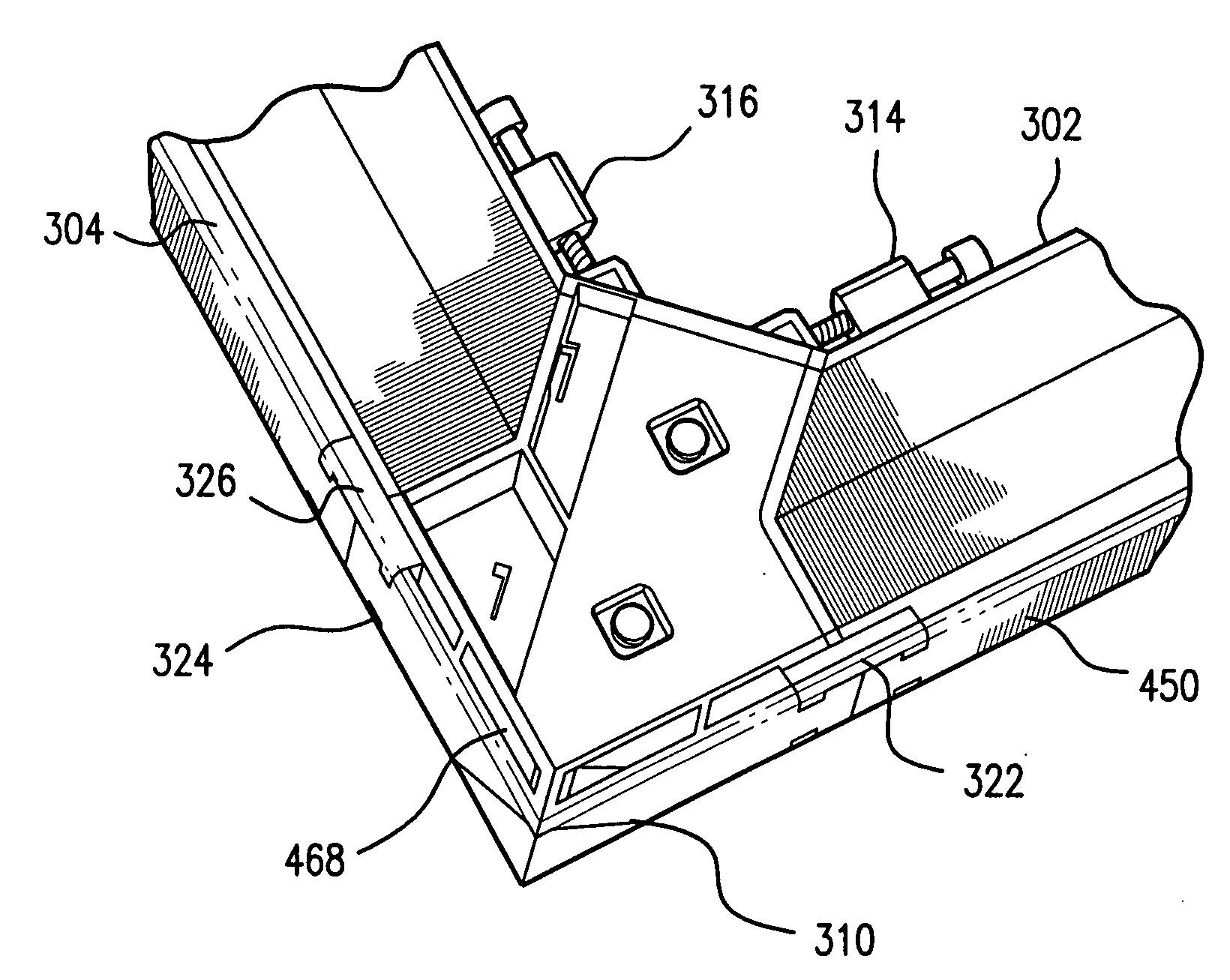
[0024]Referring now to FIG. 3, there is shown a rear view of the exemplary stretcher bar assembly 300 in its fully assembled form. The stretcher bar 300 may be used to apply tension to a canvas in preparation for applying paint thereto. As used herein, the term “canvas” will refer to any kind of fabric, but is typically, when used as a painting substrate, either “cotton duck” or “linen”. The two fabrics are made of different kinds of plant fibers; duck, the most commonly used and least expensive type of canvas, is ...
PUM
| Property | Measurement | Unit |
|---|---|---|
| force | aaaaa | aaaaa |
| tensioning force | aaaaa | aaaaa |
| width | aaaaa | aaaaa |
Abstract
Description
Claims
Application Information
 Login to View More