Intraoral cpap interface

US20100024817A1Inactive Publication Date: 2010-02-04DISCOVER MEDICAL DEVICES
10 Cites 1 Cited by

Patent Information

Authority / Receiving Office
US · United States
Current Assignee / Owner
Publication Date
2010-02-04
Estimated Expiration
Not applicable · inactive patent

Smart Images

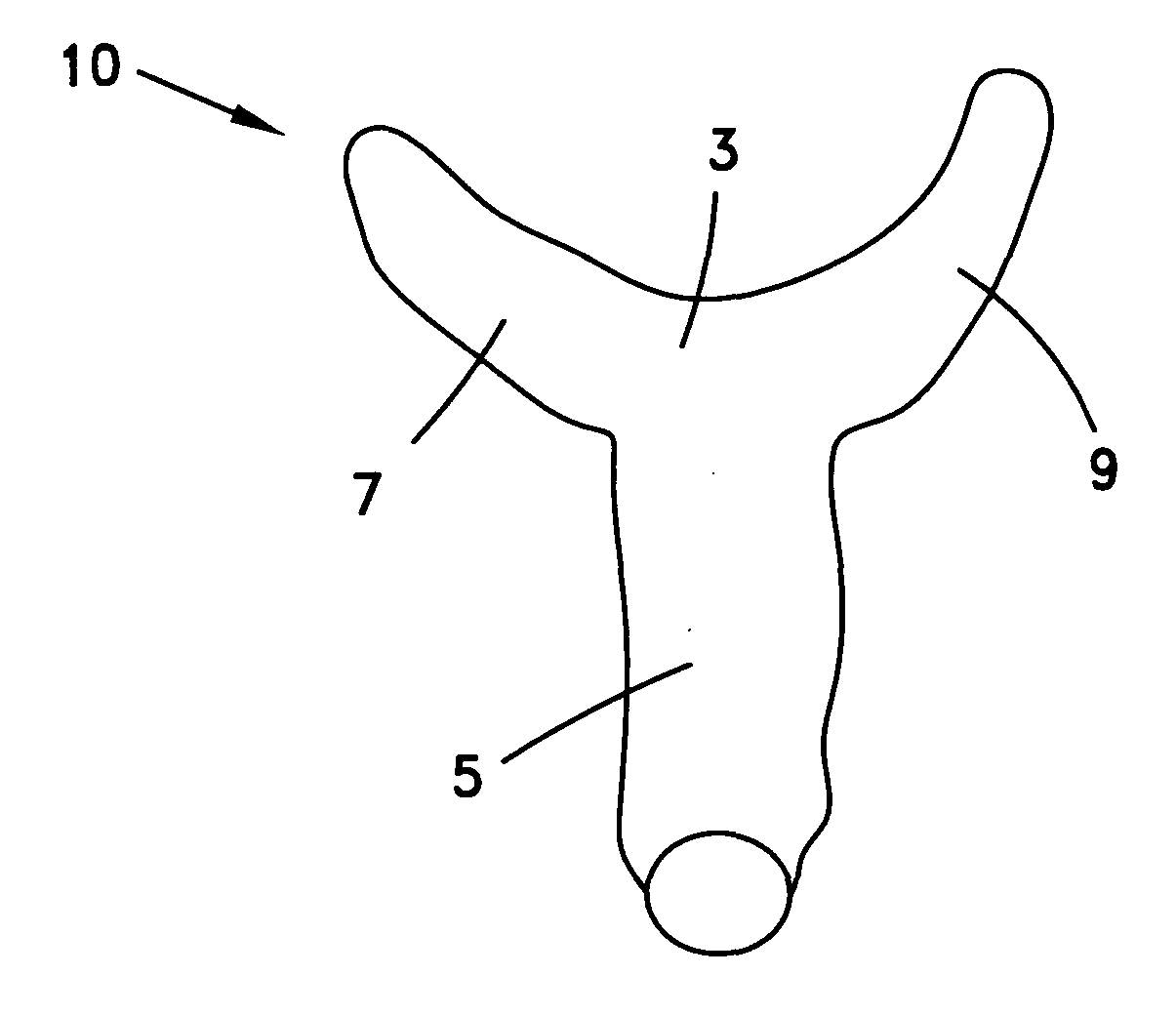
  • Figure 1
    Figure 1
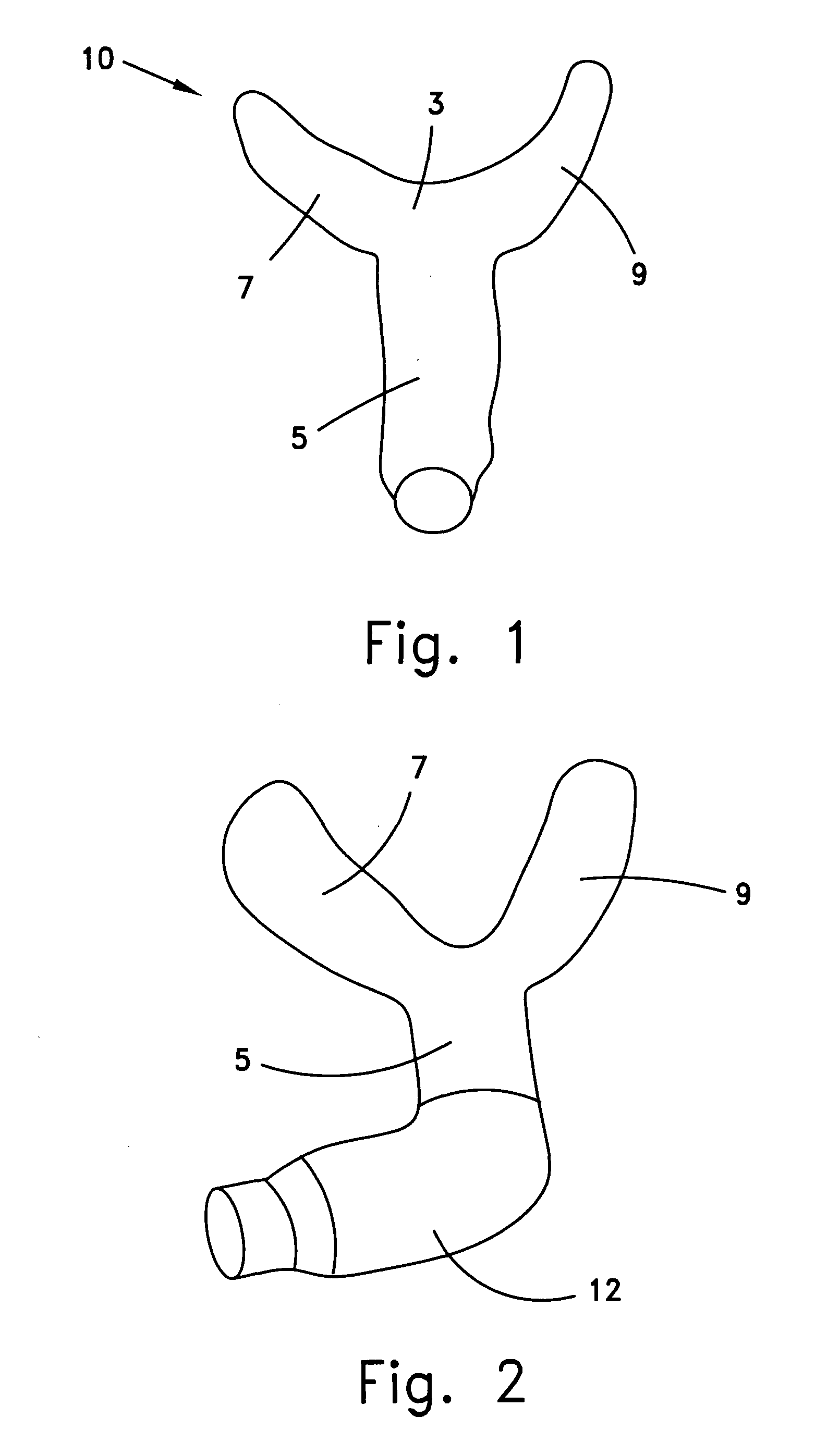
  • Figure 2
    Figure 2
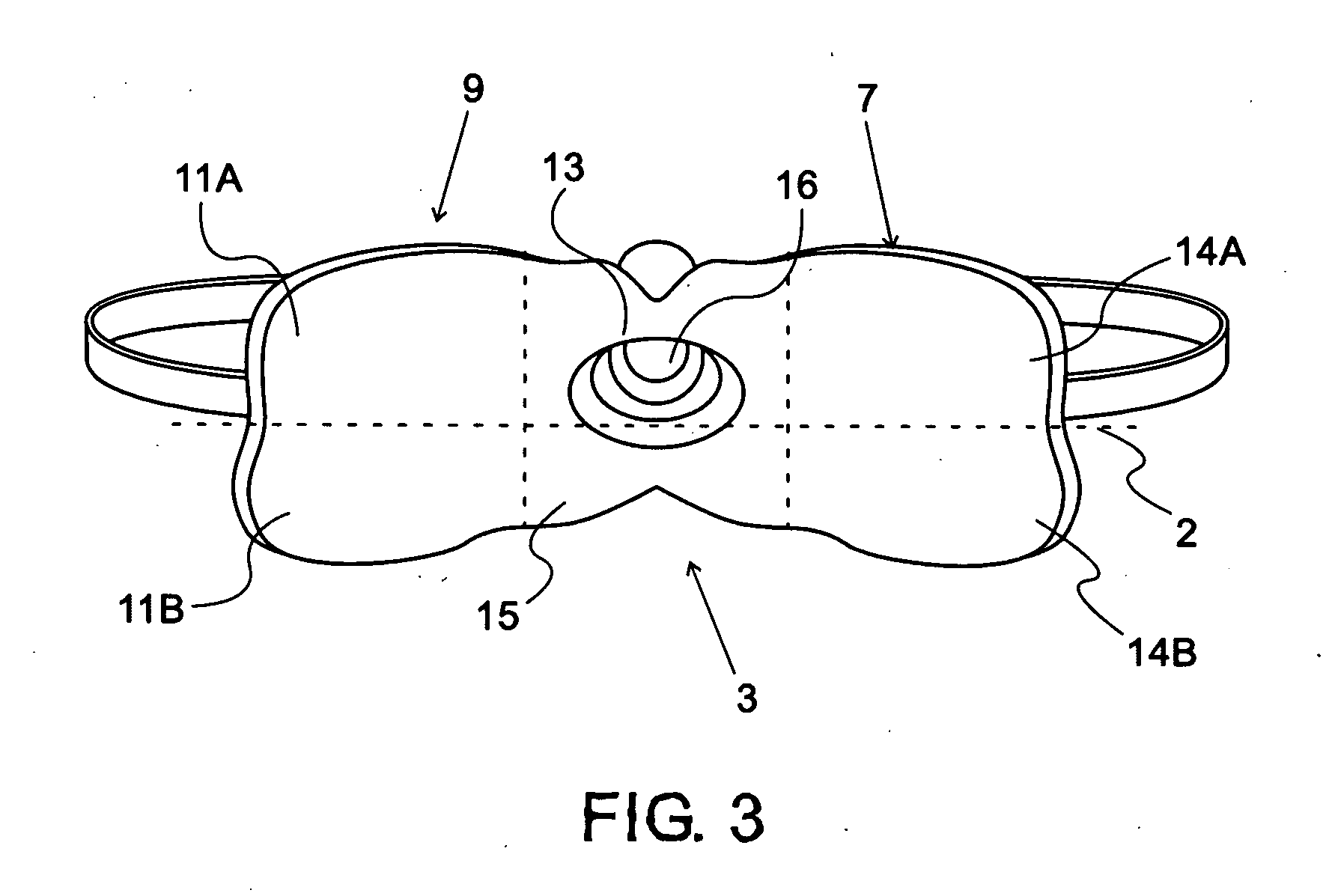
  • Figure 3
    Figure 3
Patent Text Reader

Abstract

An intraoral continuous positive airway pressure (CPAP) interface that comprises a tube connected to a source of positive air pressure, and a shield connected to, or integrally formed with, the tube and adapted to be inserted within buccal sulci in such a way that facilitates oral cavity sealing. The shield has a central part formed with an aperture in communication with the tube, and right and left longitudinally extending projections adjoining, and of substantial bilateral symmetry with respect to the central part. Each of the projections has adjoining upper and lower regions and each of the regions has adjoining proximal and distal portions, Each of the projections is dimensioned such that a distal portion has a thickness substantially equal to, or greater than, a buccal sulcus potential space gap, and is configured, when inserted within a buccal sulcus, in such a way so as to adhere to the oral mucosa, to occupy the entire volume of buccal sulcus potential space, and to seal the oral cavity.
Need to check novelty before this filing date? Find Prior Art

Description

FIELD OF THE INVENTION

[0001] The present invention relates to apparatus for alleviating sleep apnea. More particularly, the invention relates to an intraoral interface through which continuous positive air pressure, or any other suitable gas, is applied to a patient.BACKGROUND OF THE INVENTION

[0002] Obstructive sleep apnea (OSA) syndrome is a disorder characterized by repetitive episodes of upper airway obstruction that occur during sleep. Breathing disorders during sleep are considered as a public health problem, detracting from the quality of life due to reduced alertness and negatively influencing the cardiovascular system, resulting in increased morbidity and mortality. As positive pressure is applied in the upper airway by means of continuous positive air pressure (CPAP) devices, the airway remains unobstructed, thereby preventing apnea hypoxia and sleep disturbance.

[0003] Nasal CPAP treatments, by which a mask in communication with a source of air is fitted over the nose of a pat...

Examples

Embodiment Construction

[0037]The present invention is a novel intraoral continuous positive airway pressure (CPAP) interface, which is placed in the buccal sulcus, between the inner aspect of the cheeks and lips and the buccal aspect of the gums. While prior art CPAP devices are uncomfortable to the patient, particularly due to the pressure applied to various bodily parts, such as the lips, facial skin, and teeth, thereby reducing patient compliance, the interface of the present invention does not cause any significant discomfiture to the patient; it is configured in complementary fashion to the interspace of the buccal sulcus and therefore does not apply any significant pressure to the gums, lips or teeth. The interface is also configured such that, after being inserted within the buccal sulcus, it advantageously does not intrude between the teeth and between the upper and lower tooth arches, and does not contact portions of the tongue or of the oral cavity which are lingually disposed with respect to th...