
RFID reader and signal receiving method thereof
- Summary
- Abstract
- Description
- Claims
- Application Information
AI Technical Summary
Benefits of technology
Problems solved by technology
Method used
Image

Examples
Embodiment Construction
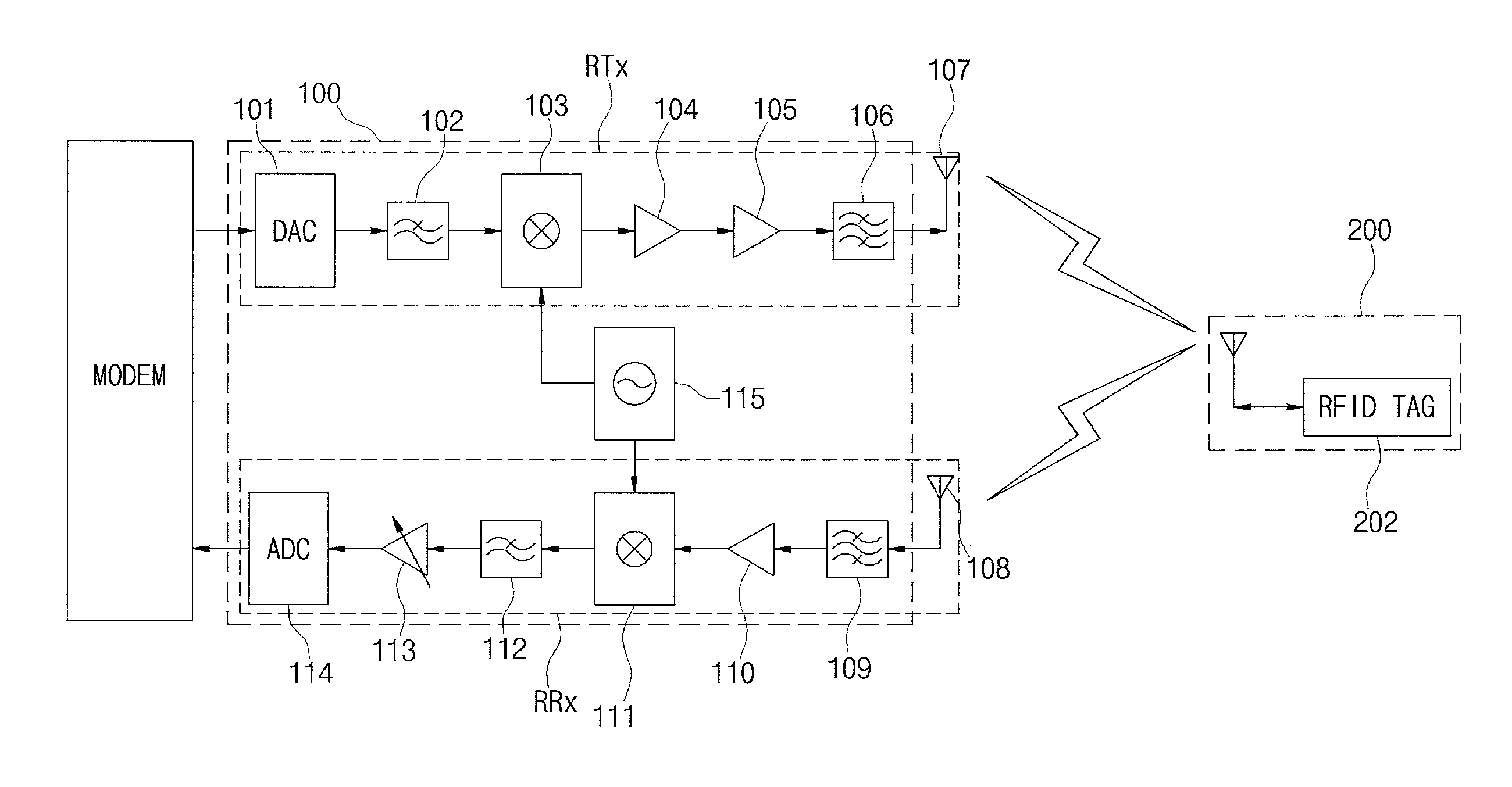
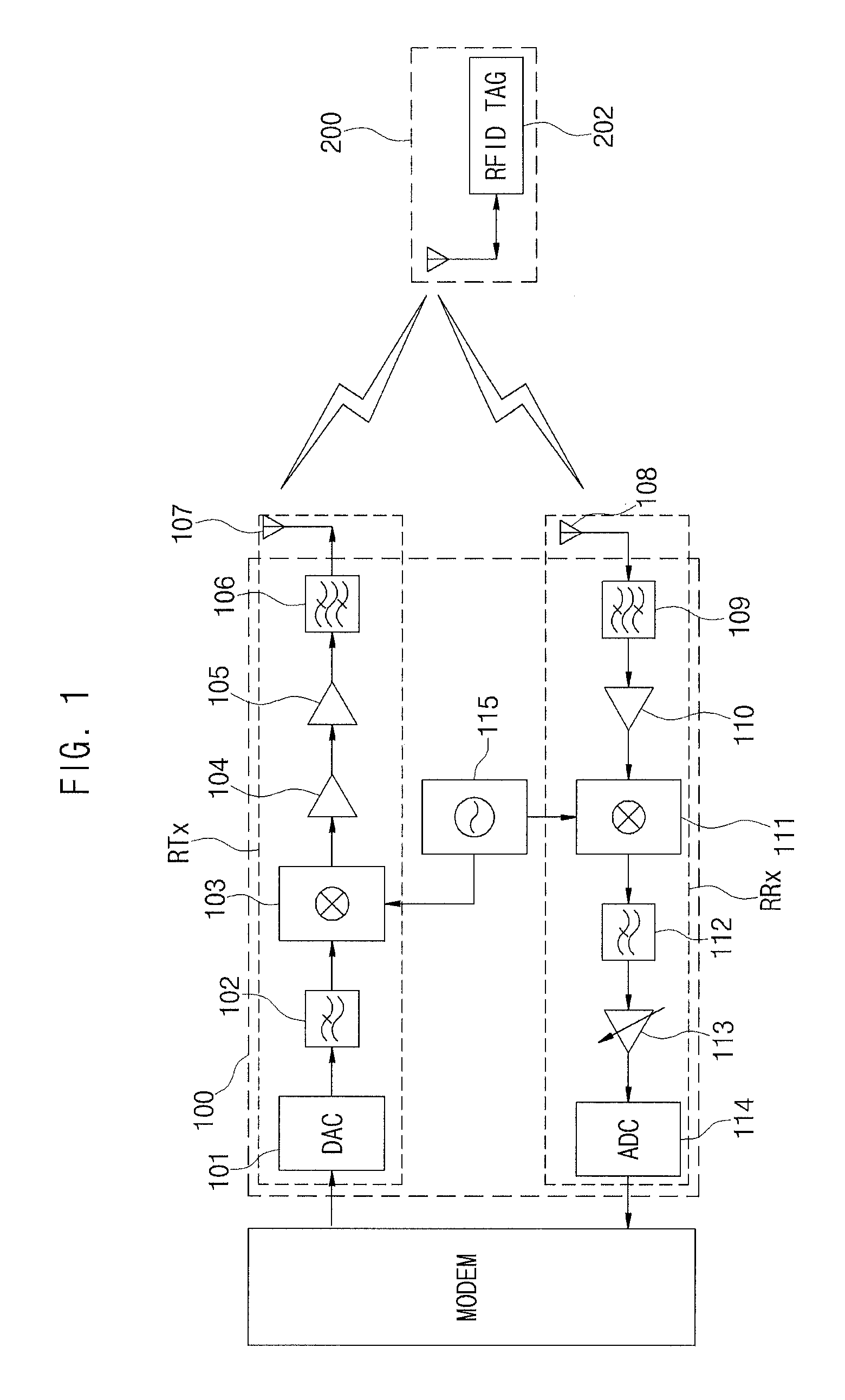
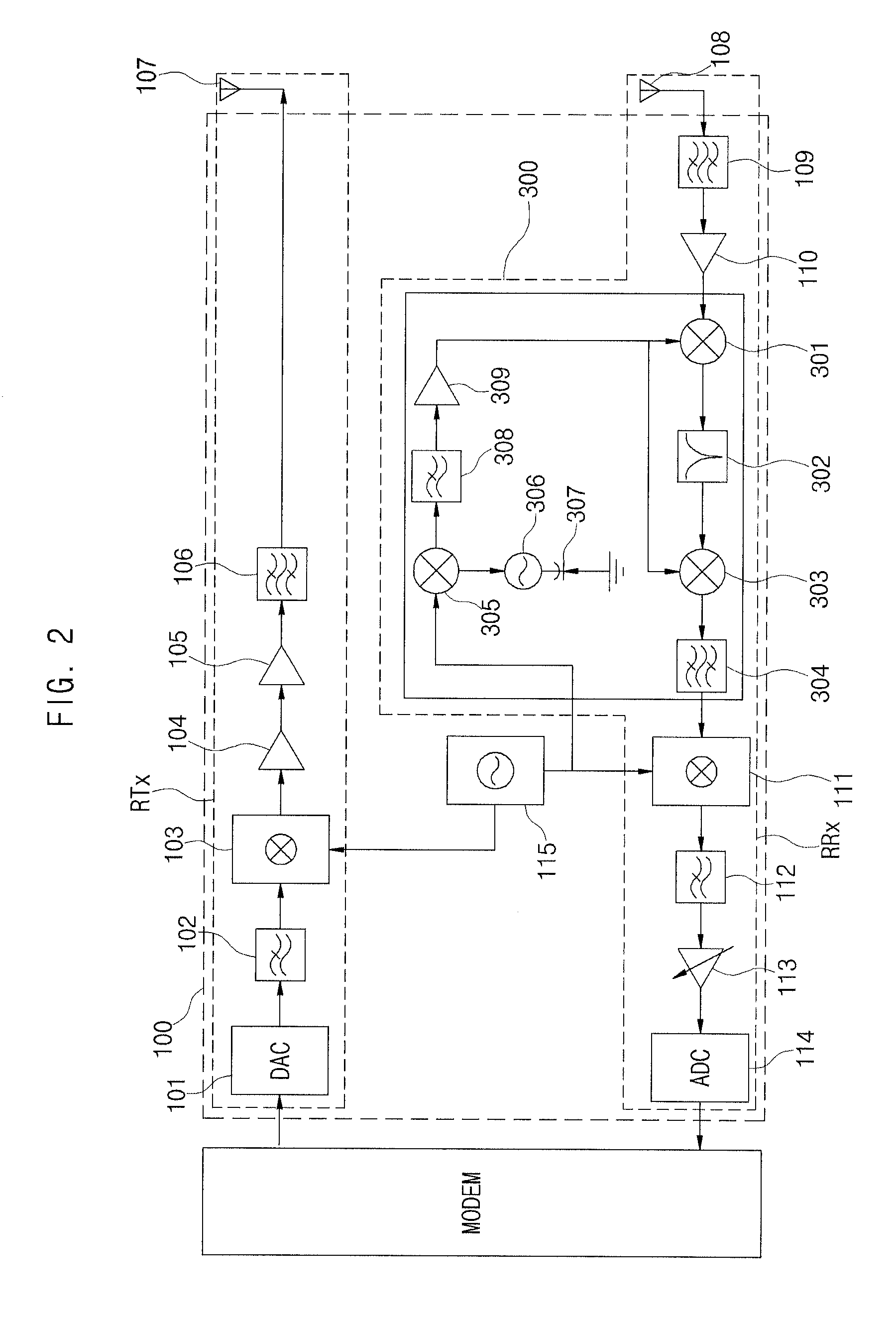
[0032]Advantages and features of the present invention and methods to achieve them will be elucidated from exemplary embodiments described below in detail with reference to the accompanying drawings. However, the present invention is not limited to exemplary embodiment disclosed herein but will be implemented in various forms. The exemplary embodiments is provided by way of example only so that a person of ordinary skilled in the art to fully understand the disclosures of the present invention and the scope of the present invention. Therefore, the present invention will be defined only by the scope of the appended claims. Meanwhile, terms used in the present invention are to explain exemplary embodiments rather than limiting the present invention. Also, when an element is referred to as being “connected to” another element, it can be directly connected to another element or be indirectly connected to another element with one or more intervening elements interposed therebetween. In t...
PUM
 Login to View More
 Abstract
Description
Claims
Application Information
 Login to View More