For example, while distribution by broadcast media is relatively inexpensive, the cost of producing entertainment, news and other content to attract an audience for broadcast media can be extremely expensive, and those costs are reflected in advertising fees.
Content production costs for printed
mass media also can be substantial, and printed
mass media can be expensive to produce and distribute.
While most direct advertising contains little or no content beyond the advertising message, and thus, involves relatively low content cost, the cost of direct advertising nevertheless can be substantial.
Such costs typically include the generation of a
mailing list and postage or other delivery costs.
Moreover, a substantial portion, if not the majority of all advertising messages are never viewed by their intended audience for one reason or another.
Many consumers receiving the advertisement may have no interest in the advertised good or service, or they may not be able to afford it.
There also is a general
clutter of advertisements that makes it difficult for a particular ad to capture the attention of consumers, especially if the
consumer is distracted or otherwise occupied when the opportunity for viewing the ad arises.
The response rates for all of these methods, however, are greatly reduced because the vast majority of the ads are never viewed.
Even when presented to a
consumer, however, many ads are not really viewed because they are lost in the
clutter of many other ads, and this is a common problem with newspaper inserts and some forms of direct mailings.
Thus, most advertising methods are very inefficient and wasteful.
The effective cost for each advertising message that is actually communicated to consumers is generally many times higher than the nominal cost per message.
Many products, however, have relatively little imprintable area available for a bar code and even minimal
product identification as is required to produce a consumer redeemable, manufacturer coupon.
While matchbooks have served as a vehicle for disseminating merchant coupons, there are no known instances where matchbooks in fact have been used as a vehicle for disseminating manufacturer coupons.
While the covers of conventional matchbooks usually have sufficient imprintable area on which a coupon may be provided, they nevertheless are poorly suited for such purposes.
If the coupon, i.e., the cover is detached immediately by a consumer it will impair the functionality of the matchbook.
On the other hand, considerable time may elapse before the matches are consumed and functionality is no longer an issue, during which time the consumer may lose the matchbook or his enthusiasm for redeeming the coupon, or the coupon may become damaged or soiled.
There also is a
perception that the matchbook is trash once all the matches have been used, and this too could reduce the rate of redemption if coupons were printed on matchbook covers.
Such matchbooks, however, are poorly suited for manufacturer coupons.
The functionality of the matchbooks is impaired if the strip is detached.
That is, the strip also serves as the cover for the match comb and, once removed, the matchbook no longer can be closed.
That
perception of “trash” would be particularly fatal to any sponsor branding message that one might want to include with a manufacturer coupon.
Nevertheless, the disclosure in Roth '689 does not disclose or suggest that its insert could be imprinted with a manufacturer coupon, although such coupons were well known at the time, or that manufacturer coupons could be disseminated through matchbooks.
Even for merchant coupons, the practice of using matchbooks as a vehicle for disseminating coupons has largely, if not entirely been discontinued as ineffective.
In addition, none of the matchbooks disclosed in the prior art are suitable for use with manufacturer coupons as they lack any effective means for
processing the coupon so that retailers may be reimbursed by a manufacturer in a cost effective manner.
Notwithstanding, no matchbooks have been disseminated with manufacturer coupons having
machine readable code to facilitate automated
processing of the coupons.
In addition, such prior art matchbook designs are poorly suited to accommodate manufacturer coupons for the vast majority of matchbooks consumed today.
Commodity matches, if they have any advertising messages at all, are limited to basic branding messages.
Promotional matches require considerable interaction with the purchaser and require extensive preparation and setup for their manufacture.
Such equipment is not efficient enough to produce commodity prices at a competitive price.
On the other hand, the equipment used to produce commodity matches requires little setup, but has little flexibility.
Such equipment is not flexible enough to satisfy the demands of promotional matches, but it does provide cigarette retailers with matches that are cheap enough to give away without regard to any promotional value they may have.
In any event, to date matchbooks have not been used to deliver more extensive and sophisticated advertising messages such as manufacturer coupons.
Moreover, the design of most conventional matchbooks is not such that they can easily, economically, and effectively present to the consumer manufacturer coupons that may be neatly and easily separated for automated processing.


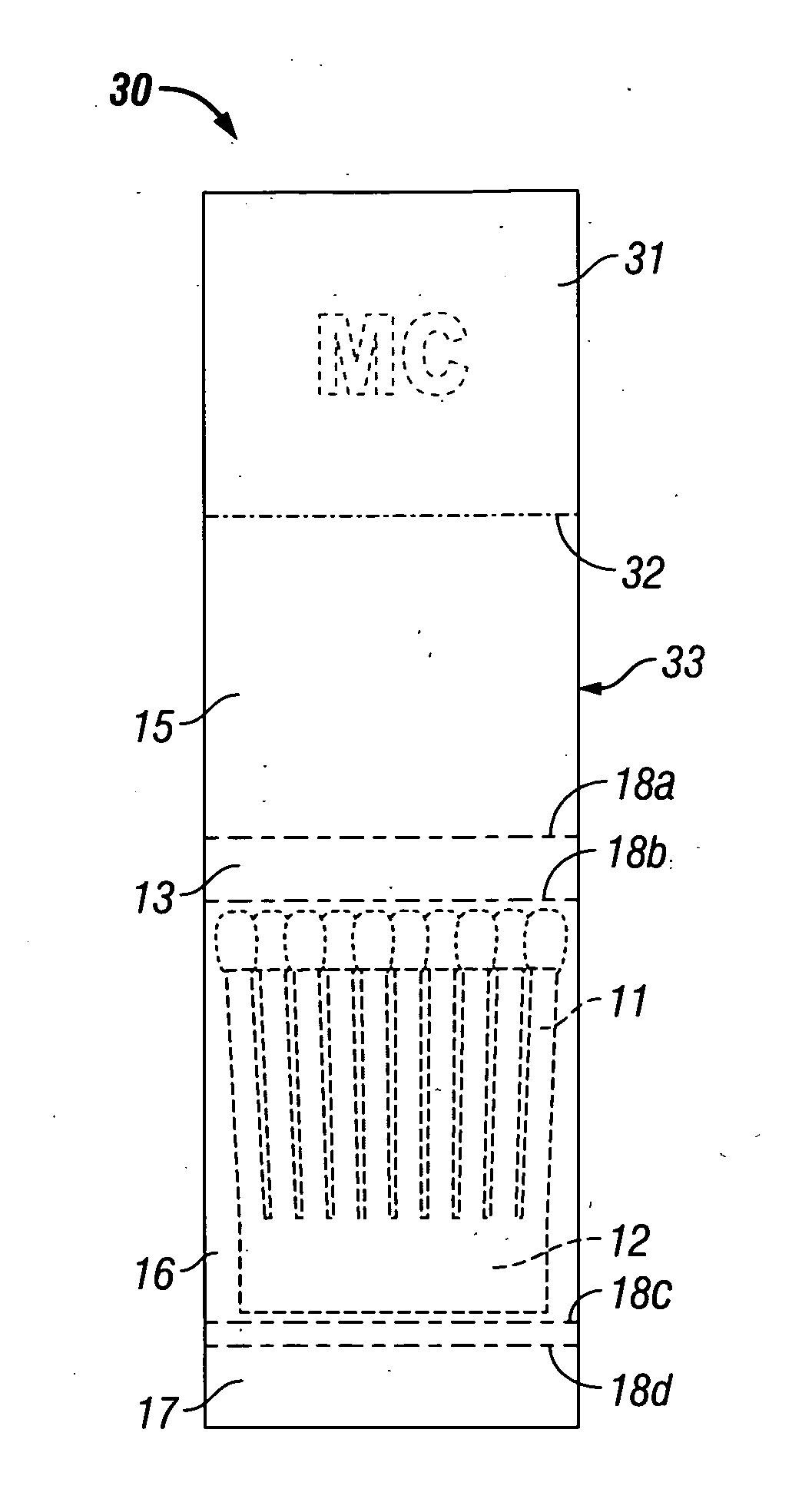
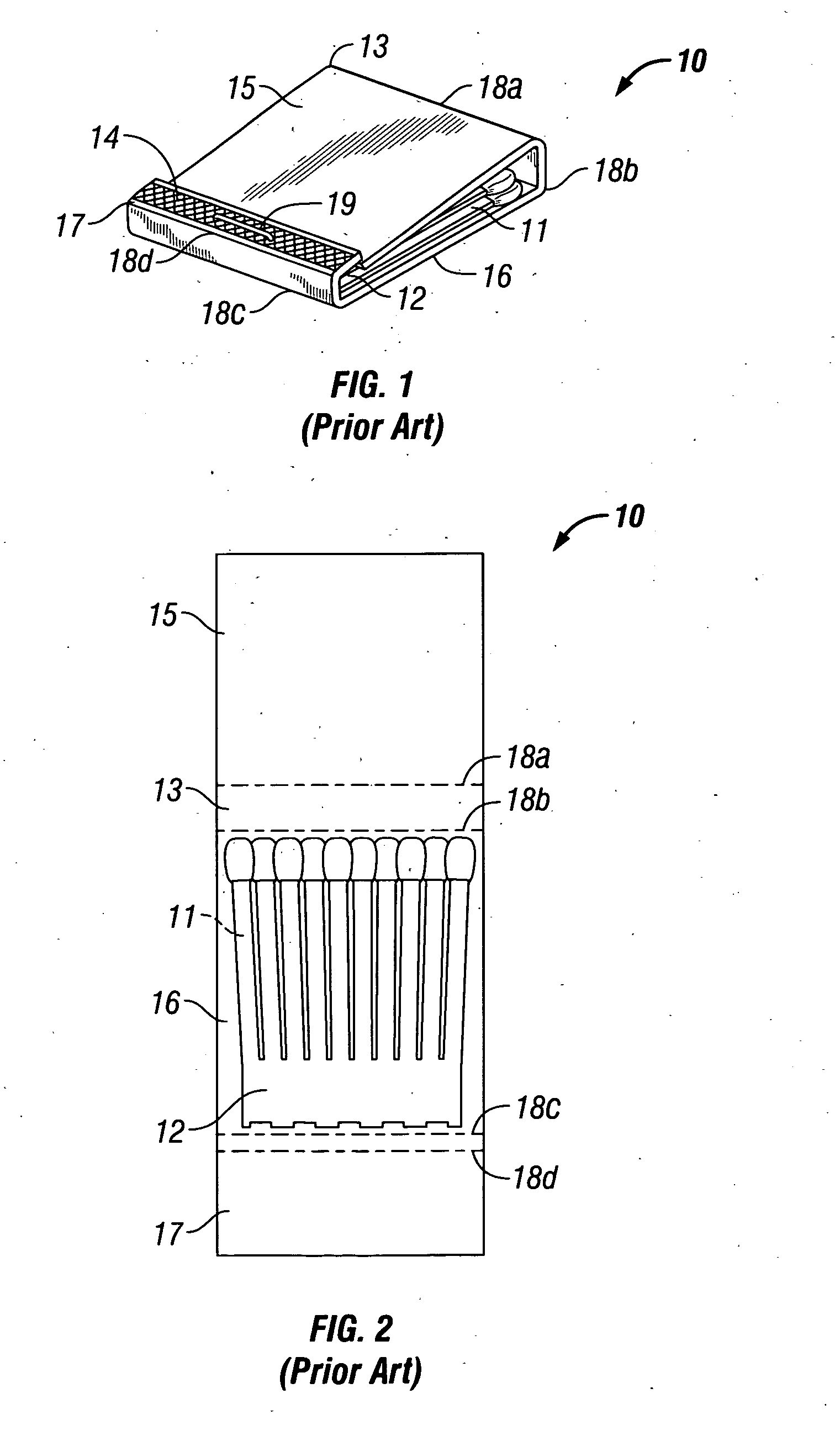
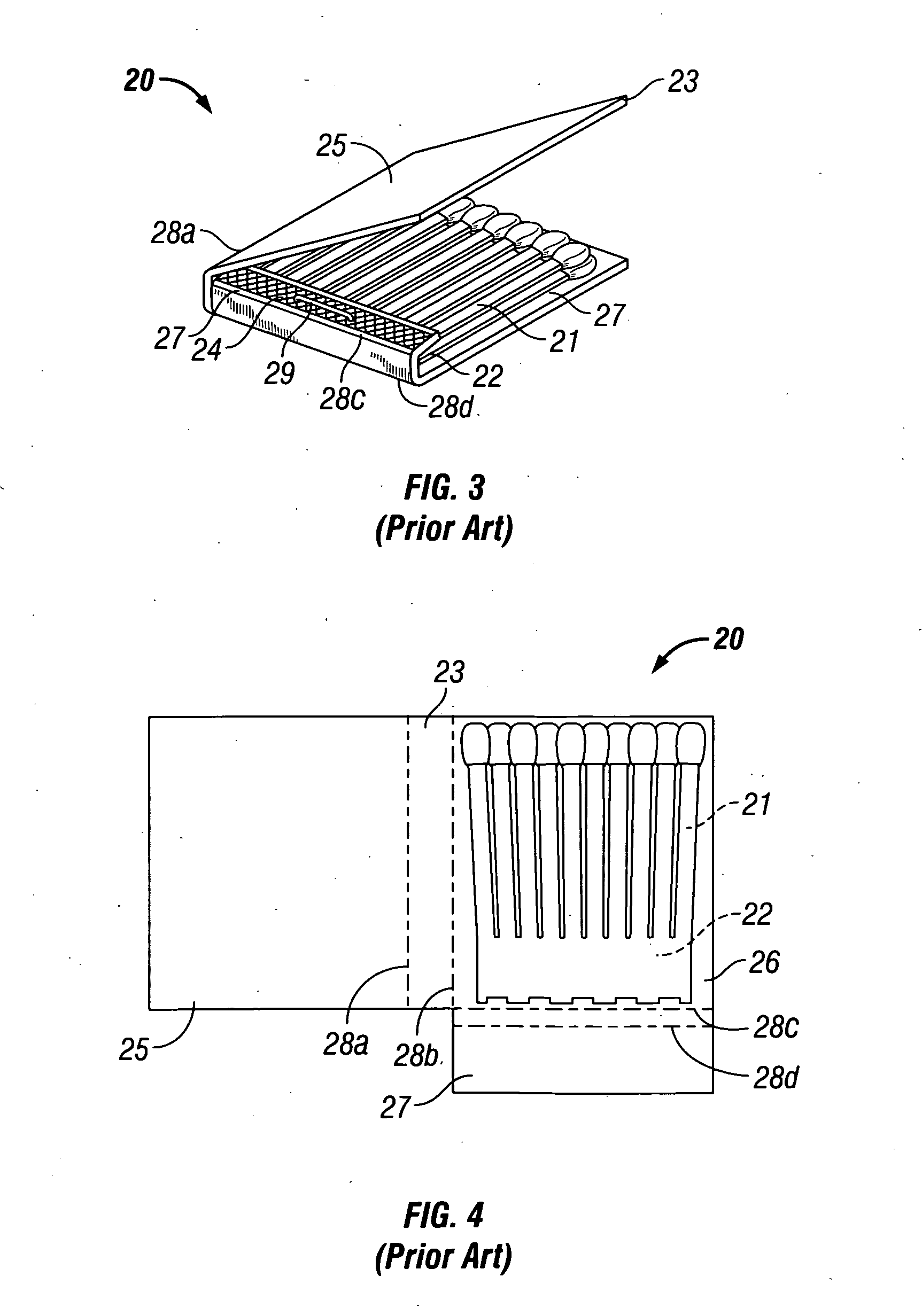
 Login to View More
  Login to View More