Method for producing an acceleration sensor
- Summary
- Abstract
- Description
- Claims
- Application Information
AI Technical Summary
Benefits of technology
Problems solved by technology
Method used
Image


Examples
Embodiment Construction
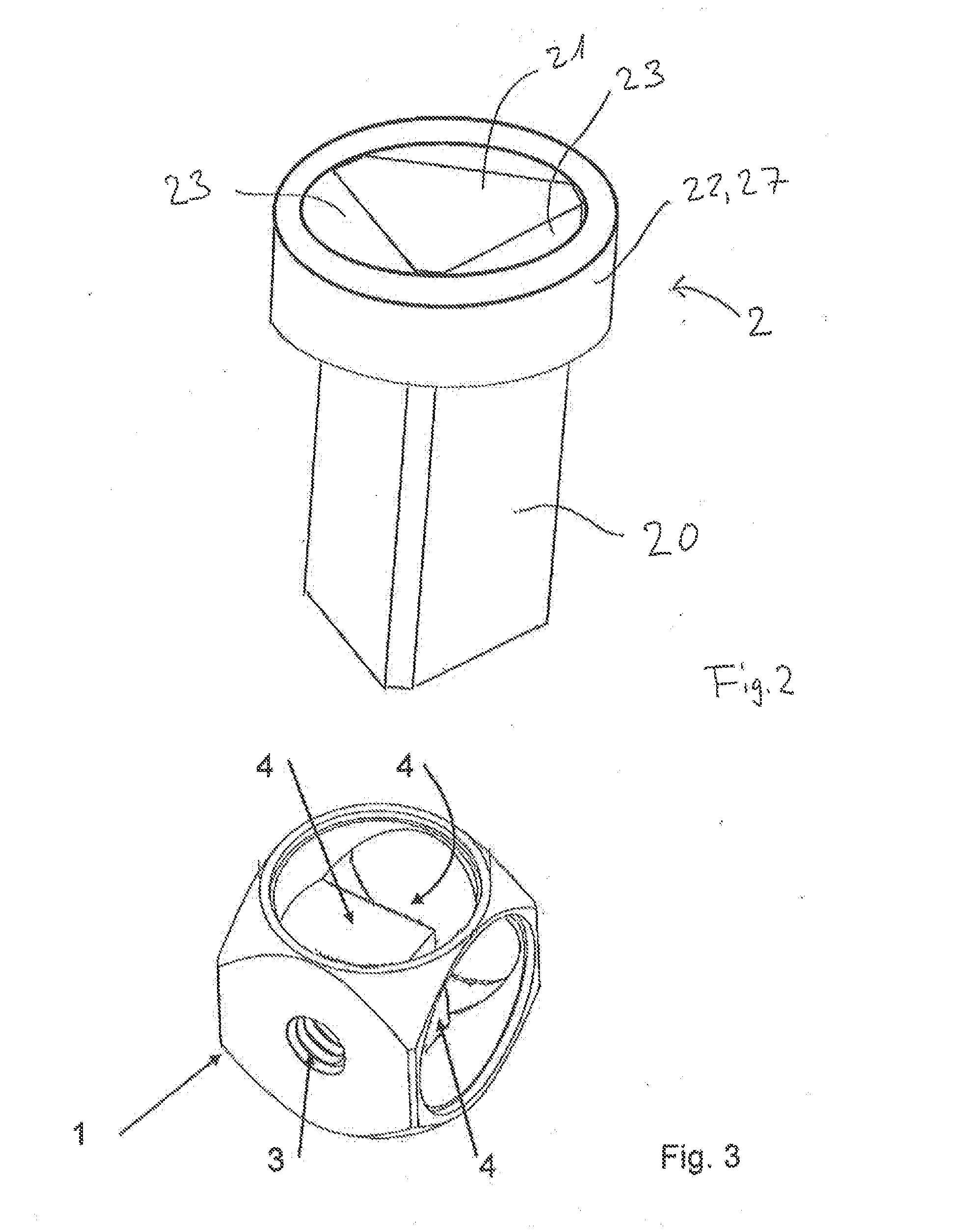
[0024]FIG. 1a shows a housing of an acceleration sensor according to the prior art, which is milled from one part. Three base bodies 20 without sensor elements are illustrated in a cubic housing 1, which base bodies were likewise milled out.
[0025]Each sensor element 2 is first installed completely in the housing 1, which is difficult and time-consuming in the case of a visibly small interior of the housing 1. It is in this case foreseeable that the housings will become even smaller in the future, for which reason the milling is also made more difficult.
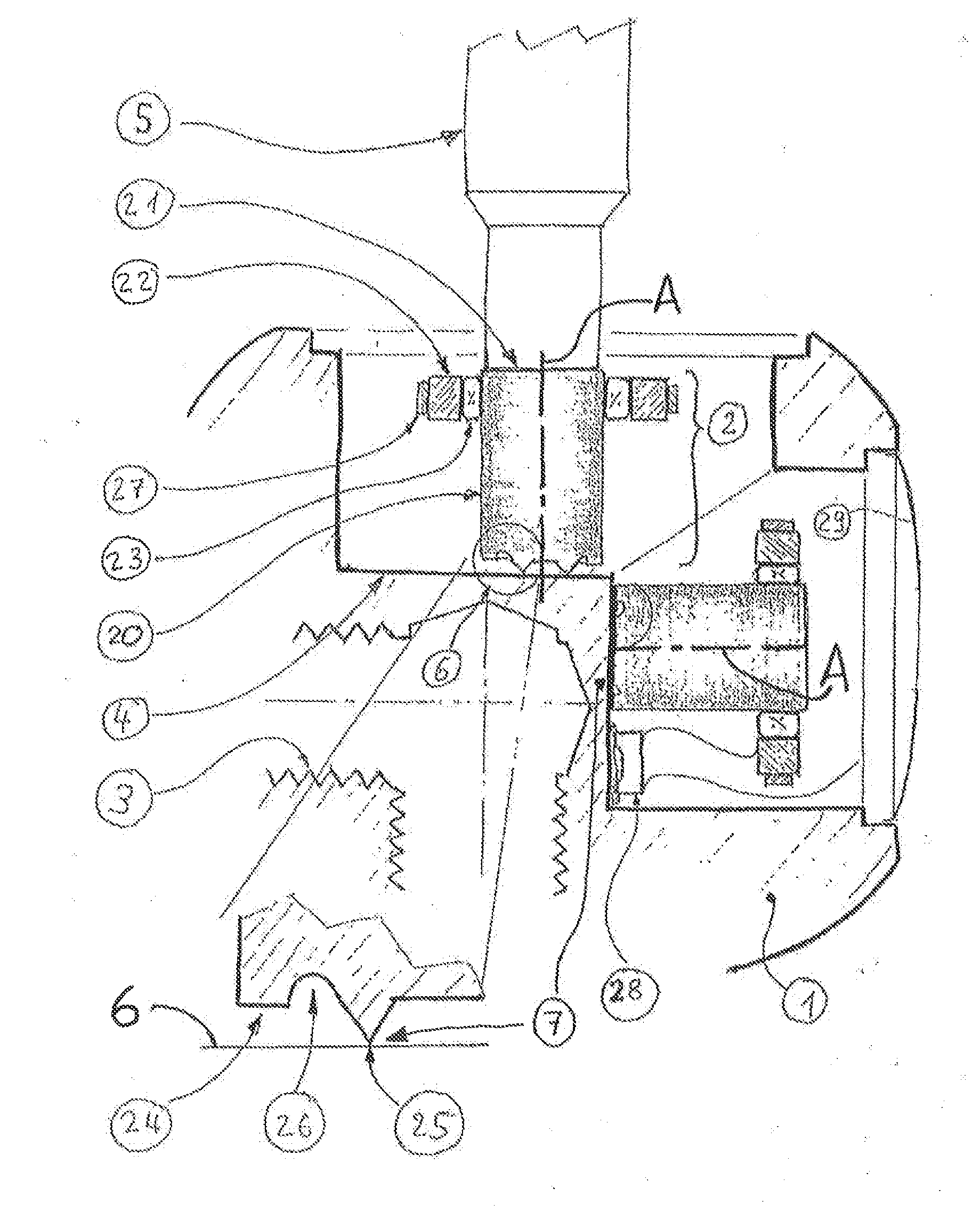
[0026]It can be seen from FIG. 4 that installation threads 3 for attaching the acceleration sensor are arranged externally on the housing 1. As a result, the internal supports 4 for accommodating the sensor elements 2, which are opposite the installation threads 3, cannot be enlarged. The wall thickness in this region, which turns out to be very low, is problematic. Therefore, the sensor elements 2 cannot be screwed into the housing 1...
PUM
| Property | Measurement | Unit |
|---|---|---|
| Force | aaaaa | aaaaa |
| Mass | aaaaa | aaaaa |
| Shape | aaaaa | aaaaa |
Abstract
Description
Claims
Application Information
 Login to View More