

Motion Decoy System for Duck Hunters
a duck hunting and motion decoy technology, applied in the field of multi-directional motion decoy systems, can solve the problem that the ducks cannot simulate horizontal movement across the water surfa
- Summary
- Abstract
- Description
- Claims
- Application Information
AI Technical Summary
Benefits of technology
Problems solved by technology
Method used
Image

Examples
Embodiment Construction
[0012]All illustrations of the drawings are for the purpose of describing selected versions of the present invention and are not intended to limit the scope of the present invention.
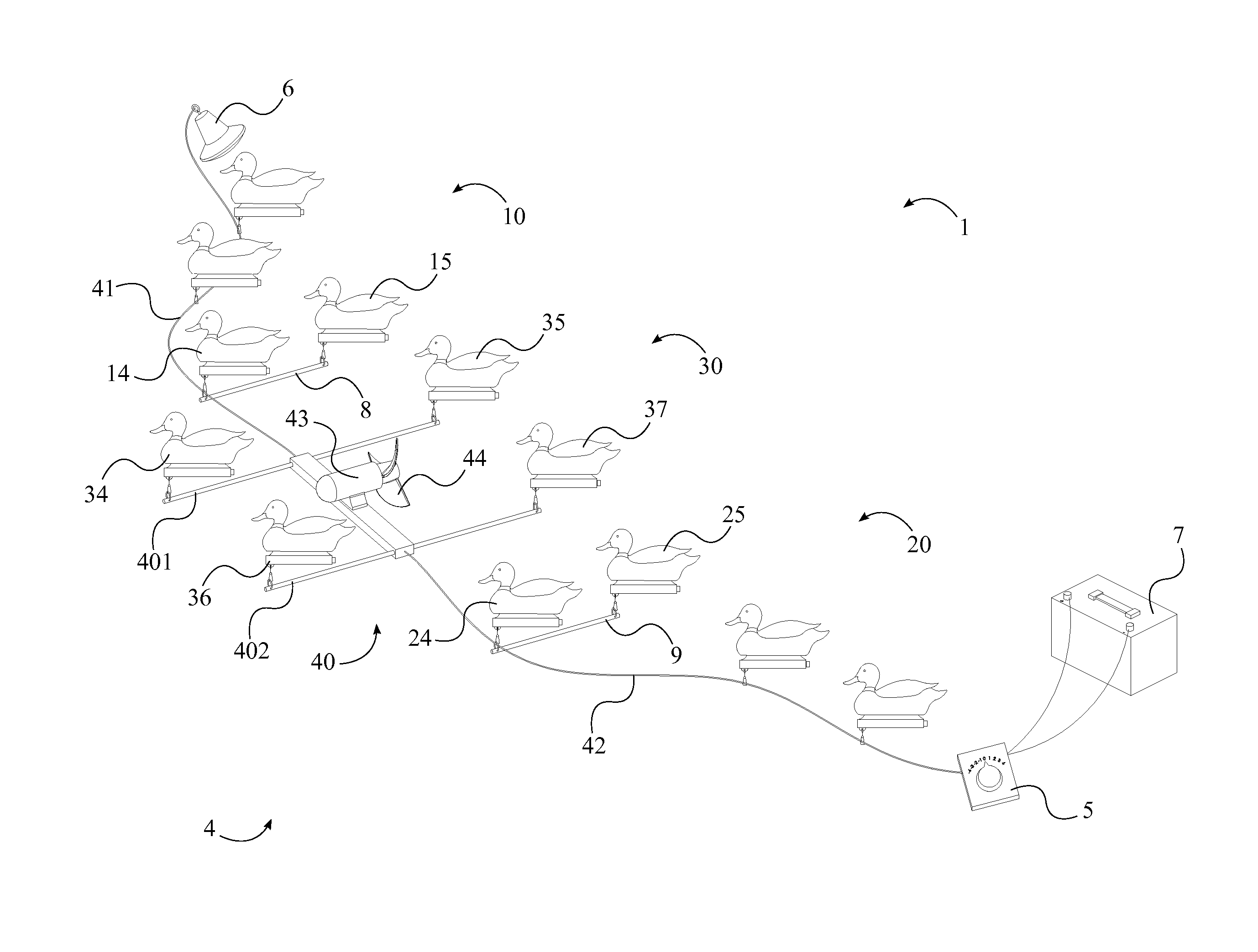
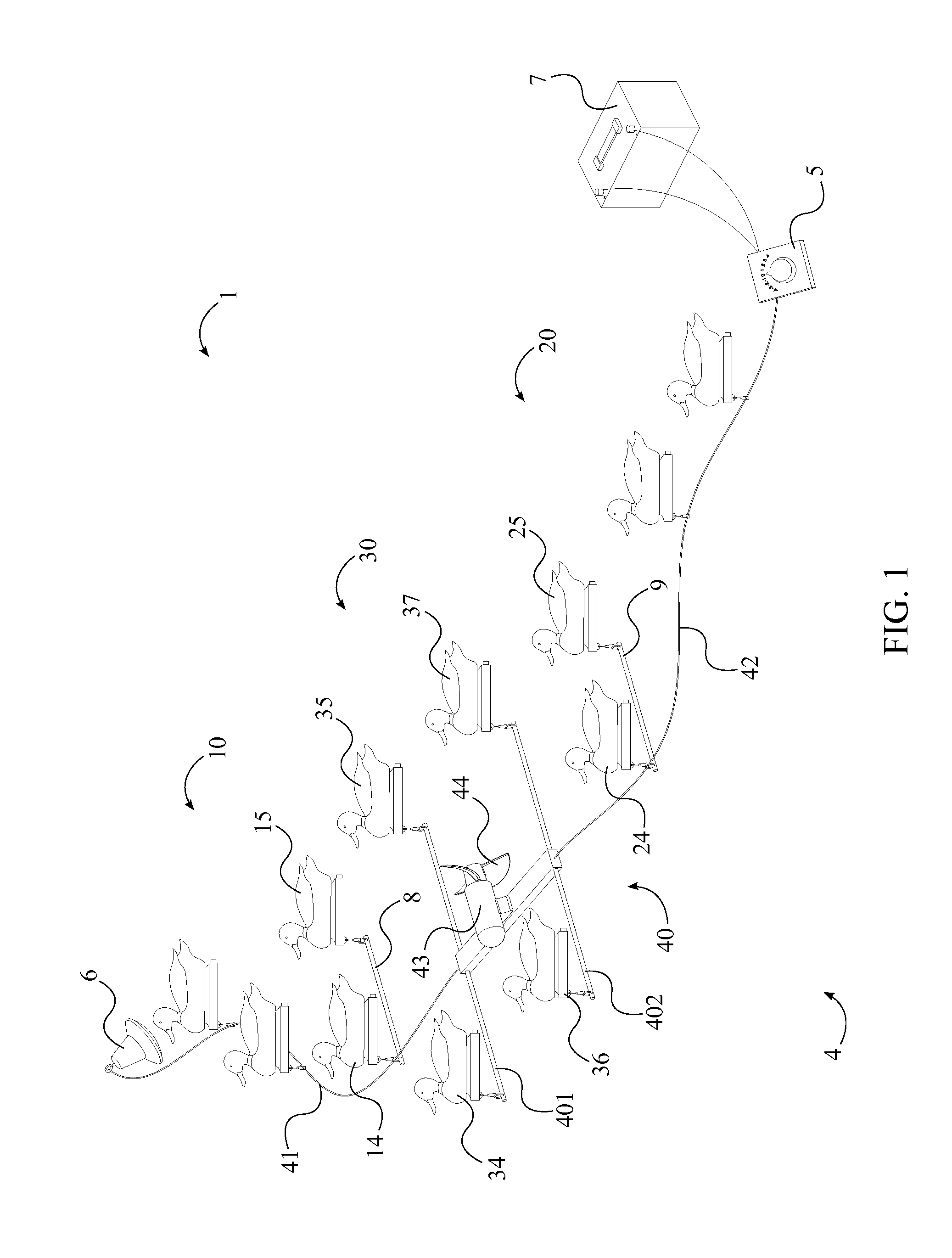
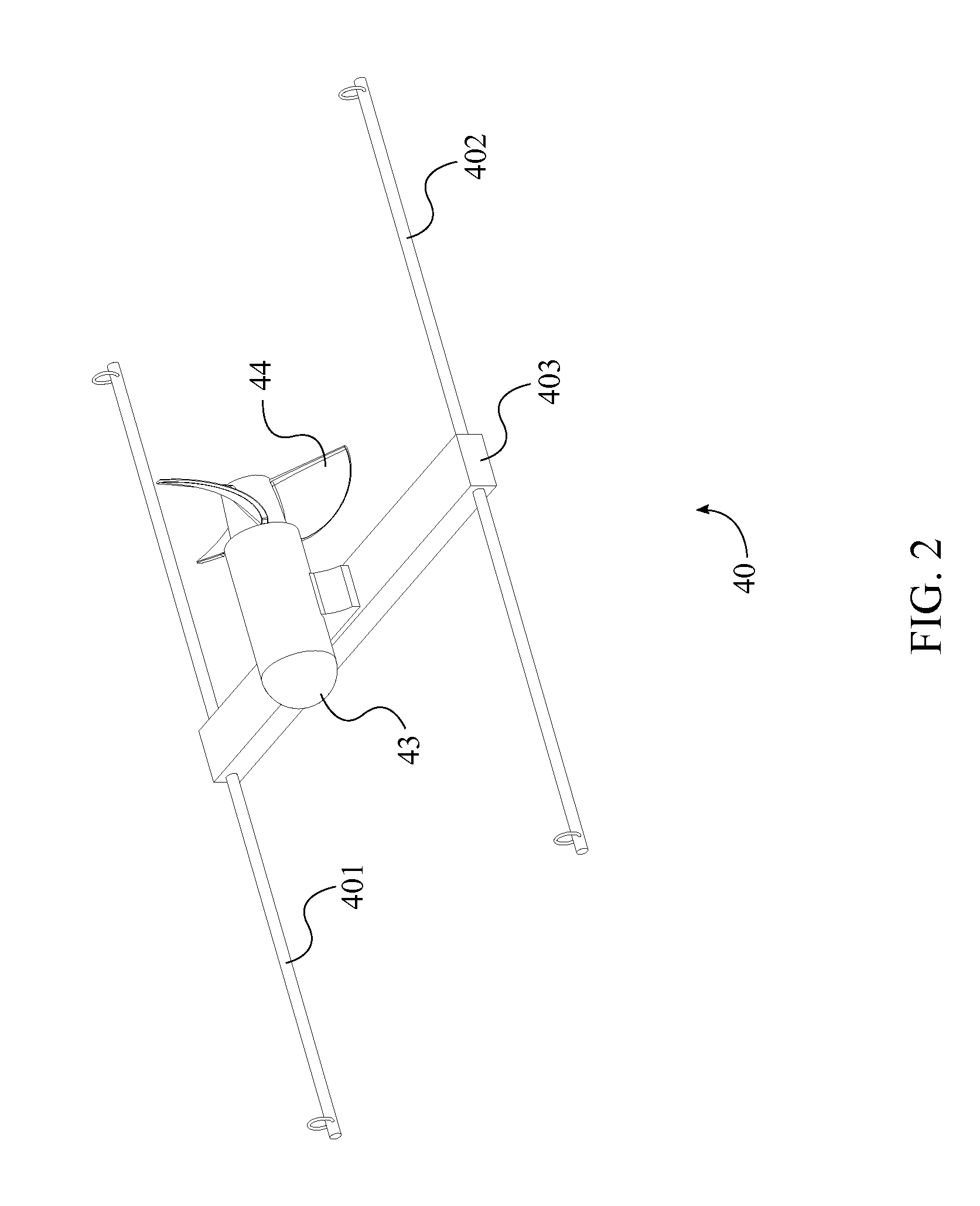
[0013]The present invention is a motion decoy system that mimics a flock of birds swimming within a body of water. In reference to FIG. 1, the present invention comprises a plurality of bird decoys 1, a drive unit 4, a control unit 5, an anchor 6, and a battery 7. The plurality of bird decoys 1 is pivotally connected along the drive unit 4, wherein each of the plurality of bird decoys 1 presents a life like presentation of a particular species of bird. In the preferred embodiment of the present invention, each of the plurality of bird decoys 1 is in the form of a duck, however, the plurality of bird decoys 1 may depict any other type of bird in other embodiments of the present invention. The drive unit 4 provides bi-directional movement for the plurality of bird decoys 1 and is operated through the contr...
PUM
 Login to View More
 Abstract
Description
Claims
Application Information
 Login to View More