
Light cooling and heating machine
a technology of light cooling and heating machines, which is applied in the direction of heating and refrigeration combinations, domestic cooling apparatus, and refrigerators, etc., can solve the problems of low solar thermal efficiency and unsuitable magnetic cooling for use in near-room temperature areas, and achieve the effects of increasing the temperature of positive ion gas, and increasing the average kinetic energy
Patent Information
- Authority / Receiving Office
- US · United States
- Patent Type
- Applications(United States)
- Current Assignee / Owner
- Publication Date
- 2018-08-30
- Estimated Expiration
- Not applicable · inactive patent
Smart Images

Figure 1 
Figure 2 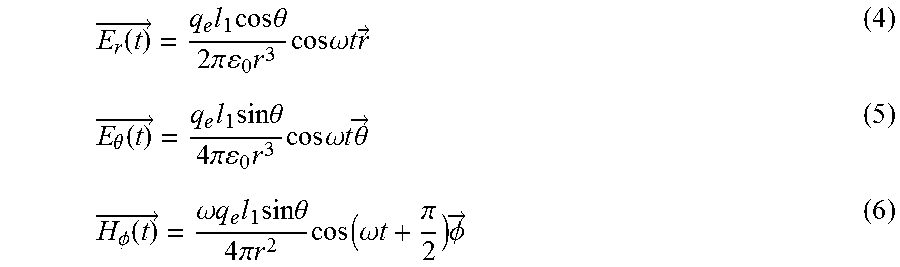
Figure 3
Abstract
Description
CROSS REFERENCE TO RELATED APPLICATIONS
[0001] The present application is a Continuation Application of PCT Application No. PCT / CN2016 / 102226 filed on Oct. 14, 2016, which claims the benefit of Chinese Patent Application No. 201510740607.8 filed on Oct. 27, 2015. All the above are hereby incorporated by reference.TECHNICAL FIELD
[0002] This light cooling and heating machine uses electrons or other charged particles as a working medium, comprising a light source and a sealed container. The machine uses the near-field energy of vibrating charged particles for cooling and heating. When cooling, the interior of the sealed container is filled with an electron gas, and the average distance between electrons in the sealed container is caused to be much smaller than the wavelength of the incident light, and an electron number density is much greater than the negative third power of wavelength of the incident light, allowing vibrating electrons to be in the near-field of each other; under the ir...
Examples
Embodiment Construction
[0047]Two specific embodiments are described below, but specific implementations are not limited to these two examples.
[0048]When cooling, if there is air in a sealed container, the thermal kinetic energy of molecules in the air will affect the cooling effect. Therefore, the sealed container needs to be evacuated first so that the pressure in the sealed container is lower than 1 Pa. After the evacuation, the electron gas is injected, and to allow vibrating electrons to be in a near-field of each other, the average distance between electrons in the sealed container should be much smaller than the wavelength rλ of incident light. Because there is a following relationship between the average distance r between the electrons and the electron number density nd:
r∼nd-13(42)
[0049]Therefore, there is the following relationship between the electron number density nd and the wavelength λ of incident light:
ndλ-13(43)
[0050]That is, the electron number density is much greater than the negative th...