
Reduced negative zeta potential sanitization method and system
a sanitization method and negative zeta potential technology, applied in the direction of meat/fish preservation using chemicals, specific water treatment objectives, disinfection, etc., can solve the problems of limited efficacy in reducing the population, contamination of packaging facilities, malodorous chlorination, etc., to achieve low zeta potential crystals and enhance concentration
- Summary
- Abstract
- Description
- Claims
- Application Information
AI Technical Summary
Benefits of technology
Problems solved by technology
Method used
Image

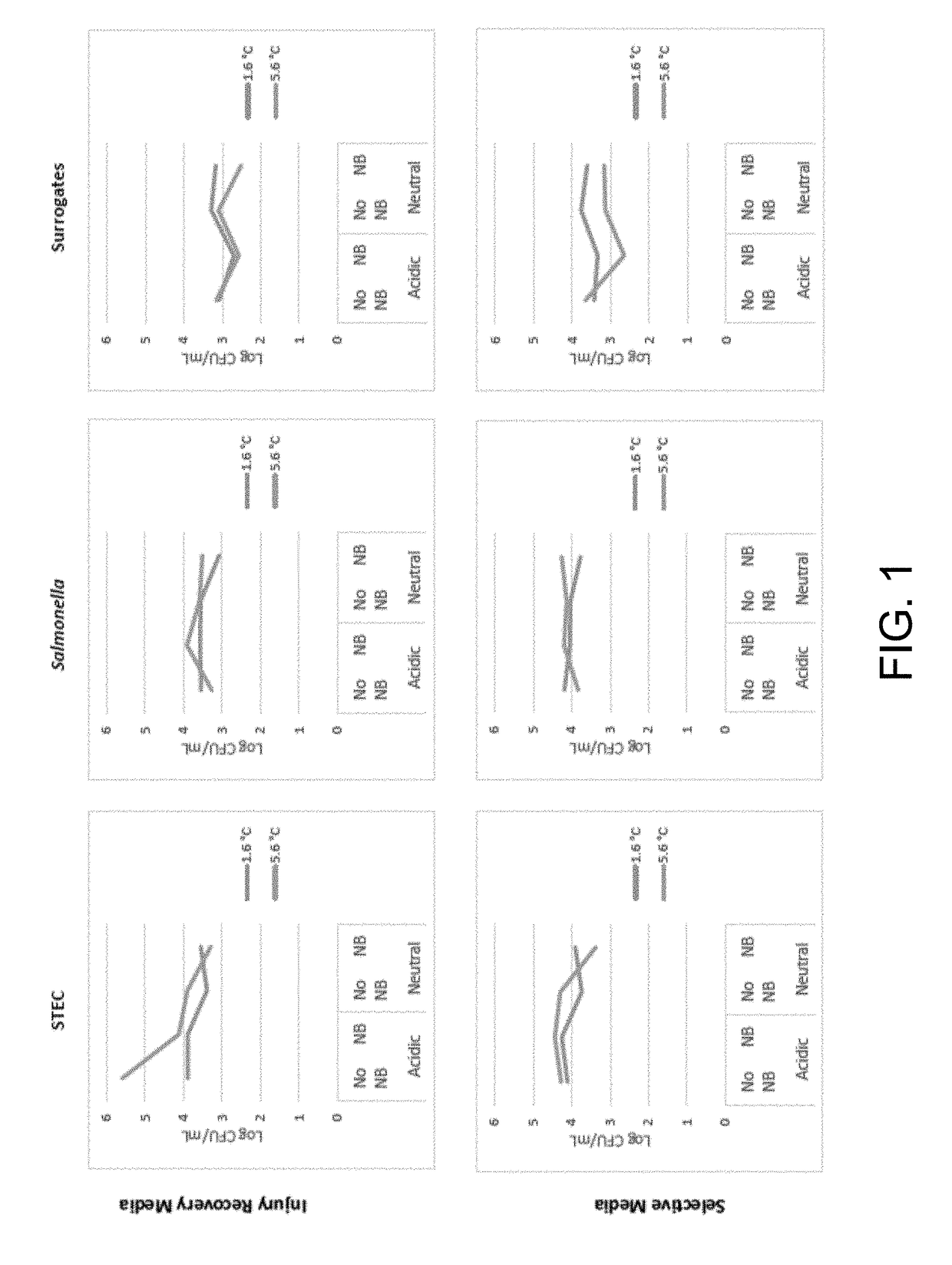
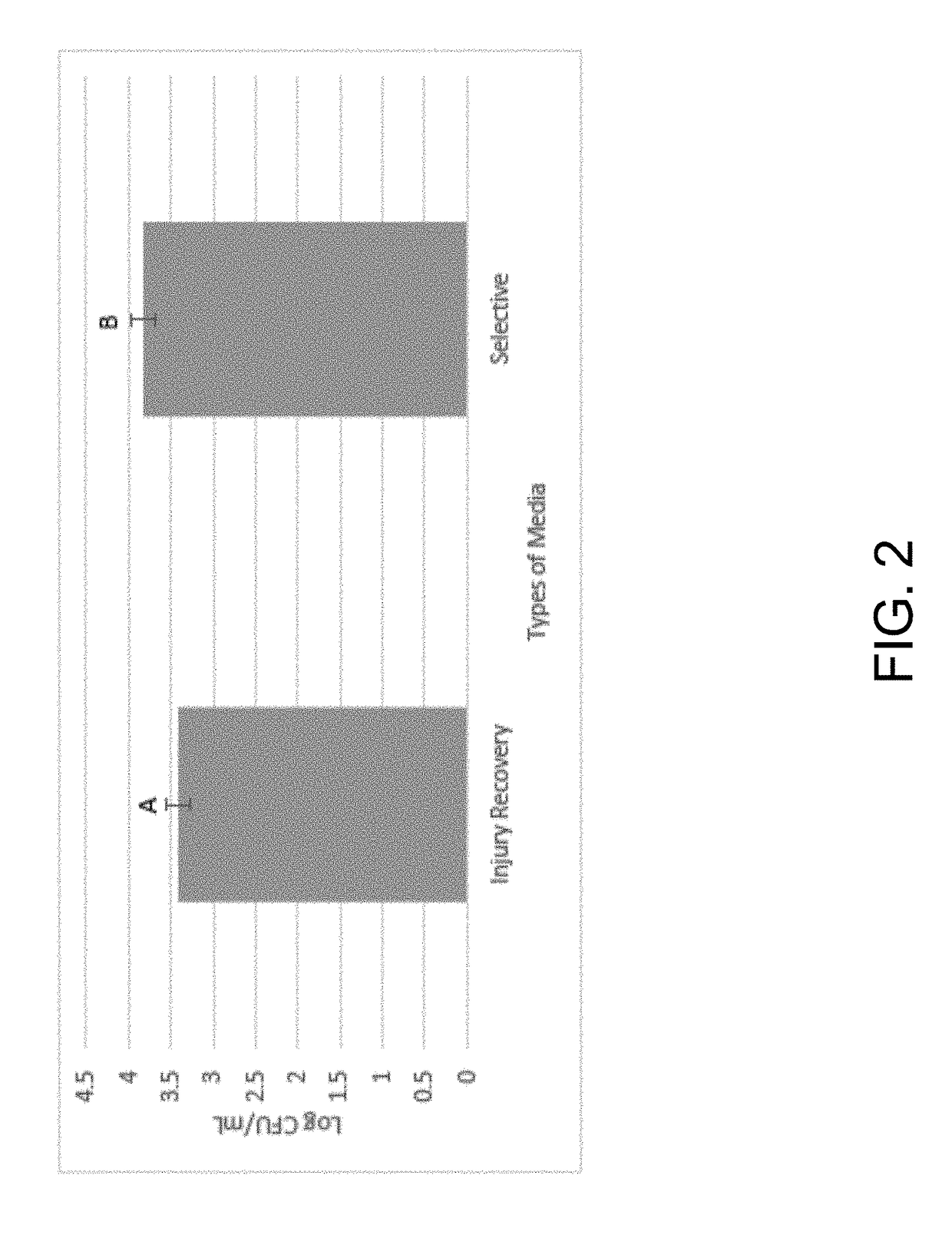
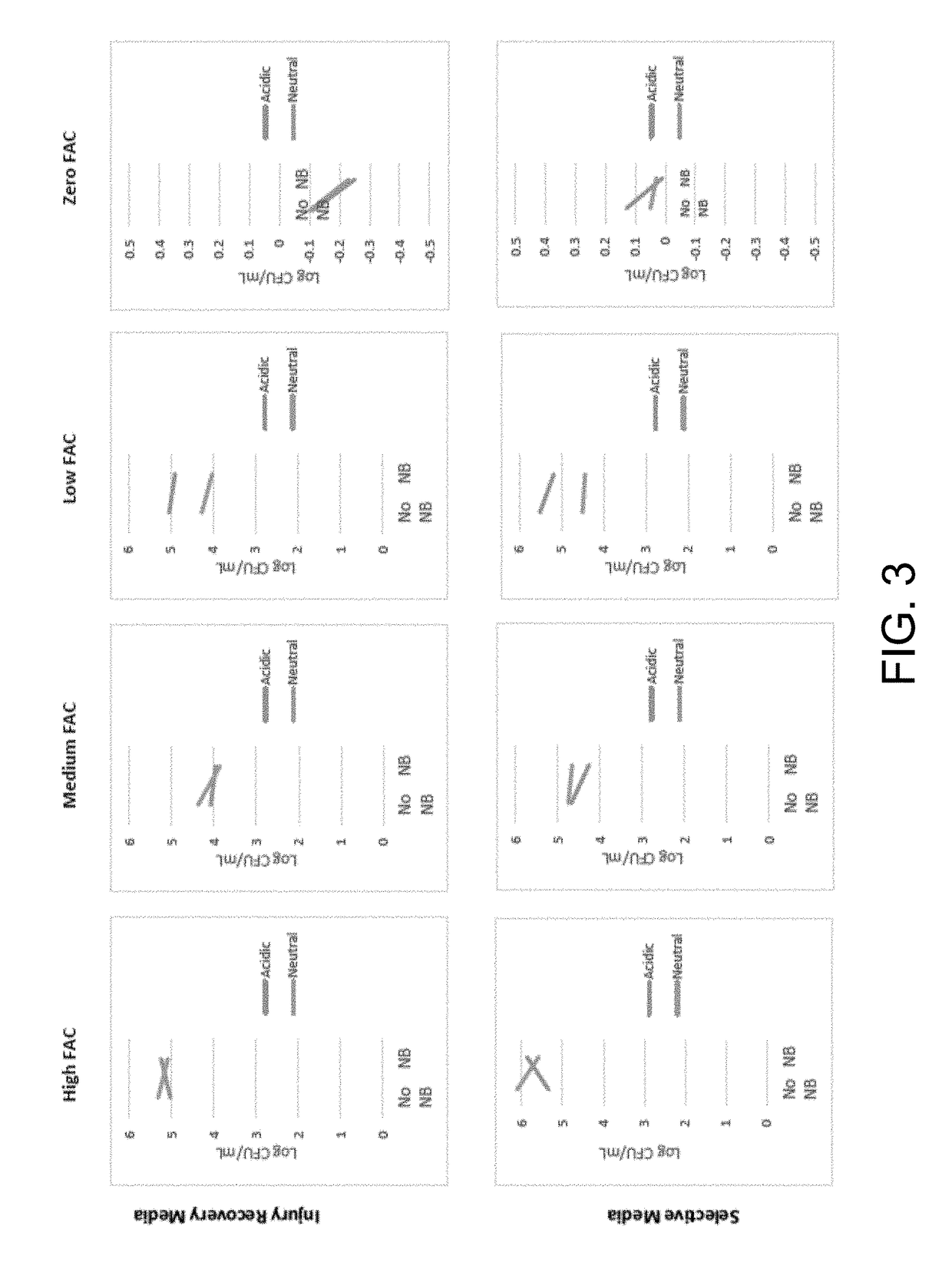
Examples
example 1
Efficacy of Chlorinated Nanobubble Solutions to Control Shiga Toxin-Producing E. coli, Salmonella spp., and Non-Pathogenic Surrogate E. coli in a Model Beef Processing
1.1. Determining Minimum Bactericidal Concentrations of Chlorinated Waters in Pure Cultures
[0083]Numerous antimicrobials, including lactic and peroxyacetic acids, are widely used in raw beef processing to reduce the presence of foodborne pathogens such as Shiga toxin-producing E. coli (STEC) and Salmonella; however, there is interest in exploring combinations of various technologies to enhance antimicrobial effects on pathogens and to support proprietary developments in beef processing. Chemical residues from traditional antimicrobials can lead to deterioration of quality attributes, including appearance, texture, and taste, and potential human health hazards (Tsuge, H. (Ed.). (2014). Micro- and nanobubbles: fundamentals and applications. Singapore: Pan Stanford Publishing). Therefore, interventions requiring very low ...
example 2
Evaluation of a Chlorinated Nanobubble Water System to Control Shiga Toxin-Producing E. coli Surrogates in a Novel Commercial Ground Beef Manufacturing Process
[0168]Beef products, specifically ground beef, have been associated with human illness, disease outbreaks, and product recalls due to contamination from Shiga toxin-producing E. coli (STEC) and Salmonella enterica, both cattle harbored foodborne pathogens. Although not declared adulterants in beef, Salmonella has been associated with 35% of ground beef outbreaks from 2002-2011 (Laufer, A. S., et al. (2015). Outbreaks of Salmonella infections attributed to beef—United States, 1973-2011. Epidemiology and Infection, 143(9), 2003-2013). The United States Department of Agriculture Food Safety and Inspection Service (USDA FSIS) has declared seven serotypes of enterohemmorhagic STEC to be adulterants in raw, non-intact beef—O26, O45, O103, O111, O121, O145, and O157: H7—due to the severity of illness caused after human consumption (C...
example 3
Salmon Roe (Ikura) Processing
[0289]Salmon roe (or Ikura as it is called in Japan) was washed in a processing plant with Cesco-NAN-02 technology water with 1-2 ppm active Aquaox AX-5000 (HOCl).
[0290]Results
[0291]Samples of processed (Cesco-NAN-02-Aquaox) and unprocessed (‘Green”) Ikura were submitted to Edge analytical for Total Aerobic Plate Counts (AOAC990.12 Petrifilm), E. coli (AOAC991.14 Petrifilm) and Total Coliform (AOAC991.14 Petrifilm) testing (Tests 1-4 attached). Test 4 (Green Ikura) had a Total Aerobic Plate Count mean average of 852 CFU / g, which exceeds the measurable range of 30-300 colonies for AOAC990.12. E. coli measured in all ten (10) samples at <10 CFU / g, which is below the measurable range of AOAC991.14 (15-150 colonies). However, six of the ten samples tested positive for Total Coliforms, having a mean average of 30, which falls well within the measurable range of this test.
[0292]Results for the Cesco-NAN-02-Aquaox processed Ikura were very good for Tests 1-3. T...
PUM
 Login to View More
 Abstract
Description
Claims
Application Information
 Login to View More