
Methods and compositions for reducing clostridium difficile infection
a technology of clostridium difficile and composition, which is applied in the field of methods and compositions for reducing clostridium difficile infection, can solve the problems of limited widespread adoption of fmt (pamer), and achieve the effect of reducing risk and severity
- Summary
- Abstract
- Description
- Claims
- Application Information
AI Technical Summary
Benefits of technology
Problems solved by technology
Method used
Image

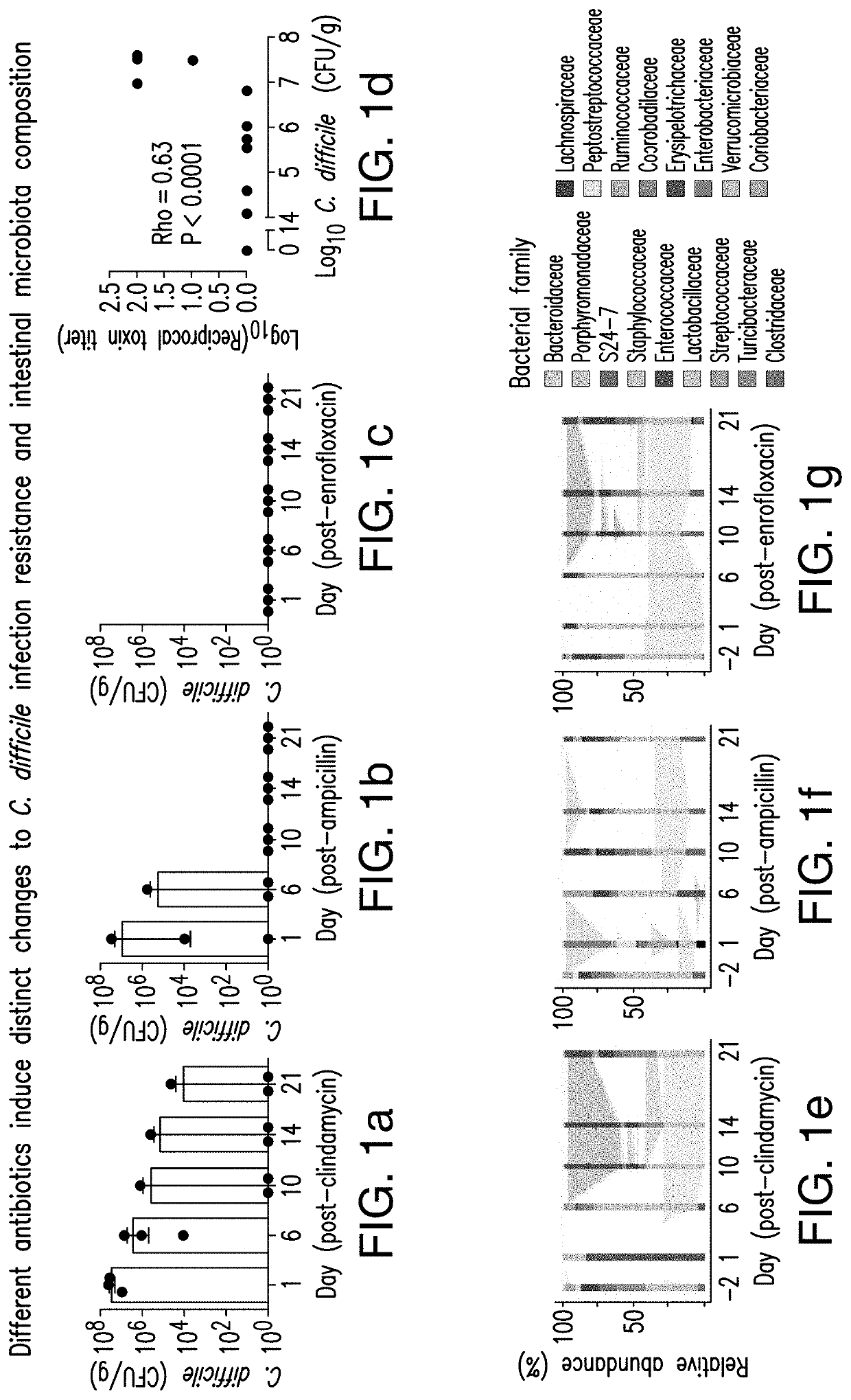
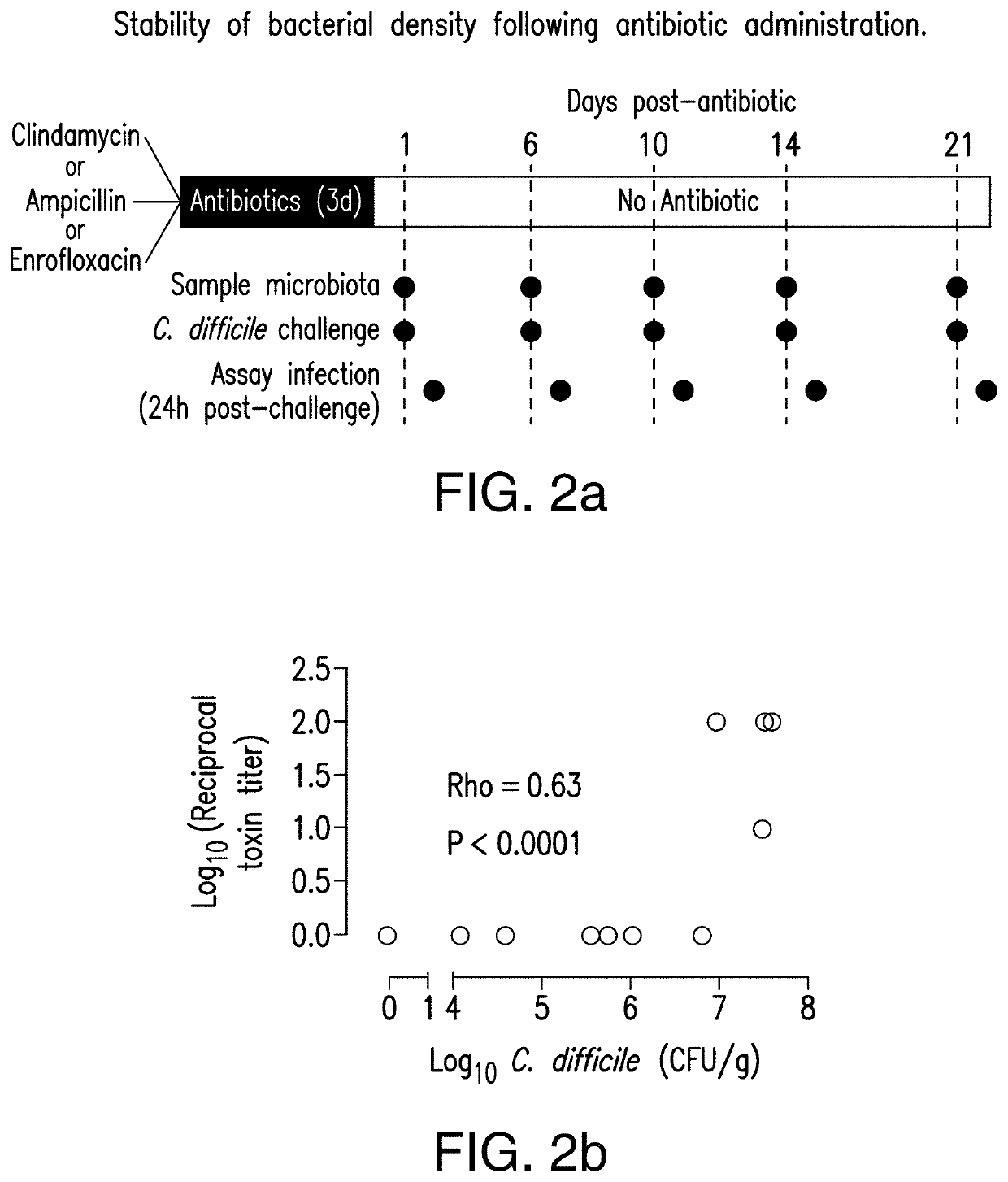
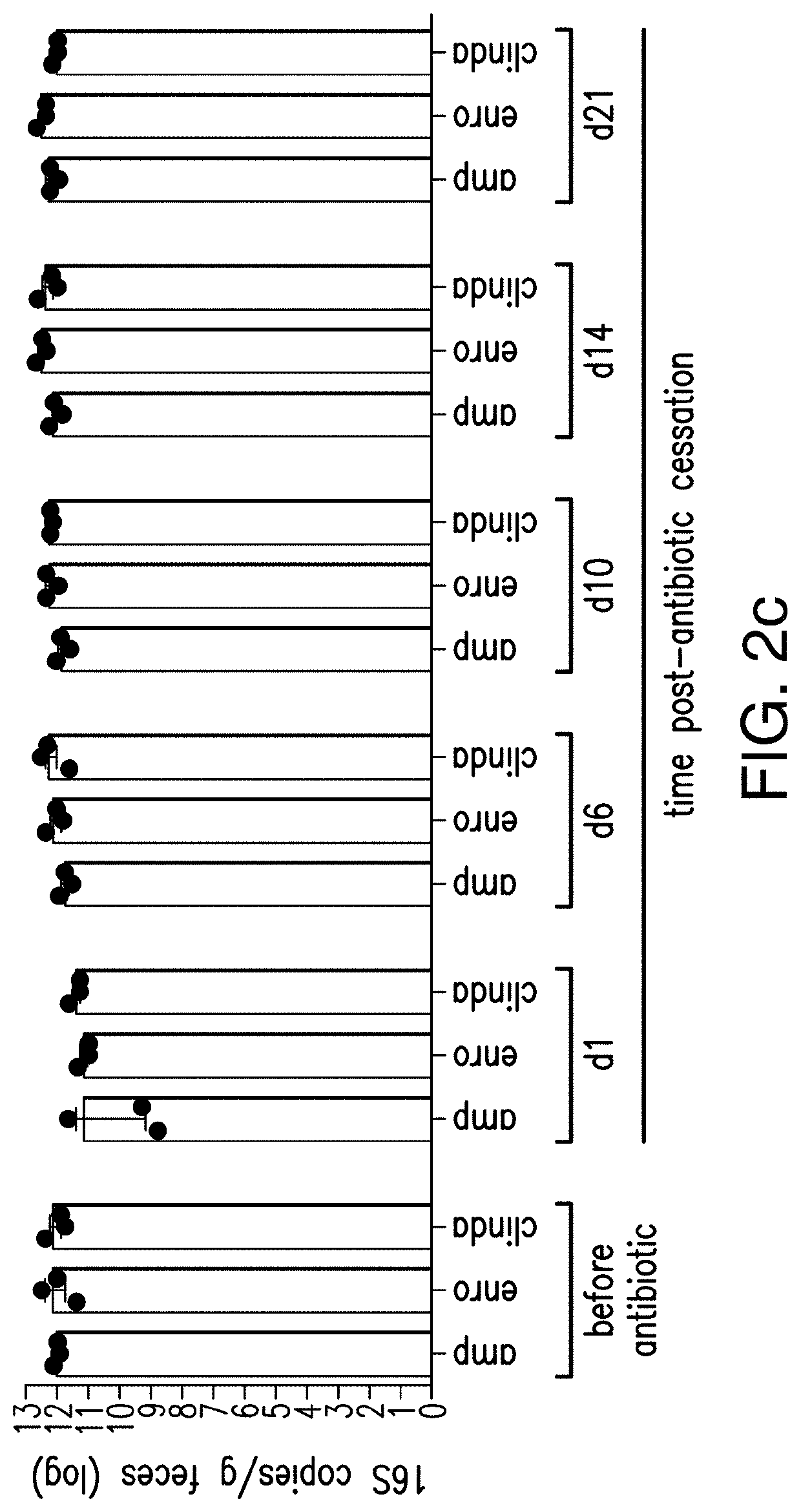
Examples
Embodiment Construction
[0043]The present invention relates to methods and compositions for reducing the risk and / or severity of C. difficile infection. For clarity of description, and not by way of limitation, this section is divided into the following subsections:[0044](i) Recombinant cells;[0045](ii) Therapeutic bacteria;[0046](iii) Pharmaceutical compositions;[0047](iv) Methods of treatment; and[0048](v) Non-limiting embodiments of the disclosure.
[0049]The following are terms relevant to the present invention:
[0050]An “individual” or “subject” herein is a vertebrate, such as a human or non-human animal, for example, a mammal. Mammals include, but are not limited to, humans, primates, farm animals, sport animals, rodents and pets. Non-limiting examples of non-human animal subjects include rodents such as mice, rats, hamsters, and guinea pigs; rabbits; dogs; cats; sheep; pigs; goats; cattle; horses; and non-human primates such as apes and monkeys.
[0051]An “effective amount” of a substance as that term is...
PUM
| Property | Measurement | Unit |
|---|---|---|
| β | aaaaa | aaaaa |
| β- | aaaaa | aaaaa |
| resistance | aaaaa | aaaaa |
Abstract
Description
Claims
Application Information
 Login to View More