
Device and method for producing microfilament yarns with high titer uniformity from thermoplastic polymers
a thermoplastic polymer and microfilament technology, applied in the direction of manufacturing tools, chain saws, melt spinning methods, etc., can solve the problems of not being able to exceed the densities of approximately 8 holes/cm, space requirements, product quality, etc., to improve textile-mechanical properties, reduce the number of spinning interferences, and reduce equipment and production costs
- Summary
- Abstract
- Description
- Claims
- Application Information
AI Technical Summary
Benefits of technology
Problems solved by technology
Method used
Image

Examples
Embodiment Construction
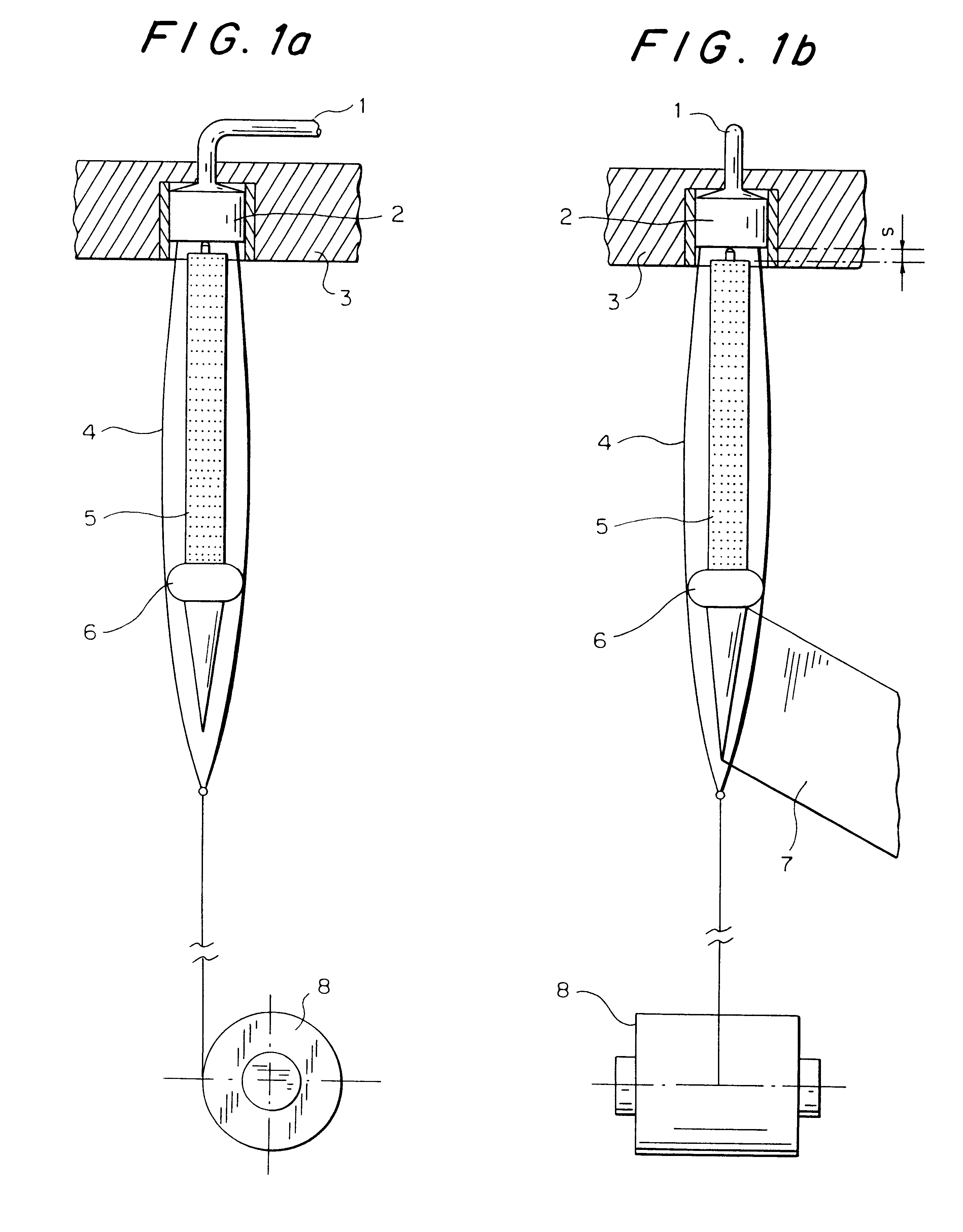
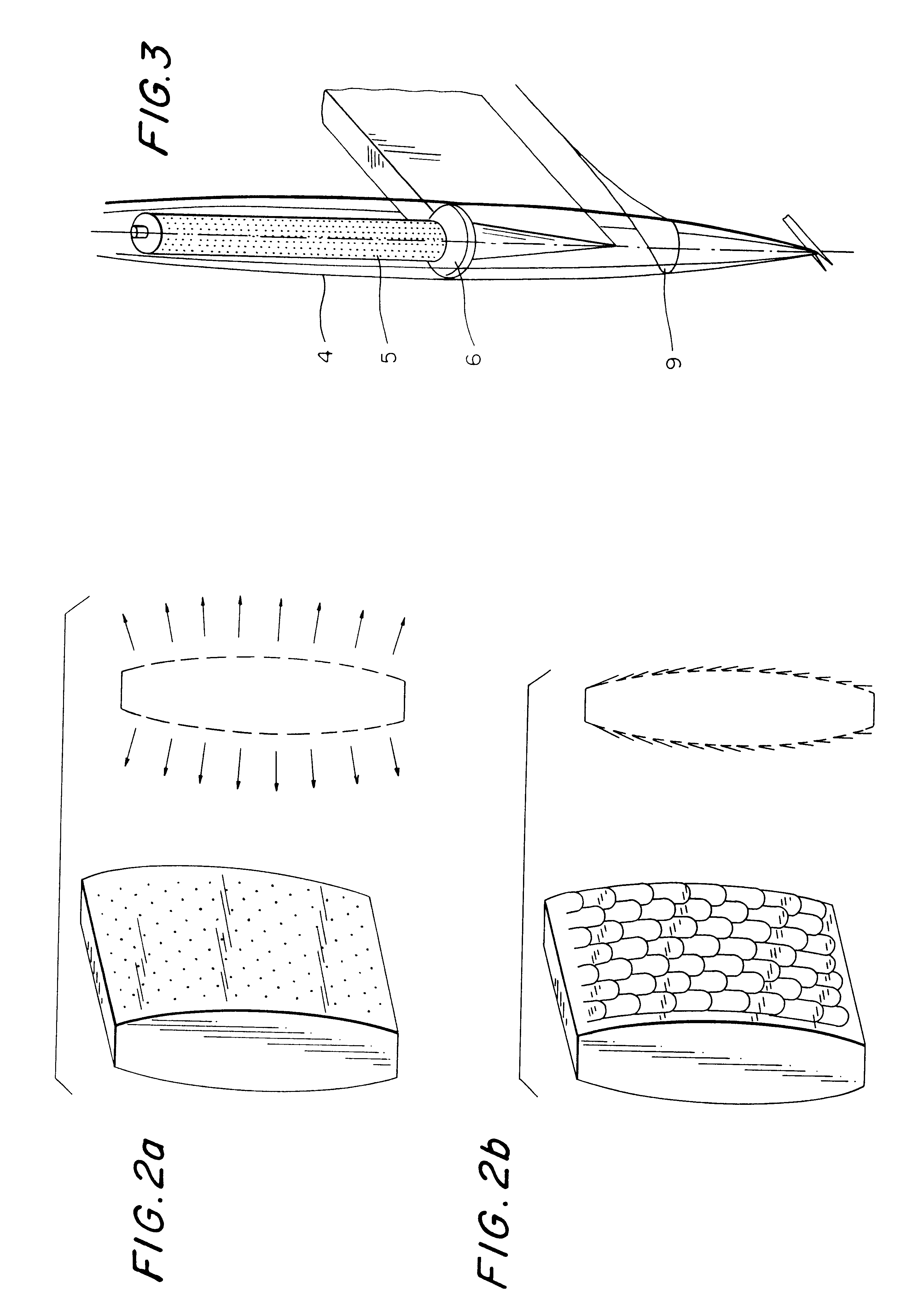
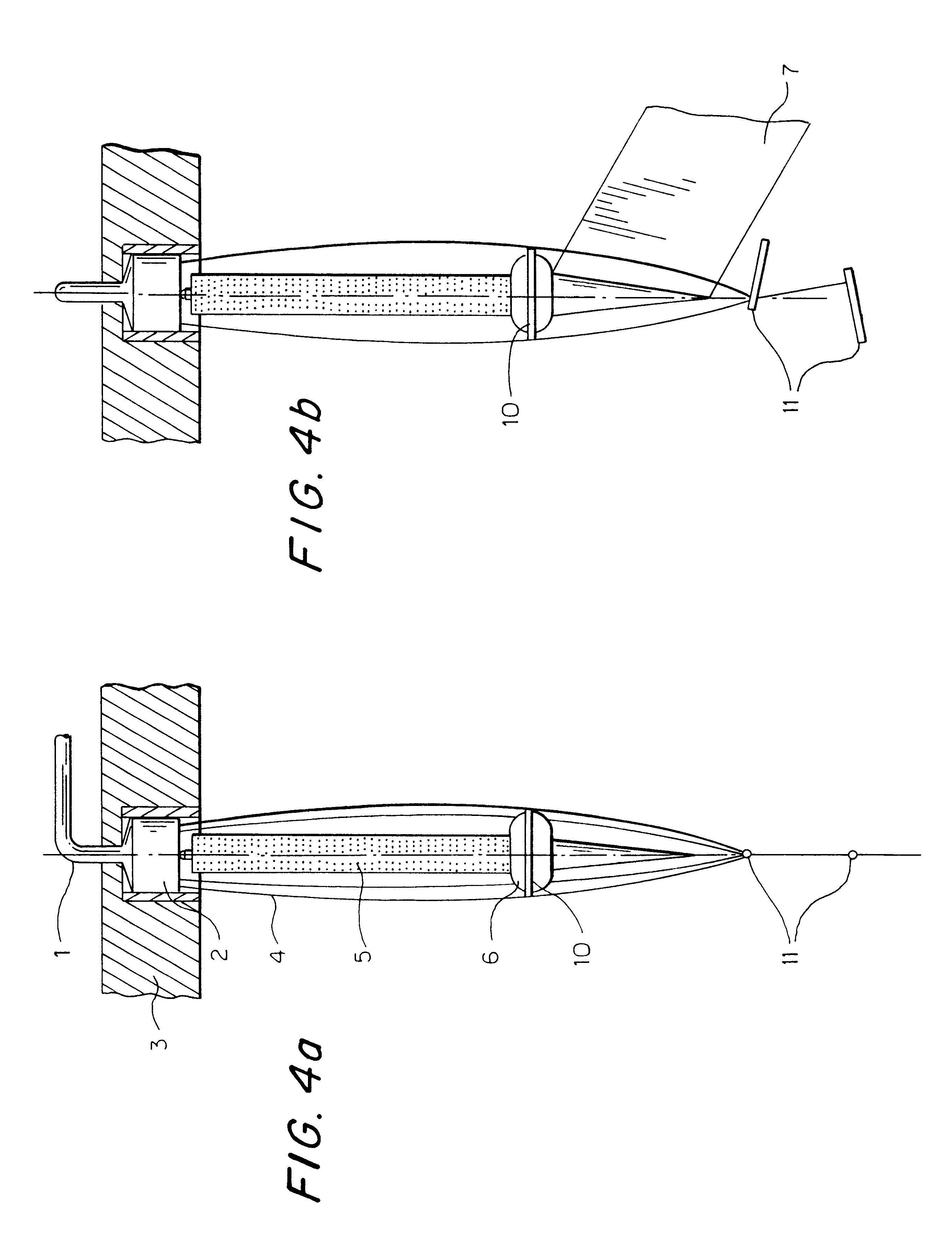
(central cooling device) shows how the quality is clearly improved in comparison with the comparison example 2 (cross-flow diffusion) in respect to uniformity (Uster values and Uster 1 / 2 values) and the quality (grade number). The values shown in example 3 confirm that, using the device in accordance with the invention, the quality of a yarn which consists of very many microfilaments is clearly better than the one shown in comparison example 5, which uses a device in accordance with the prior art. Example 4 makes it clear that, using the method in accordance with the invention with the device in accordance with the invention, it is possible to increase the hole number and to achieve a considerably improved quality over a device in accordance with the prior art. The manufacture of such high-capillary products while using the same nozzle diameter was not possible with the aid of cross-flow diffusion. This improved quality of the method in accordance with the invention with the device ...
PUM
| Property | Measurement | Unit |
|---|---|---|
| Length | aaaaa | aaaaa |
| Length | aaaaa | aaaaa |
| Angle | aaaaa | aaaaa |
Abstract
Description
Claims
Application Information
 Login to View More