

Automobile vehicle lock
a technology for automobiles and locks, applied in passenger locks, door locks, lock applications, etc., can solve the problems of motor dimensioning, back-up power supply problems, lock cannot be opened either electrically or mechanically, and the solution may prove insufficien
- Summary
- Abstract
- Description
- Claims
- Application Information
AI Technical Summary
Problems solved by technology
Method used
Image

Examples
Embodiment Construction
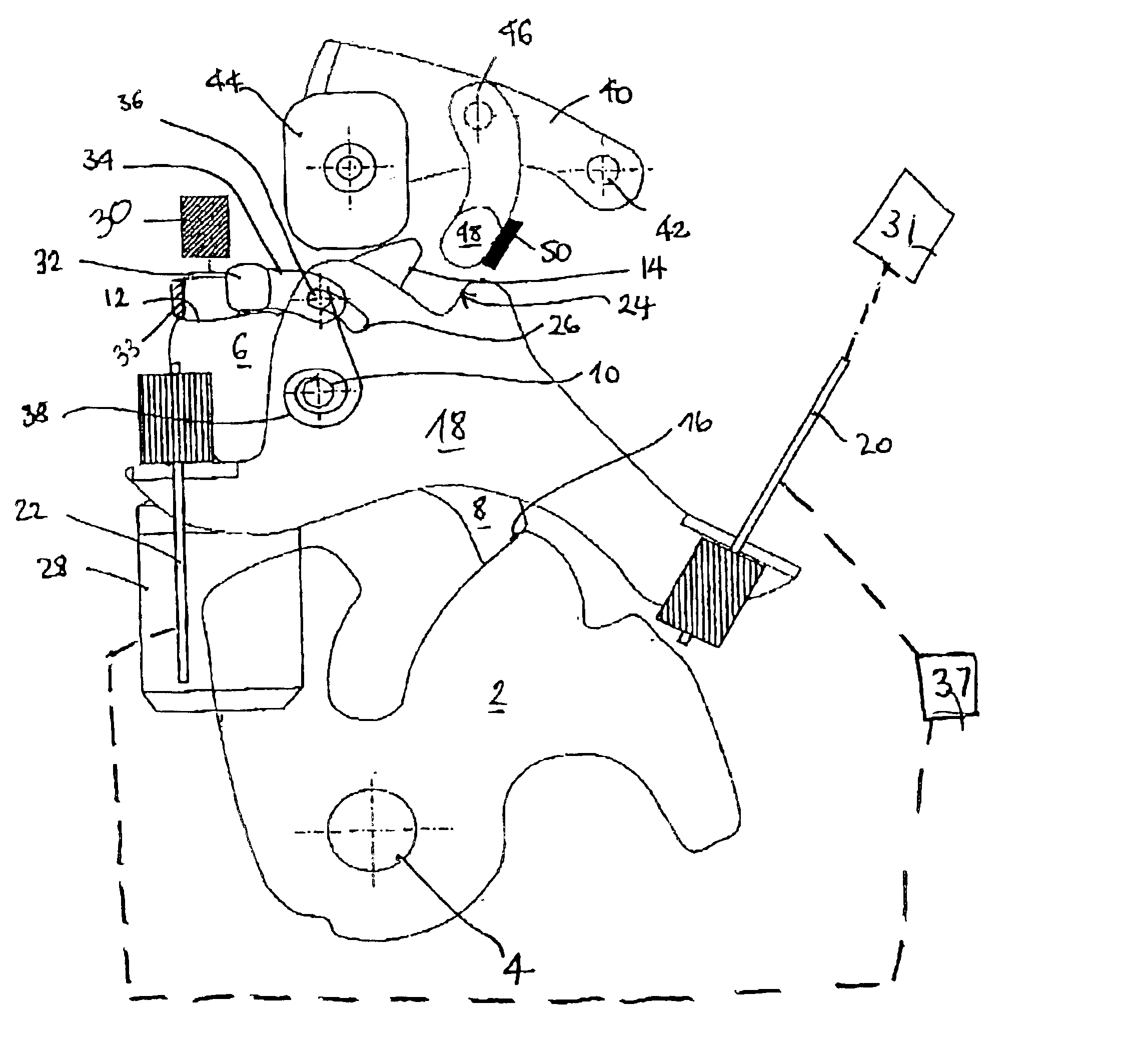
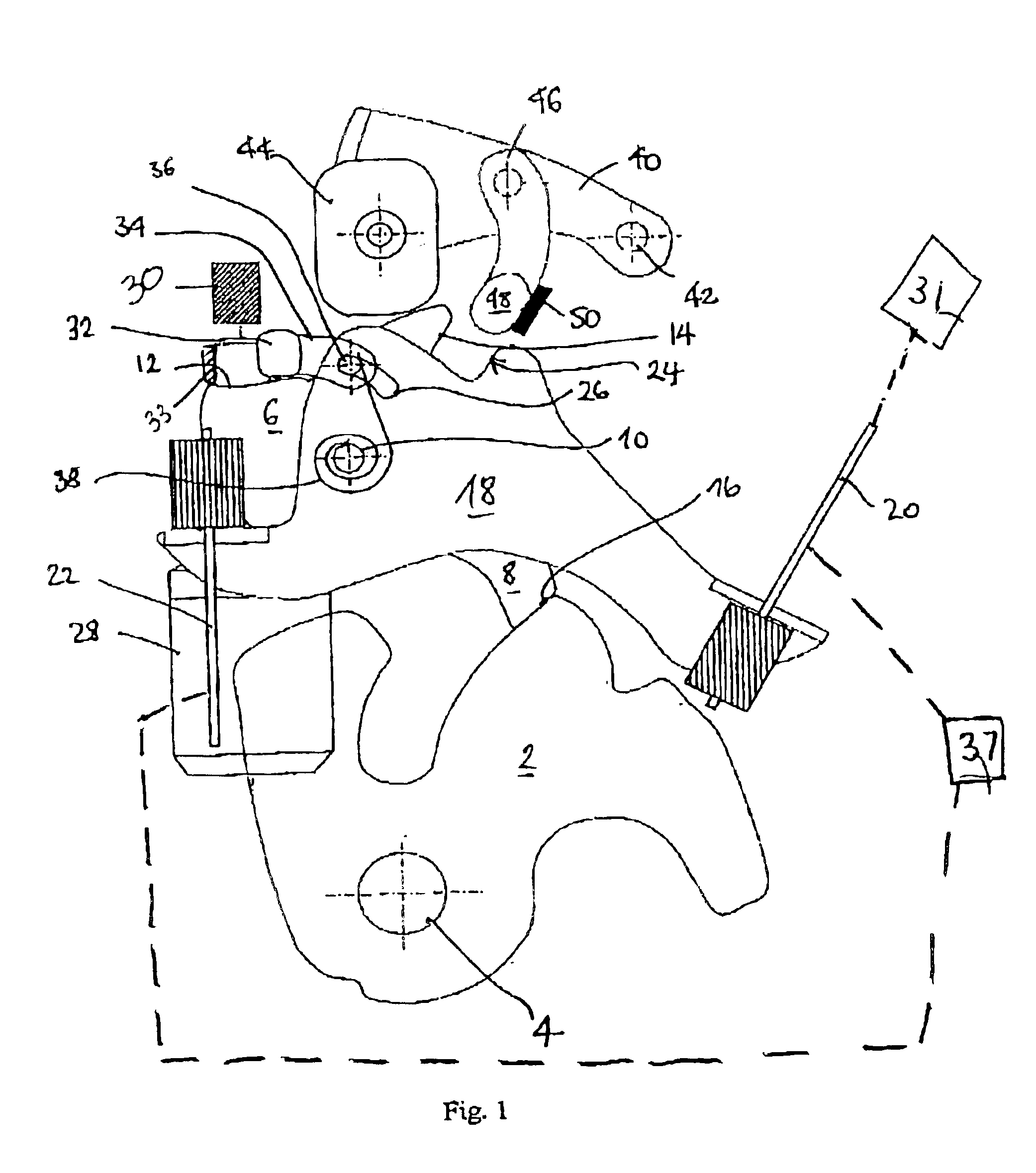
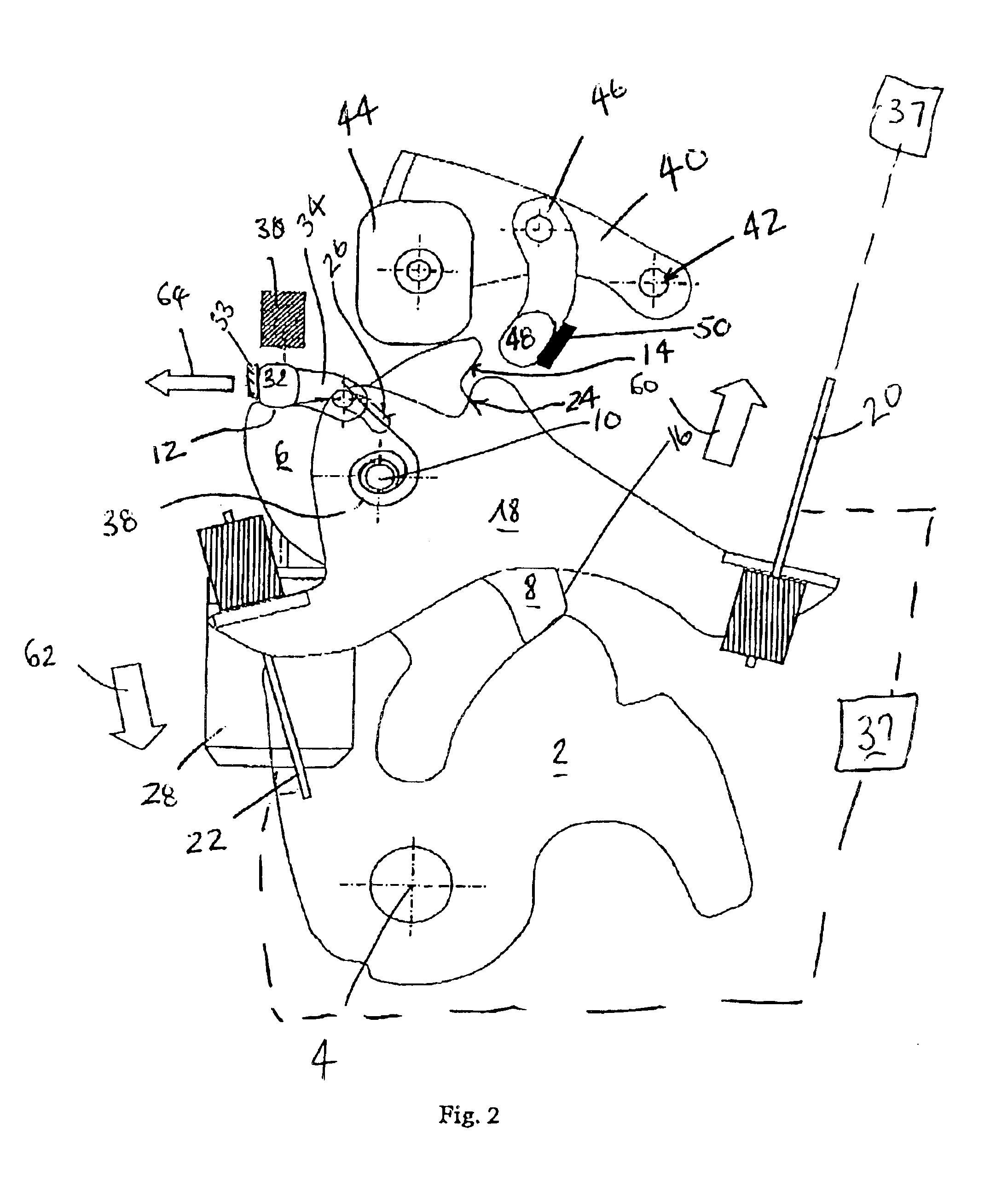
[0040]The invention provides a lock with an electric release as well as a selectively enabled mechanical release.
[0041]If the mechanical release is not selectively enabled into operation under normal conditions of use, the lock behaves like a purely electric lock. Consequently, the lock has the advantages of such a purely electric lock, notably as regards simplification of managing the various functions of authorizing or impeding release, discussed above.
[0042]The lock has a selectively enabled mechanical release, able to be used under degraded operating conditions. This means that it is not necessary for the electric motor that opens the lock to be dimensioned suitably to ensure release under degraded conditions. Thus, it is sufficient to dimension the motor to ensure release under normal conditions. The invention consequently makes it possible to employ a motor that is less powerful than those used in purely electrical state-of-the-art solutions.
[0043]In the following description,...
PUM
 Login to View More
 Abstract
Description
Claims
Application Information
 Login to View More