
Heating device suitable for motor vehicles
a motor vehicle and heating device technology, applied in the direction of domestic stoves or ranges, fluid friction heating, lighting and heating apparatus, etc., can solve the problem of increasing the production cost of heating devices
- Summary
- Abstract
- Description
- Claims
- Application Information
AI Technical Summary
Benefits of technology
Problems solved by technology
Method used
Image

Examples
Embodiment Construction
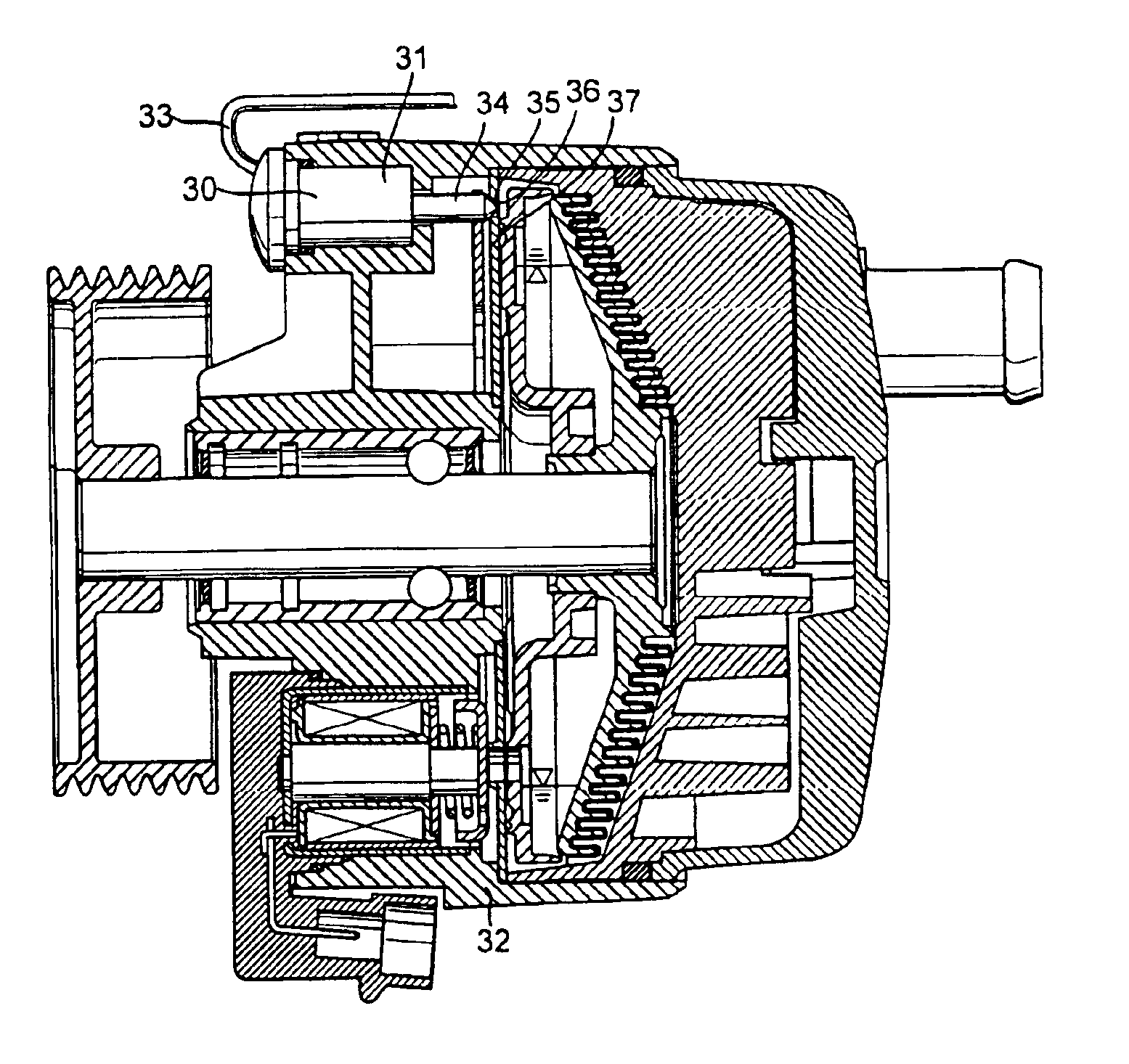
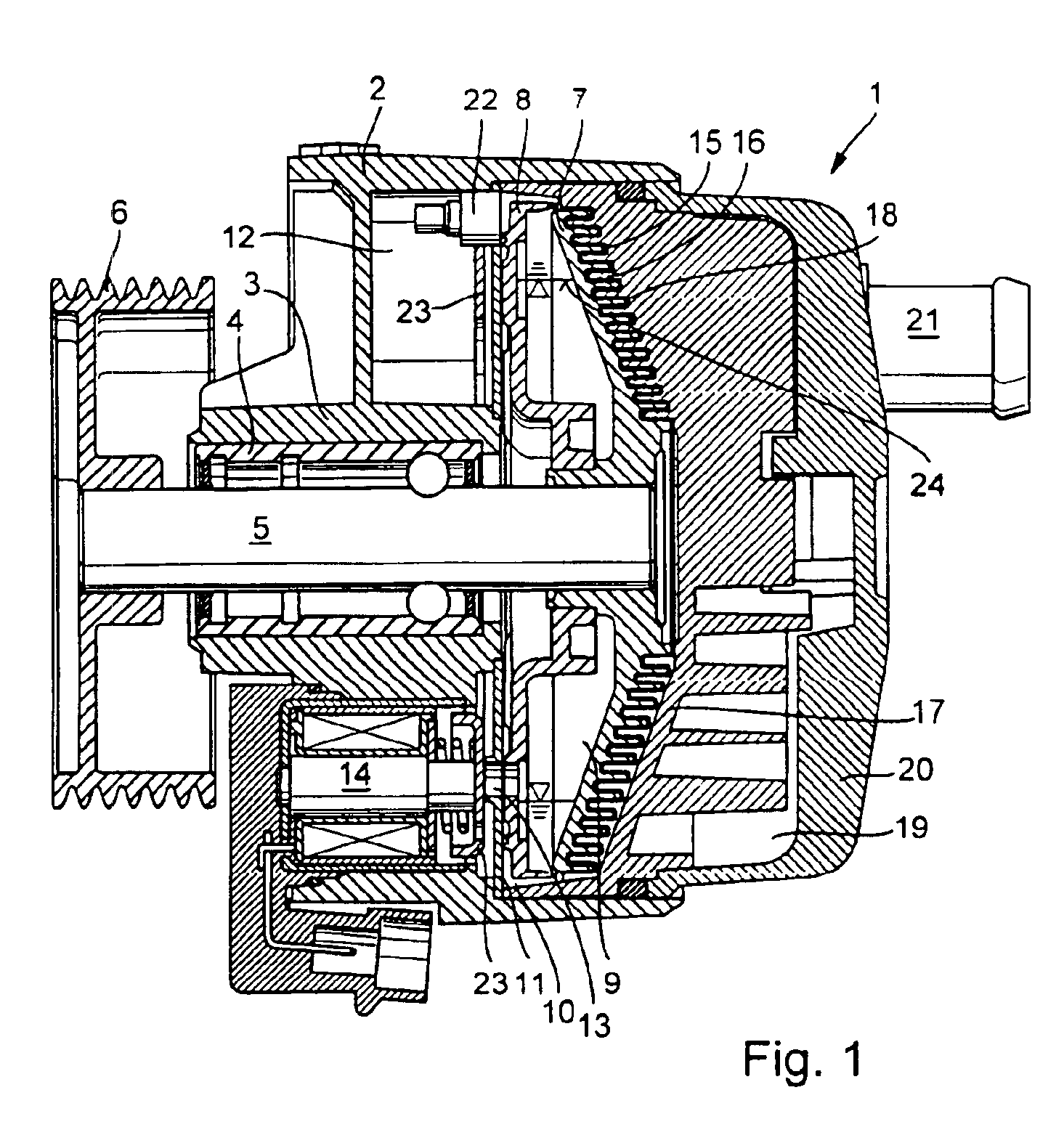
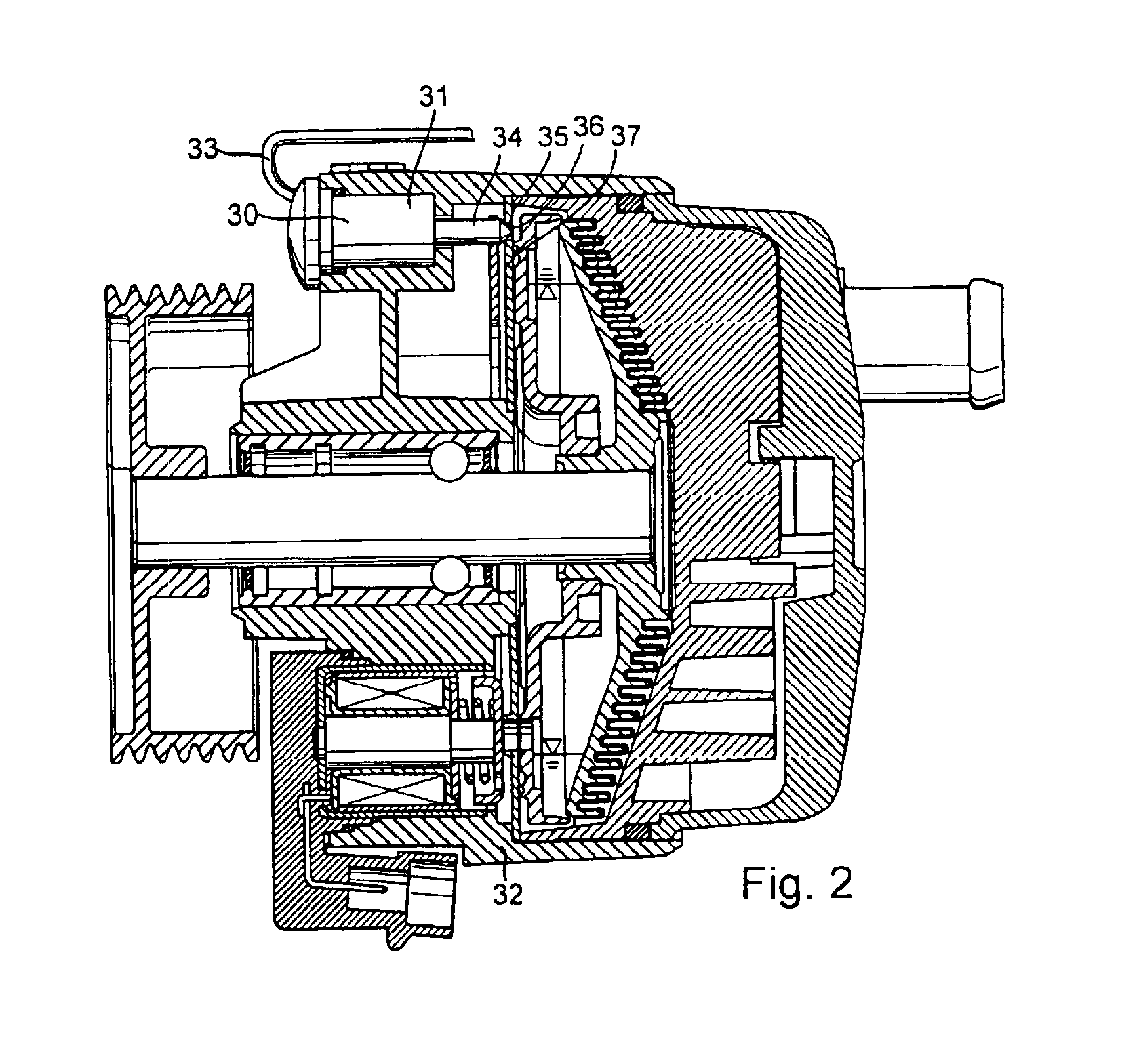
[0016]According to the invention, a control valve is arranged in the return part of the viscous liquid circuit in the heating device. This relatively simple design measure allows the pressure of the viscous liquid in the working chamber and therefore also in the working gap to be controlled, which at the same time results in the heating output being controlled. A linear bearing, which is subject to wear, can be dispensed with, since the rotor is arranged fixedly on the drive shaft in the axial direction. Overheating, which could even lead to the viscous liquid being destroyed, is avoided. Furthermore driving output of the internal combustion engine of the motor vehicle is also saved, since the drive moment required for the rotor is reduced with the reduction in pressure. This measure is based on the discovery that the static pressure of the viscous liquid in the working space and therefore also in the working gap is important for the torque which can be transmitted and therefore als...
PUM
 Login to View More
 Abstract
Description
Claims
Application Information
 Login to View More