
Microwave coupler
- Summary
- Abstract
- Description
- Claims
- Application Information
AI Technical Summary
Benefits of technology
Problems solved by technology
Method used
Image

Examples
Embodiment Construction
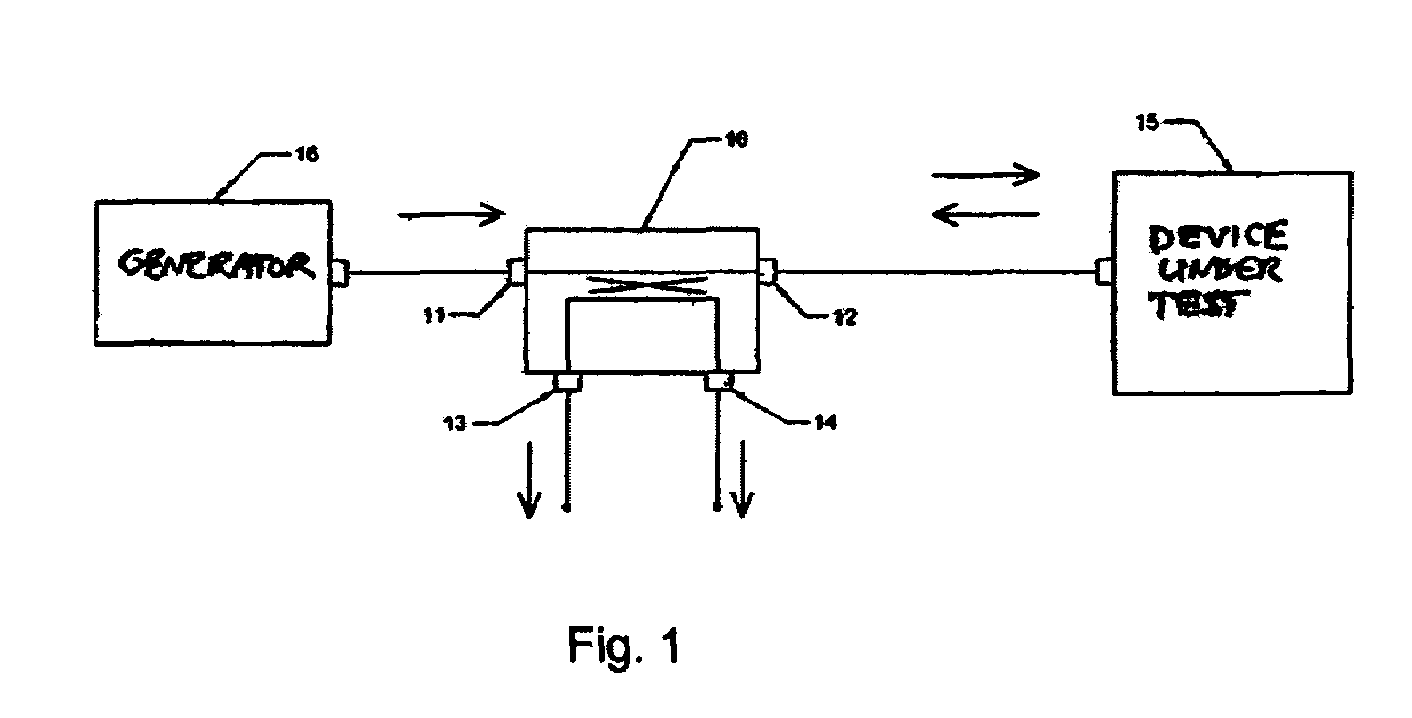
[0021]FIG. 1 shows an exemplary directional coupler 10 used in a typical application. In the application illustrated, the coupler 10 is used in a test setup to monitor the signal levels of forward and reflected power for a device under test 15. The coupler 10 comprises an input port 11 which is coupled to the output of an RF generator 16 and an output port 12 which is coupled to the device under test 15. The coupler 10 provides at a first coupled output port 13 a signal which is a predetermined fraction of the forward signal flowing from the RF generator 16 to the device under test 15. The coupler also provides at a second coupled output port 14 a signal which is a predetermined fraction of any reflected signal flowing back from the device under test 15 to the RF generator 16. Ideally, none of the reflected power appears at the first coupled output port 13 and none of the forward power appears at the second coupled output port 14.
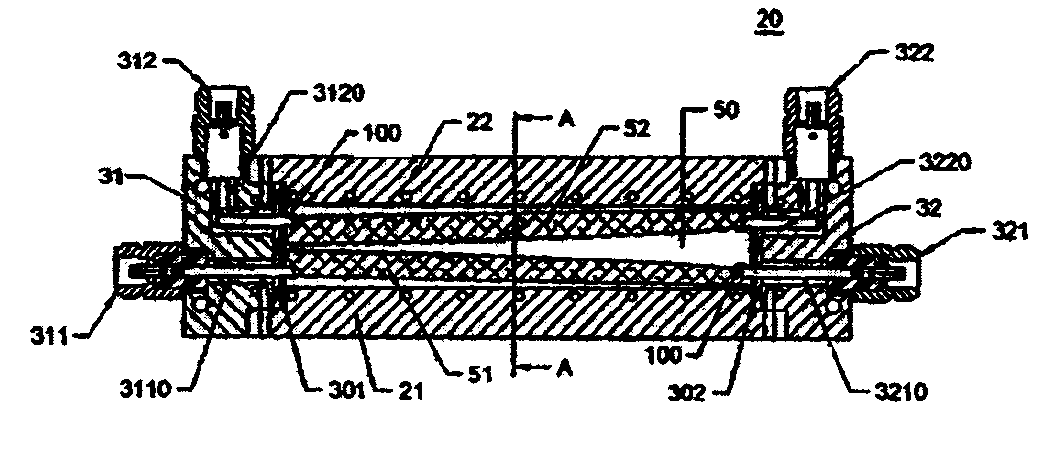
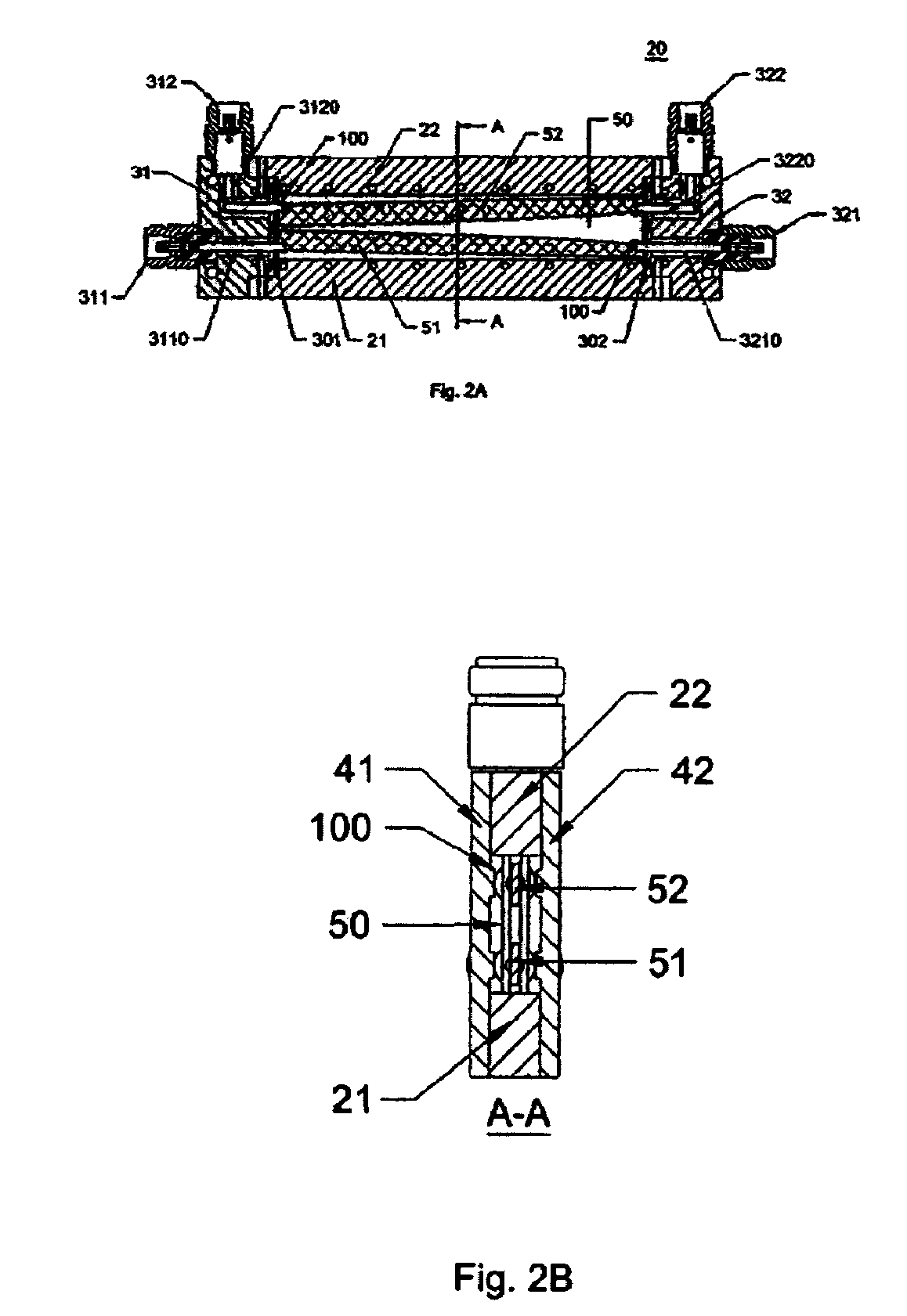
[0022]FIG. 2A is a plan view of a first exemplary emb...
PUM
 Login to View More
 Abstract
Description
Claims
Application Information
 Login to View More