
Collimating optical device and system
a collimating optical and lightguide technology, applied in the direction of polarising elements, planar/plate-like light guides, instruments, etc., can solve the problems of inconvenient installation and at times even unsafe use, high cost where high-performance is required, and facilitate the design and fabrication of compact imaging devices. , the effect of easy incorporation
- Summary
- Abstract
- Description
- Claims
- Application Information
AI Technical Summary
Benefits of technology
Problems solved by technology
Method used
Image

Examples
Embodiment Construction
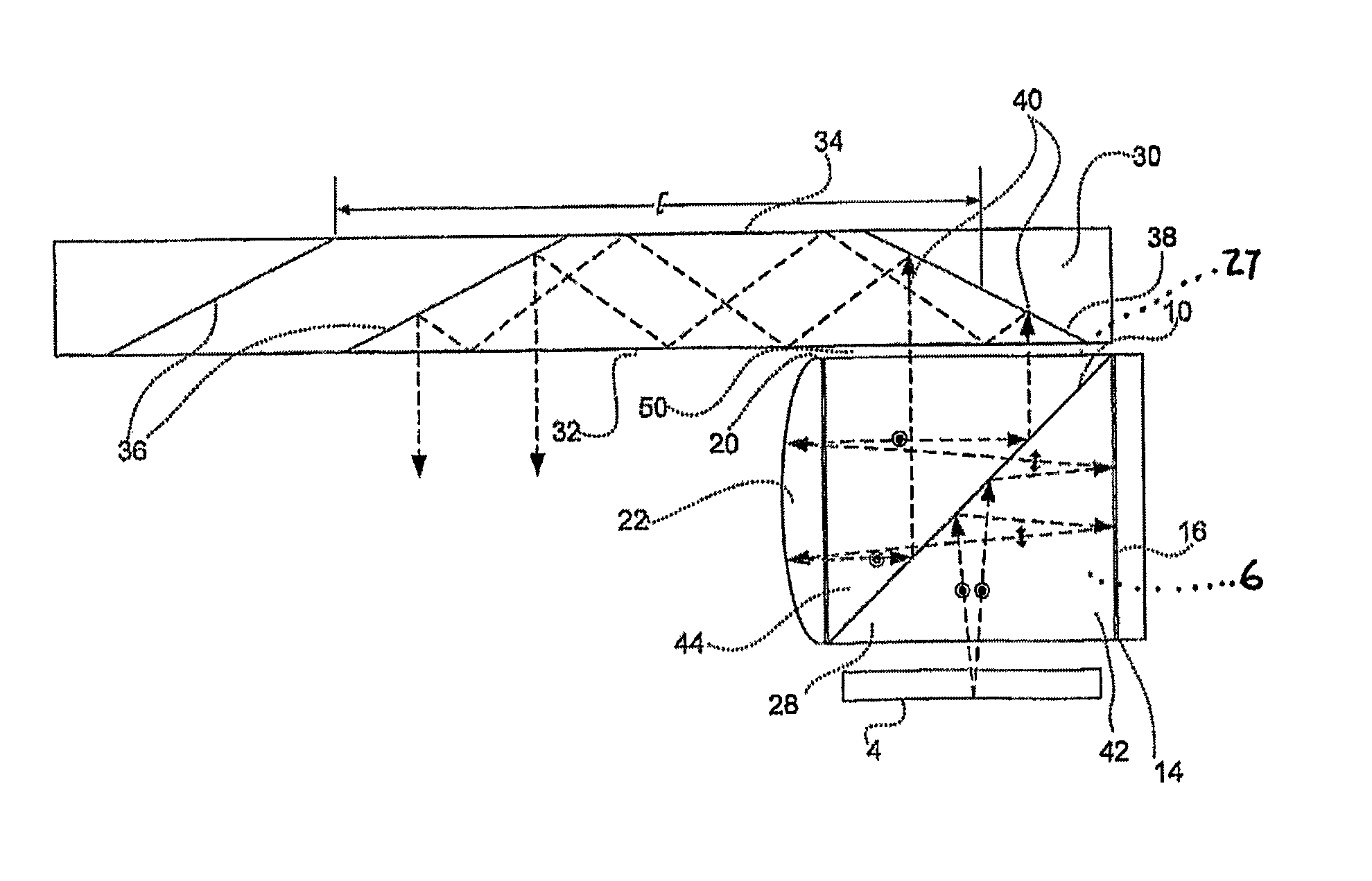
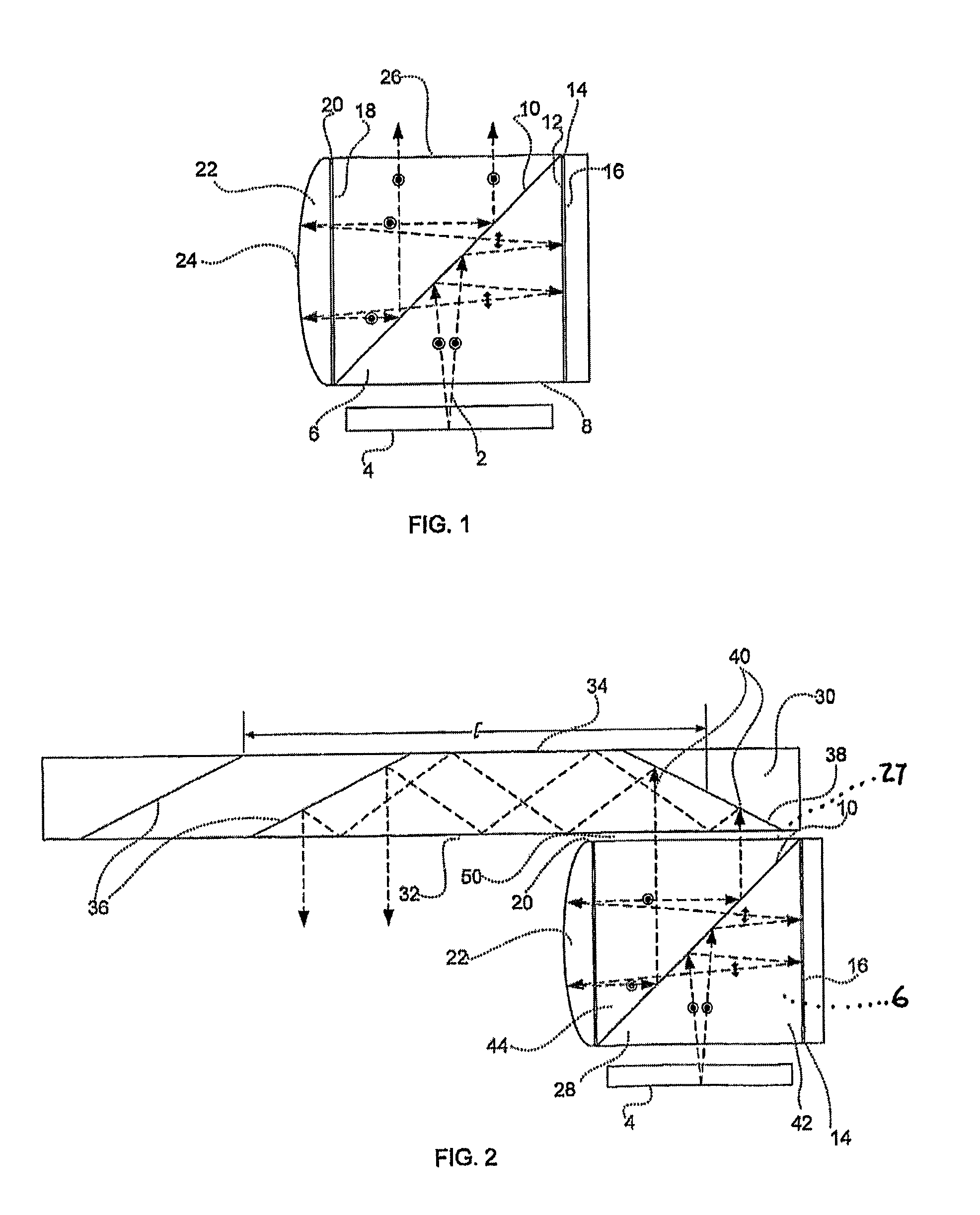
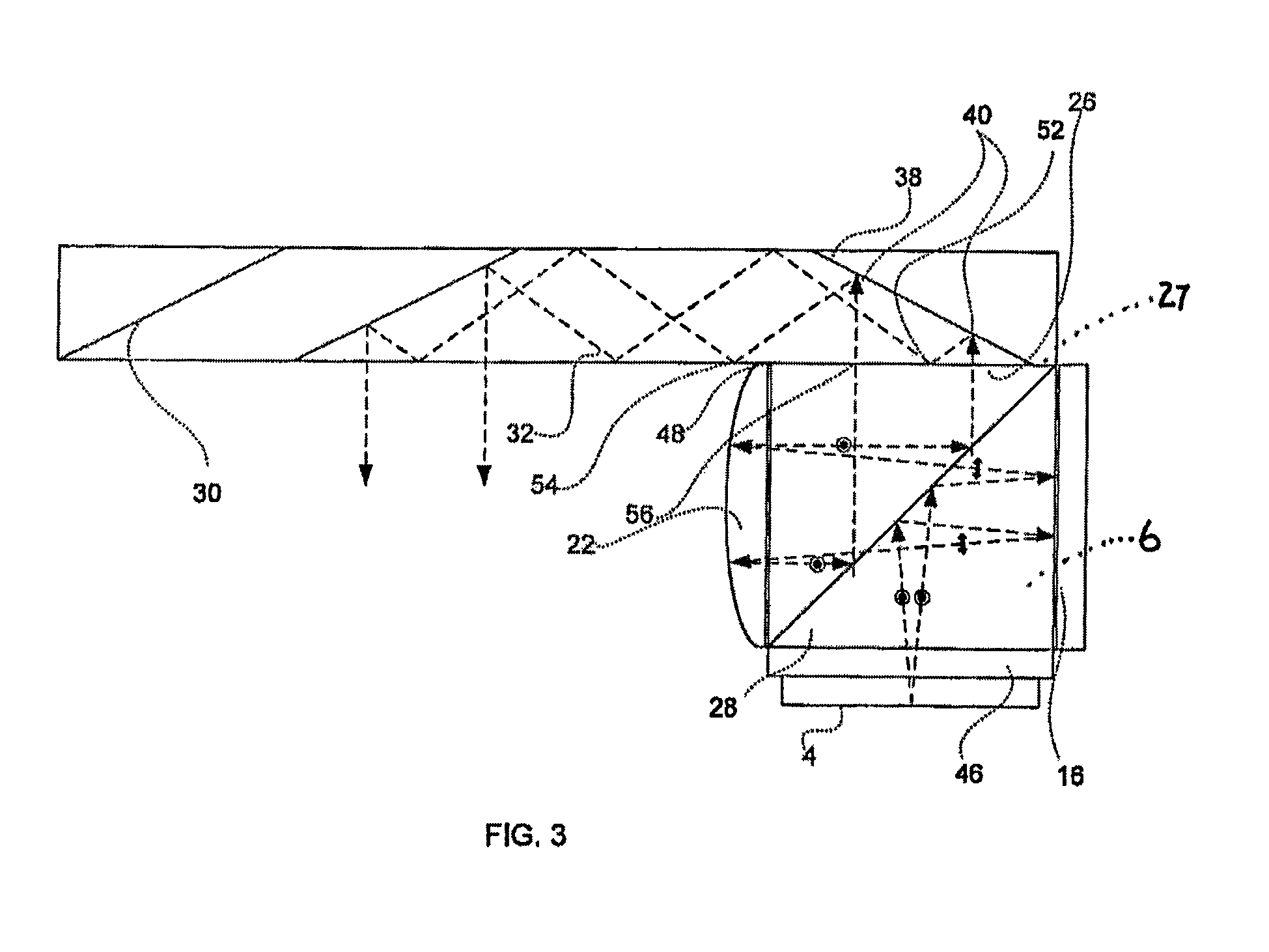
[0065]In the following there will be described superior structures of optical devices that are more compact than the prior art devices, having various configurations suitable for matching preferred outlines of optical systems, while still maintaining desired optical properties of the system. In such a structure, which exploits the fact that in most microdisplay light sources such as LCDs or LCOS light sources, the light is linearly polarized, as illustrated in FIG. 1. As shown, the s-polarized input light-waves 2 from the display light source 4 are coupled into a light-guide (optical device) 6, which is usually composed of a light-waves transmitting material, through its entrance surface 8. Following reflection-off of a polarizing beamsplitter 10, the light-waves are coupled-out of the substrate through an external surface 12 of the light-guide 6. The light-waves then pass through a quarter-wavelength retardation plate 14, reflected by a reflecting optical element 16, e.g., a flat m...
PUM
 Login to View More
 Abstract
Description
Claims
Application Information
 Login to View More