
Hydraulic system with fluid flow summation control of a variable displacement pump and priority allocation of fluid flow
a variable displacement pump and fluid flow technology, applied in fluid couplings, clutches, servomotors, etc., can solve the problems of low performance of other hydraulic functions and loss of efficiency of previous flow priority techniques
- Summary
- Abstract
- Description
- Claims
- Application Information
AI Technical Summary
Benefits of technology
Problems solved by technology
Method used
Image

Examples
Embodiment Construction
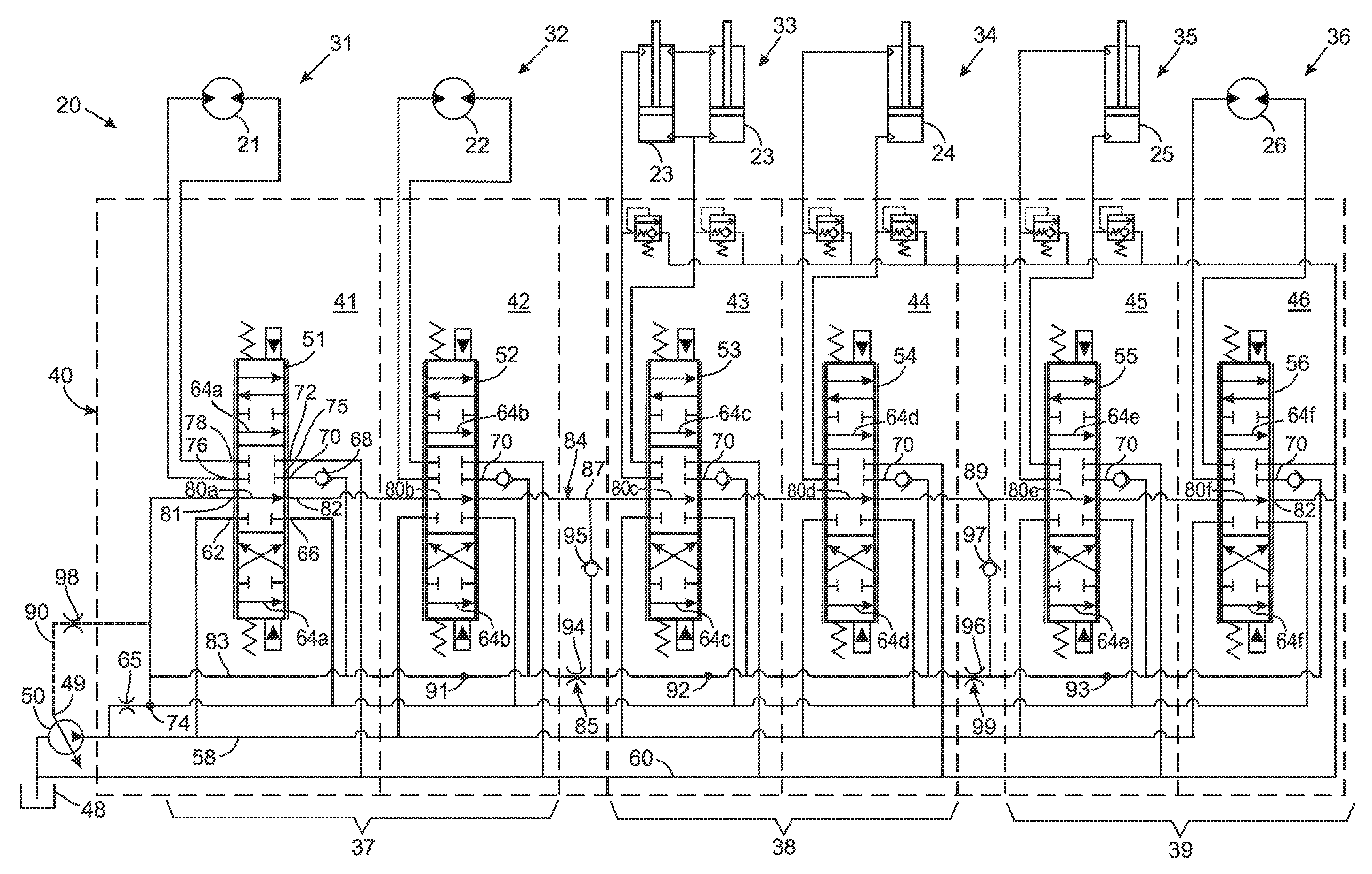
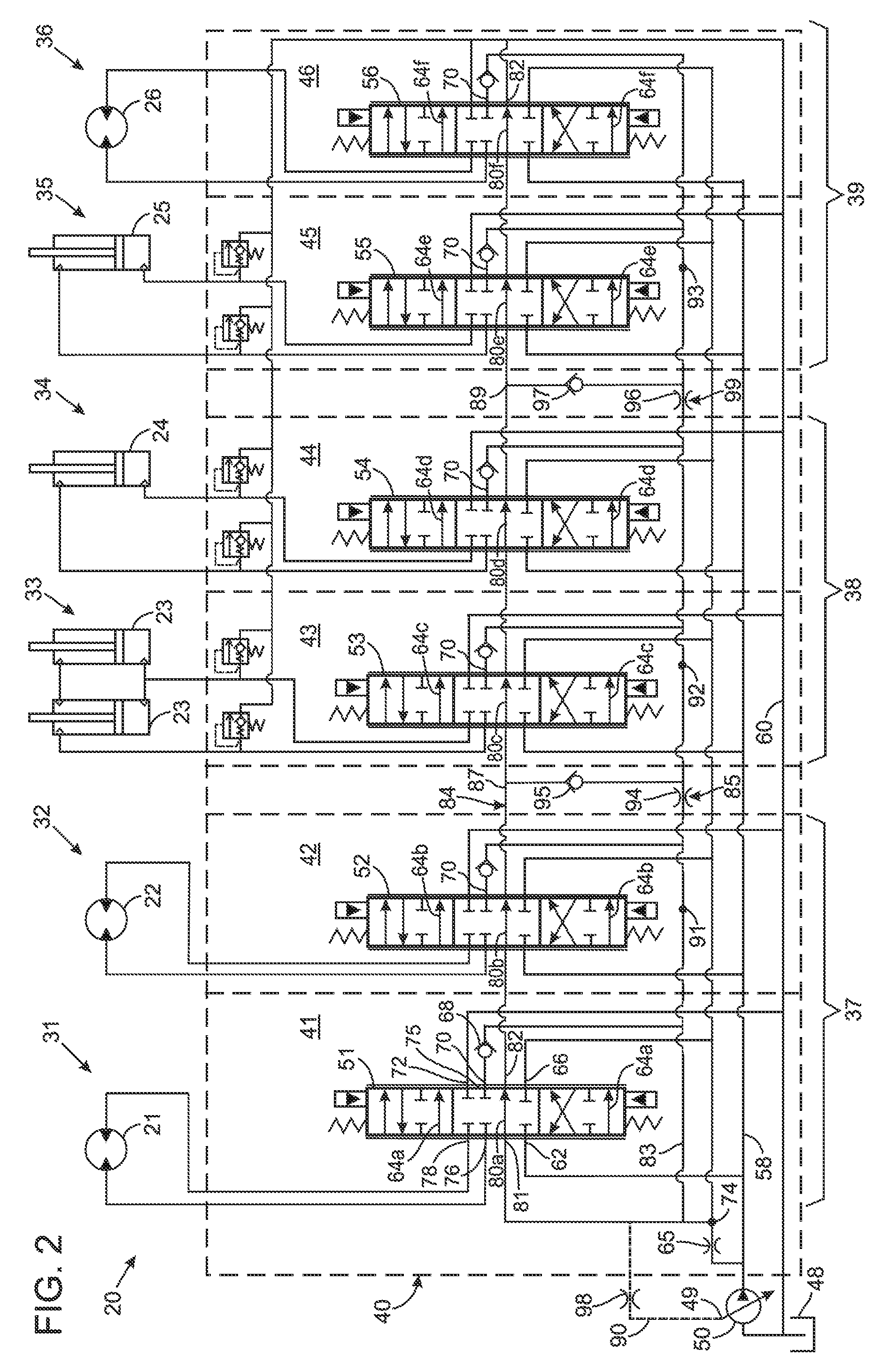
[0024]The term “directly connected” and “directly connects” as used herein means that the associated components are connected together by a conduit without any intervening element, such as a valve, an orifice or other device, which restricts or controls the flow of fluid beyond the inherent restriction of any conduit. If a component is described as being “directly connected” between two points or hydraulic circuit nodes, that component is directly connected to each such point or node.
[0025]Although the present invention is being described in the context of use on an earth excavator, it can be implemented on other hydraulically operated machines.
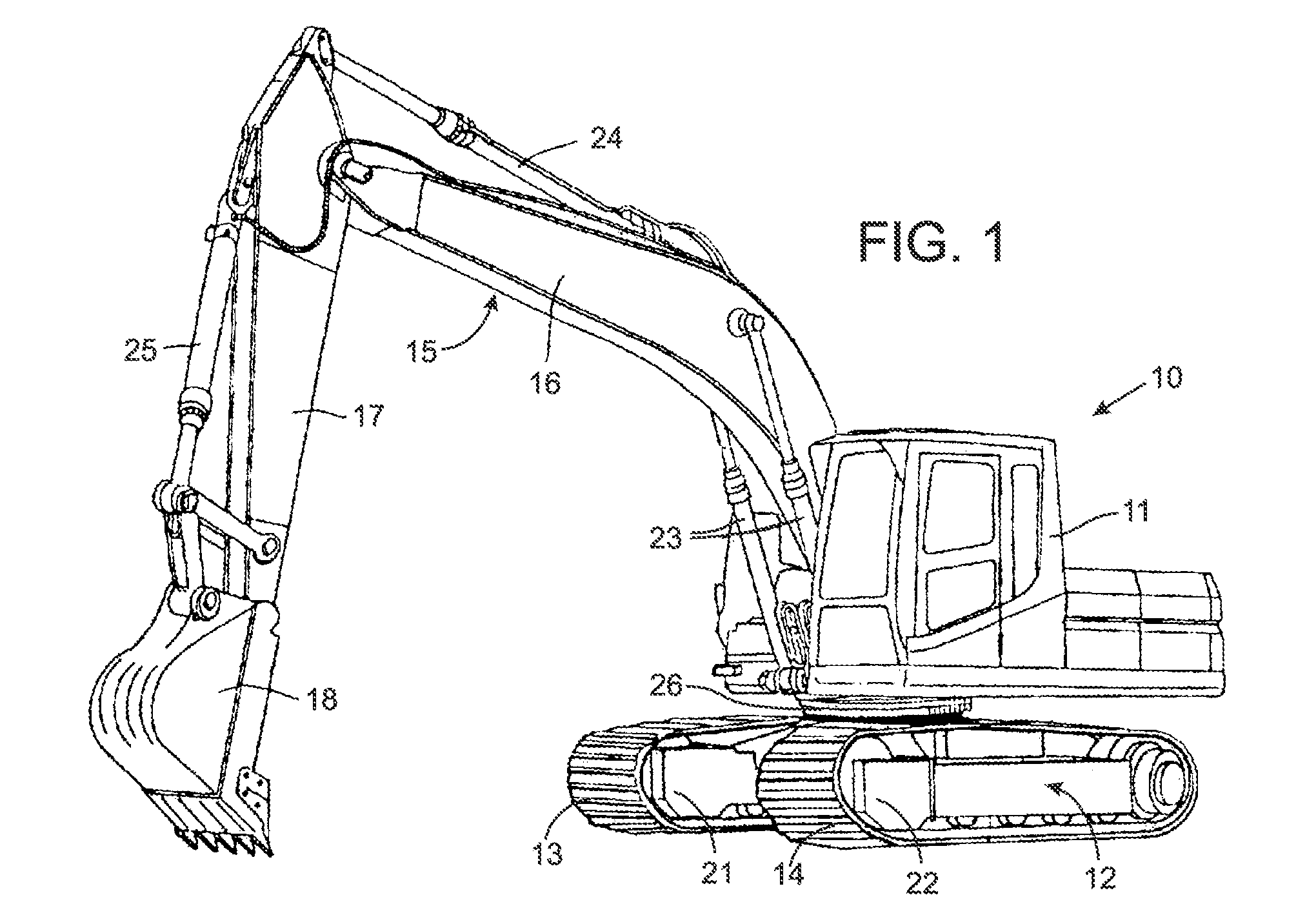
[0026]With initial reference to FIG. 1, an excavator 10 comprises a cab 11 that can swing clockwise and counter-clockwise on a crawler 12 when driven by a hydraulic motor 26. The crawler 12 is propelled by right and left tracks 13 and 14 that are driven by separate hydraulic motors 21 and 22, respectively.
[0027]A boom assembly 15, attached to...
PUM
 Login to View More
 Abstract
Description
Claims
Application Information
 Login to View More