
Challenging black hole attack defense method and device
A technology that challenges black holes and defense functions. It is applied in the field of network security and can solve problems such as resource waste and inability to filter by attackers, so as to avoid waste and improve CPU utilization.
- Summary
- Abstract
- Description
- Claims
- Application Information
AI Technical Summary
Problems solved by technology
Method used
Image

Examples
Embodiment Construction
[0023] In order to make the object, technical solution and advantages of the present invention more clear, the present invention will be further described in detail below in conjunction with the accompanying drawings and embodiments. It should be understood that the specific embodiments described here are only used to explain the present invention, and are not intended to limit the present invention.
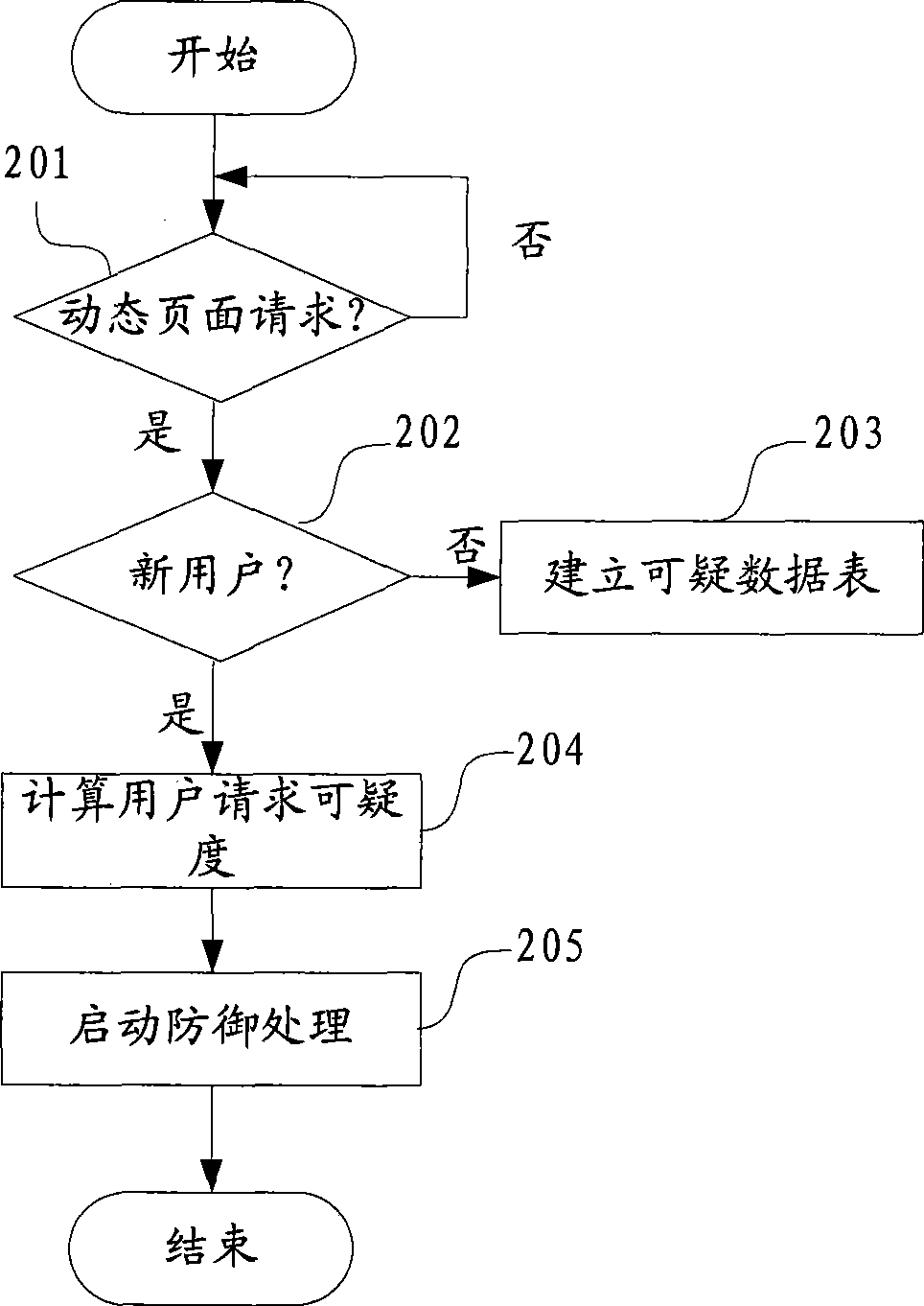
[0024] Please refer to figure 2 , is a schematic flow chart of Embodiment 1 of the present invention, and its steps include:
[0025] Step 201, judging whether the requested page is a dynamic page according to the captured data packet, if so, proceed to step 202;
[0026] Step 202, judging whether the user requesting the dynamic page is a new user, if so, proceed to step 203, otherwise proceed to step 204;
[0027] Step 203, create a suspicious data table for the new user, the data table includes two entries: the source IP address of the user and the suspicious degree of the ...
PUM
 Login to View More
 Abstract
Description
Claims
Application Information
 Login to View More