Small molecule DNA adaptorprotein for restraining activity of endotoxin
A DNA molecule and aptamer technology, applied in the biological field, can solve problems such as the inability to guarantee high affinity and high specificity of aptamers, the short immunogenic half-life of binding proteins and easy degradation, and the insignificant biological activity of endotoxins. Achieve the effect of non-immunogenicity, high affinity, and not easy in vivo
- Summary
- Abstract
- Description
- Claims
- Application Information
AI Technical Summary
Problems solved by technology
Method used
Image

Examples
experiment example 1
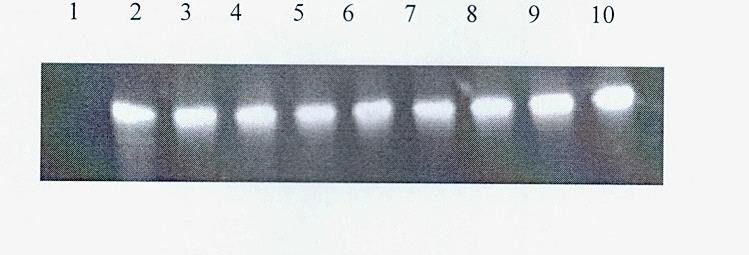
[0047] Experimental Example 1: Electrophoretic pattern after 12 rounds of screening of step d of the present invention
[0048] Such as figure 1 As shown, 1 is the blank control, only the original library; 2-10 is the schematic diagram after 12 rounds of screening of the original library and LPS; figure 1 It can be known that after 12 rounds of screening, the nucleic acid aptamer capable of binding to LPS was significantly enriched, and the electrophoresis showed an obvious single band.
experiment example 2
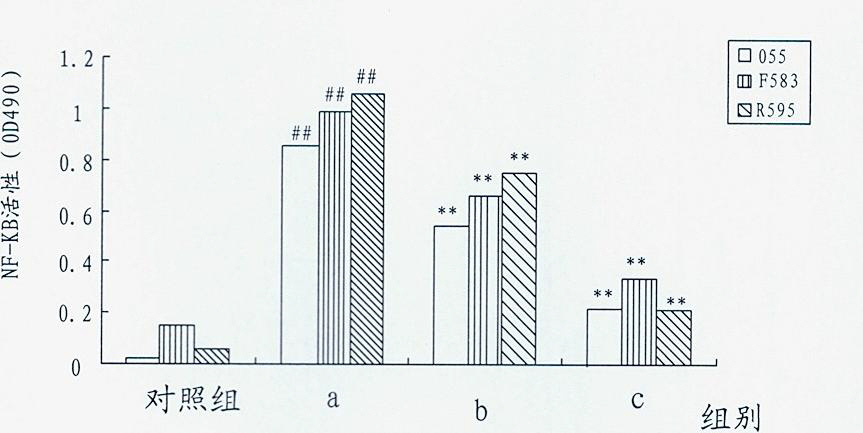
[0049] Experimental Example 2: Detection of Monocyte Nuclear Transcription Factor (NF-κB) Activity by ELISA
[0050] 1. Purpose: To verify the inhibitory effect of the obtained DNA aptamer on the activity of endotoxin, that is, the inhibitory effect on the activation of NF-κB in human monocytes stimulated by LPS.
[0051] 2. Method:
[0052] (1), apply conventional methods to isolate human peripheral blood mononuclear cells, and then cultivate 24 hours in RPMI 1640 culture fluid (Gibco company) containing 5% calf serum, and adjust the cell count to 2 × 10 6 cells / L, the purity of the cells detected by the Giemsa method was above 90%, and the survival rate of the cells identified by phthalein blue staining was 95%.
[0053](2), the experiment was divided into two groups: one group of cells were respectively stimulated with LPS 100ng / ml derived from Escherichia coli 055:B5 bacteria, E.coliLipidA (F583, Rd mutant) bacteria and Salmonella minnesota R595 (Rd mutant) bacteria; Gro...
experiment example 3
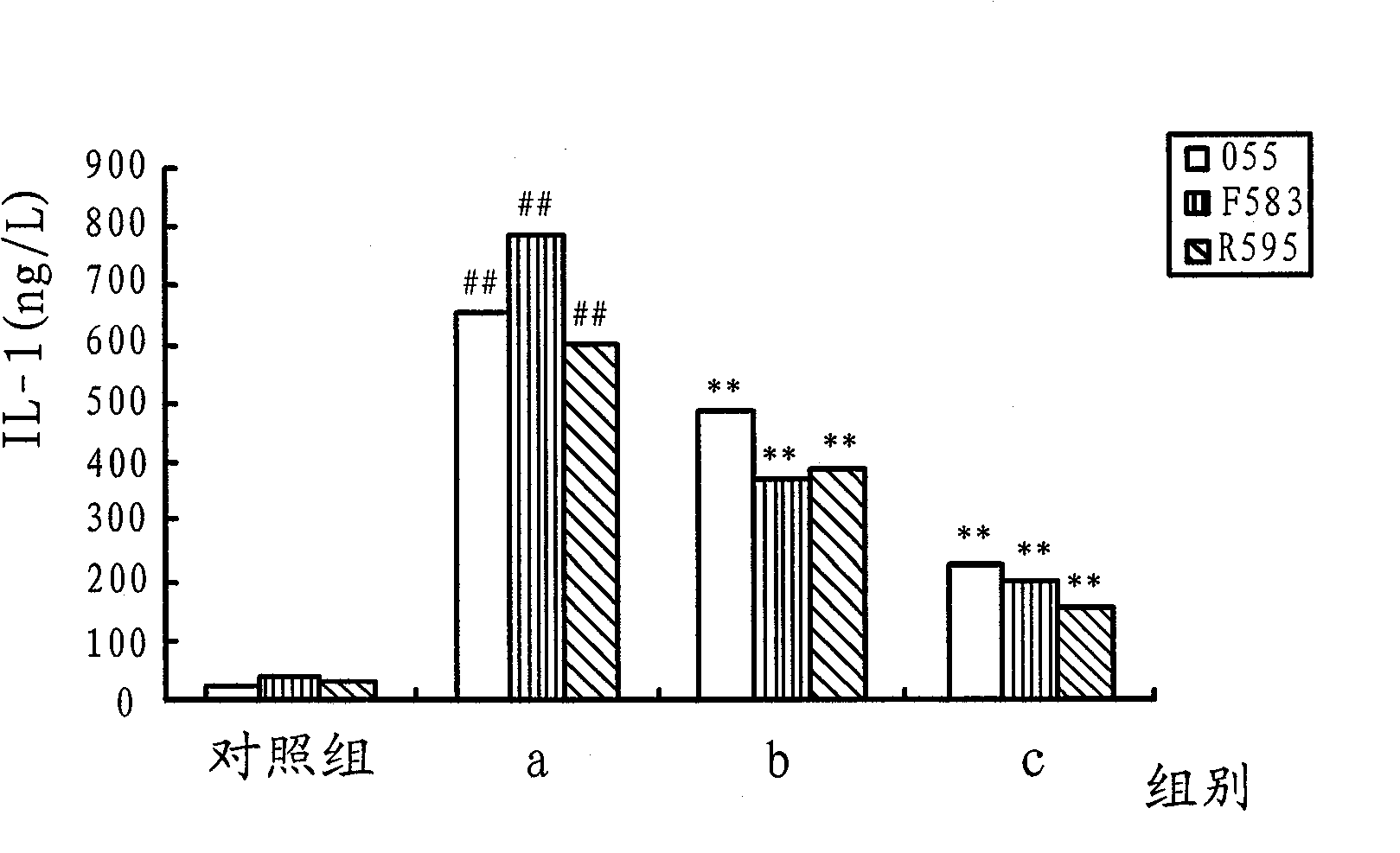
[0057] Experimental example 3: Detection of the content of inflammatory factors IL-1 and TNF-α in monocyte culture supernatant by ELISA method
[0058] 1. Purpose: To further verify the inhibitory effect of the obtained DNA aptamer on the activity of endotoxin in vitro, that is, the inhibition of the secretion of cytokines (playing a key role in sepsis caused by endotoxin) stimulated by LPS Effect.
[0059] 2. Method:
[0060] (1), apply conventional methods to isolate human peripheral blood mononuclear cells, and then cultivate 24 hours in the RPMI 1640 culture medium (Gibco company) of cold 5% calf serum, and adjust the cell count to be 2 × 10 6 cells / L, the purity of the cells detected by the Giemsa method was above 90%, and the survival rate of the cells identified by phthalein blue staining was 95%.
[0061] (2), the experiment was divided into two groups: one group of cells were respectively stimulated with LPS 100ng / ml derived from Escherichia coli 055: B5 bacteria, E...
PUM
| Property | Measurement | Unit |
|---|---|---|
| diameter | aaaaa | aaaaa |
Abstract
Description
Claims
Application Information
 Login to View More
 - R&D
- Intellectual Property
- Life Sciences
- Materials
- Tech Scout
- Unparalleled Data Quality
- Higher Quality Content
- 60% Fewer Hallucinations
Browse by: Latest US Patents, China's latest patents, Technical Efficacy Thesaurus, Application Domain, Technology Topic, Popular Technical Reports.
© 2025 PatSnap. All rights reserved.Legal|Privacy policy|Modern Slavery Act Transparency Statement|Sitemap|About US| Contact US: help@patsnap.com