
Method for preparing transparent Raman effect film
A Raman effect and transparency technology, applied in chemical instruments and methods, lamination, non-woven fabrics, etc., can solve the problems of difficult control of the production process, complicated SERS base materials and equipment, and achieve the effect of wide application prospects.
- Summary
- Abstract
- Description
- Claims
- Application Information
AI Technical Summary
Problems solved by technology
Method used
Image

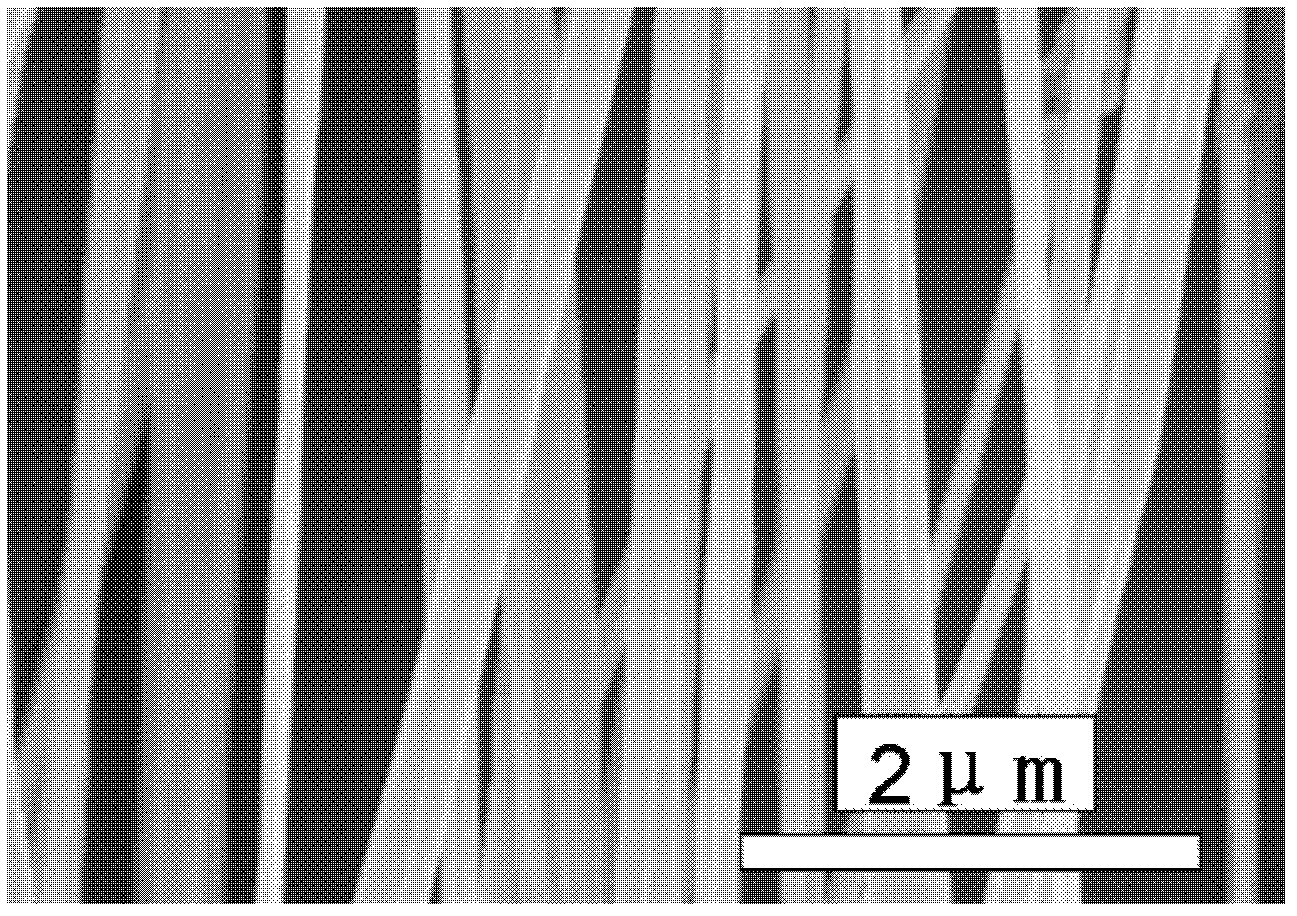
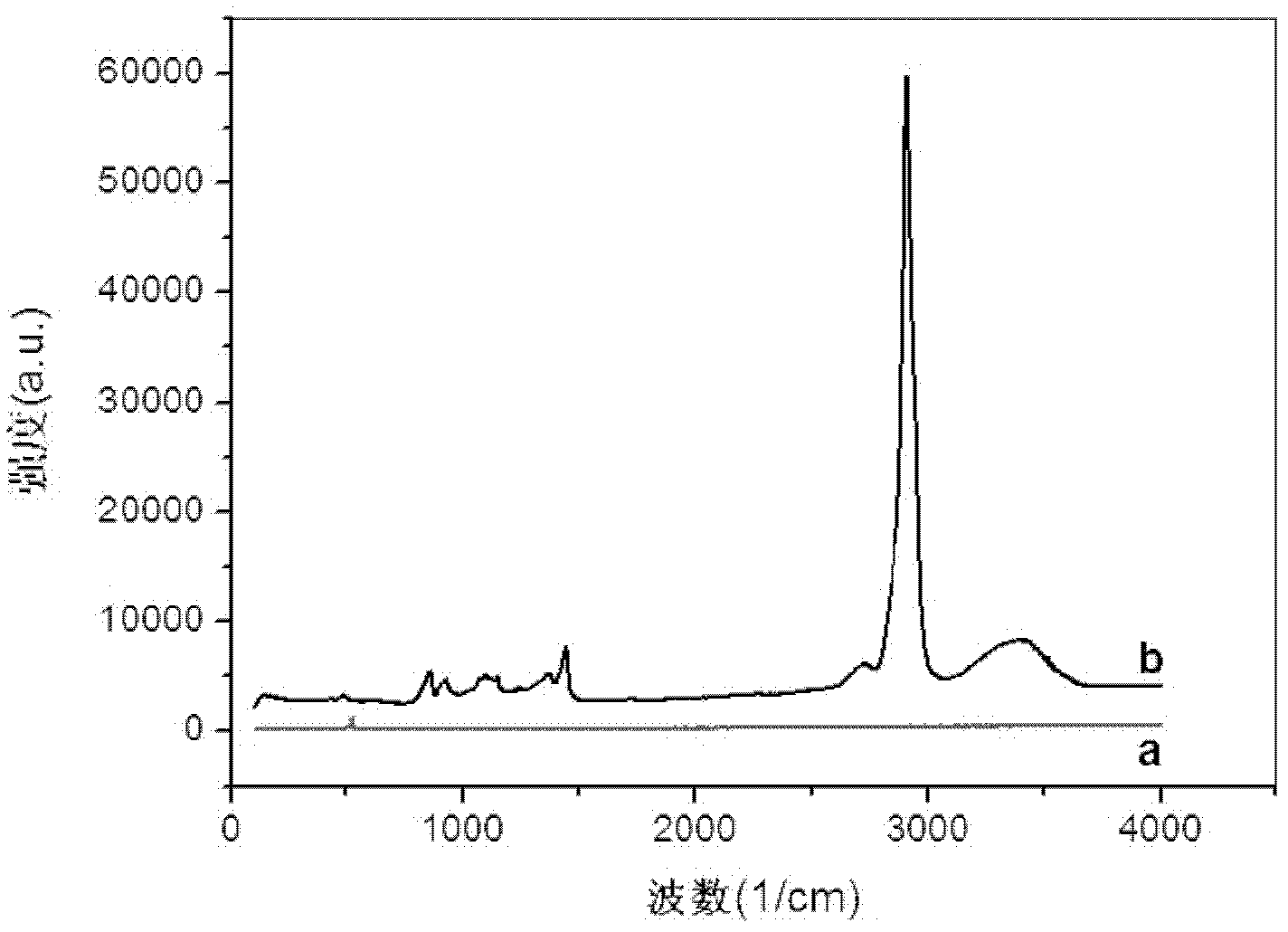
Examples
specific Embodiment approach 1
[0009] Specific embodiment one: present embodiment is a kind of preparation method of the Raman effect film with transparency, specifically is finished according to the following steps: one, at first acetone and acetic acid are mixed by volume ratio 1: (1.8~2.2) , to obtain a mixed solvent, and then dissolve cellulose acetate in the mixed solvent at 55 ° C to 65 ° C to obtain a cellulose acetate solution; 2. Mix the Ag NPs suspension with the cellulose acetate solution prepared in step 1 to obtain a spinning solution. 3. The spinning solution prepared in step 3 is spun into a nanofiber non-woven felt through an electrospinning process; 4. First, the nanofiber non-woven felt of the same size is cut according to the hole groove of the composite film forming tool, and flattened. Spread it into the hole groove of the composite film forming tool, and then pour the polyvinyl alcohol aqueous solution with a mass fraction of 7% to 9% into the hole groove to completely cover the nanofib...
specific Embodiment approach 2
[0014] Embodiment 2: The difference between this embodiment and Embodiment 1 is: the specific preparation process of the Ag NPs suspension described in step 2 is as follows: 1. First, silver nitrate is dissolved in deionized water to obtain a silver nitrate solution; ② Add soluble starch and lysine to deionized water in turn, and mix well to obtain a mixed solution; ③ Add silver nitrate solution to the mixed solution and mix evenly, then heat from room temperature to 140°C~160°C, and heat at 140°C~ Incubate at 160°C for 15s to 25s to obtain the Ag NPs suspension; the mass of silver nitrate described in step ① to the volume ratio of deionized water is (30g to 40g): 40ml; the soluble starch described in step ② The volume ratio of mass to deionized water is (0.6g~0.7g): 40ml; the mass of lysine described in step ② and the volume ratio of deionized water are (0.20g~0.27g): 40ml; step ③ The volume ratio of silver nitrate solution and mixed solution described in is (1~1.1):1.
[00...
PUM
| Property | Measurement | Unit |
|---|---|---|
| transmittivity | aaaaa | aaaaa |
Abstract
Description
Claims
Application Information
 Login to View More