Linear polarized wave transmitting-receiving device

A transceiver device and linear polarization technology, applied in the direction of antennas, electrical components, etc., can solve problems such as polarization direction deviation, deviation, and impact on communication quality, and achieve the effect of improving efficiency

A transceiver device and linear polarization technology, applied in the direction of antennas, electrical components, etc., can solve problems such as polarization direction deviation, deviation, and impact on communication quality, and achieve the effect of improving efficiency

CN102790285AActive Publication Date: 2012-11-21KUANG CHI INST OF ADVANCED TECH +1

Image

Smart Image Click on the blue labels to locate them in the text.
Viewing Examples
Smart Image
  • Linear polarized wave transmitting-receiving device
  • Linear polarized wave transmitting-receiving device
  • Linear polarized wave transmitting-receiving device

Examples

Experimental program
Comparison scheme
Effect test

Embodiment Construction

[0028] "Metamaterial" refers to some artificial composite structures or composite materials with extraordinary physical properties that natural materials do not have. Through the orderly design of the structure on the key physical scale of the material, the limitation of some apparent natural laws can be broken through, so as to obtain the supernormal material function beyond the ordinary nature inherent in nature.

[0029] Three important features of "metamaterials":

[0030] (1) "Metamaterials" are usually composite materials with novel artificial structures;

[0031] (2) "Metamaterials" have extraordinary physical properties (often not available in natural materials);

[0032] (3) The properties of "metamaterials" are jointly determined by the intrinsic properties of the constituent materials and the artificial microstructures in them. As common knowledge, we know that:

[0033] Electromagnetic waves have polarization characteristics, and its polarization methods refer t...

the structure of the environmentally friendly knitted fabric provided by the present invention; figure 2 Flow chart of the yarn wrapping machine for environmentally friendly knitted fabrics and storage devices; image 3 Is the parameter map of the yarn covering machine
Login to View More

PUM

No PUM Login to View More

Abstract

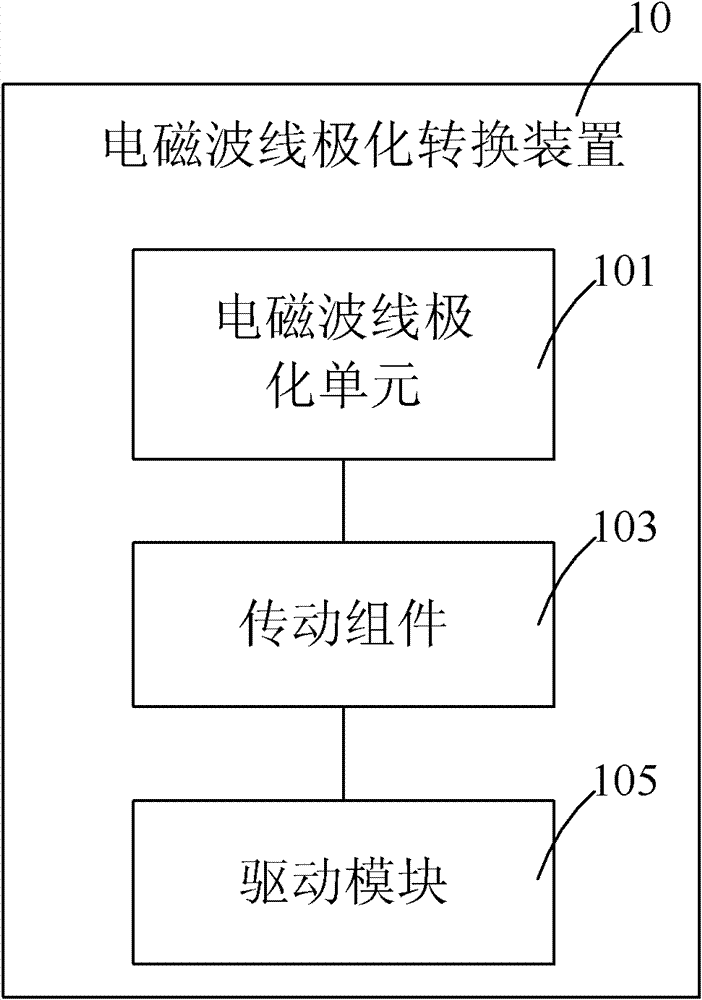
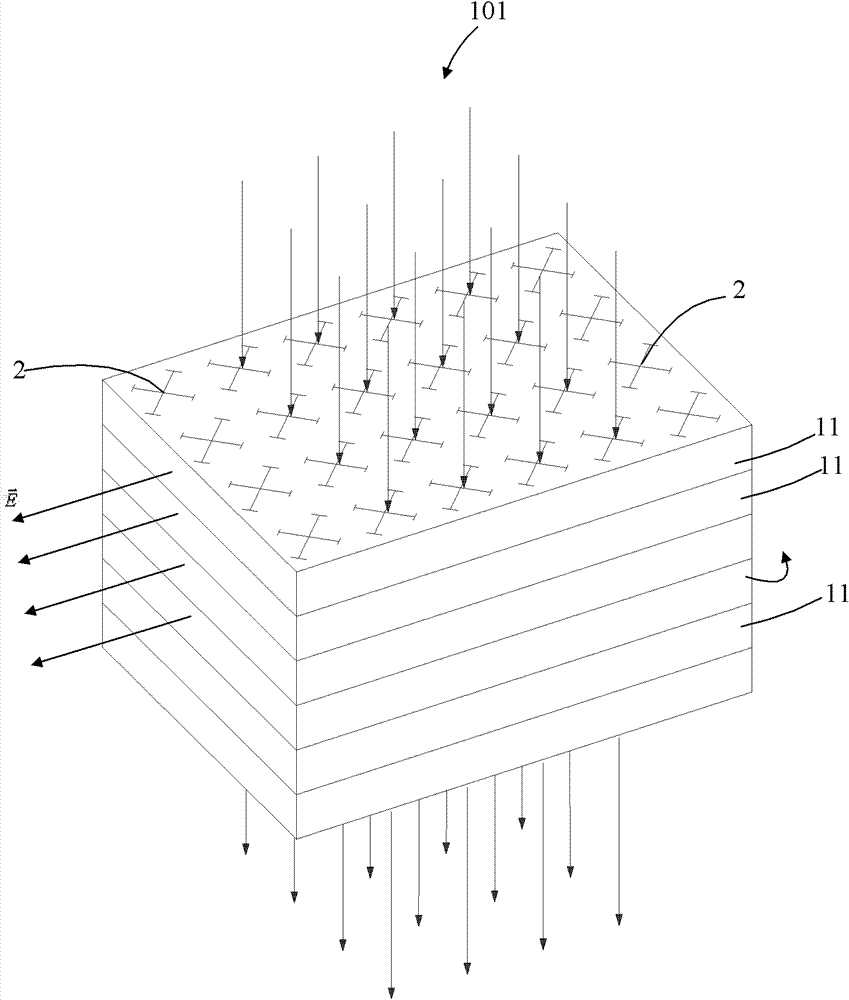
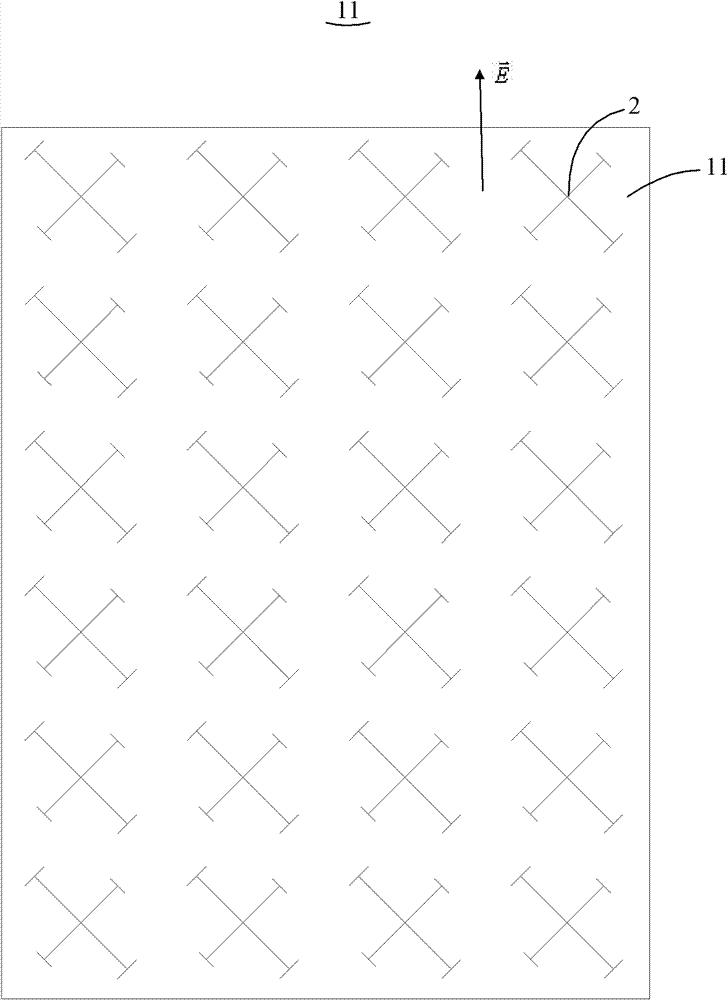
The invention relates to a linear polarized wave transmitting-receiving device. The linear polarized wave transmitting-receiving device comprises an electromagnetic wave linear polarized unit, a transmission assembly and a drive module, wherein the electromagnetic wave linear polarized unit comprises at least one meta-material layer; the meta-material layer comprises a base material and a plurality of manmade micro structures with anisotropic electromagnetic properties arranged on the base material, wherein the plurality of manmade micro structures are arranged on a plane vertical to the incidence direction of the electromagnetic wave; the transmission assembly is driven based on a drive module to rotate the electromagnetic wave linear polarized unit, so that the direction from which the electromagnetic wave linear polarized unit receives the linear polarized wave is the same as the incident electromagnetic wave polarized direction. By rotating the electromagnetic wave linear polarized unit, the direction from which the electromagnetic wave linear polarized unit receives the polarized wave is the same as the polarized direction of the incident electromagnetic wave, thereby timely adjusting the polarized direction from which a ground base station antenna or a wireless mobile communication device receives the polarized wave to improve the electromagnetic wave communication efficiency.

Description

technical field [0001] The invention relates to the field of linear polarization of electromagnetic waves based on metamaterials, in particular to a linearly polarized wave transceiver based on metamaterials. Background technique [0002] Satellite communication uses the microwave frequency range of 300MHz-30GHz. The purpose of using high-frequency signals is to ensure that the electromagnetic waves emitted on the ground can penetrate the ionosphere and reach the satellite. In satellite communication, different satellites, or transponders on the same satellite use different frequency ranges, and different frequency ranges have different code names. For example, the code name of the 3.95-5.85GHz frequency range is C, and this frequency range is referred to as the C-band; the code name of the 12.24-18GHz frequency range is Ku, and this frequency range is referred to as the Ku-band. [0003] The electromagnetic wave used in the satellite communication of the project is in the ...

Claims

the structure of the environmentally friendly knitted fabric provided by the present invention; figure 2 Flow chart of the yarn wrapping machine for environmentally friendly knitted fabrics and storage devices; image 3 Is the parameter map of the yarn covering machine
Login to View More

Application Information

Patent Timeline
21 Nov 2012
Publication
CN102790285A
IPC
H01Q15/24
Inventors
刘θ‹₯鹏; 徐冠雄