A method and device for realizing one-step access

A technology of user equipment and time delay, which is applied in the field of communication, can solve problems such as inaccessibility of services, and achieve the effect of solving excessive time delay

CN103139919BActive Publication Date: 2018-01-19ZTE CORP
3 Cites 0 Cited by

Patent Information

Authority / Receiving Office
CN · China
Patent Type
Patents(China)
Current Assignee / Owner
Publication Date
2018-01-19

Smart Images

  • Figure 1
    Figure 1
  • Figure 2
    Figure 2
Patent Text Reader

Abstract

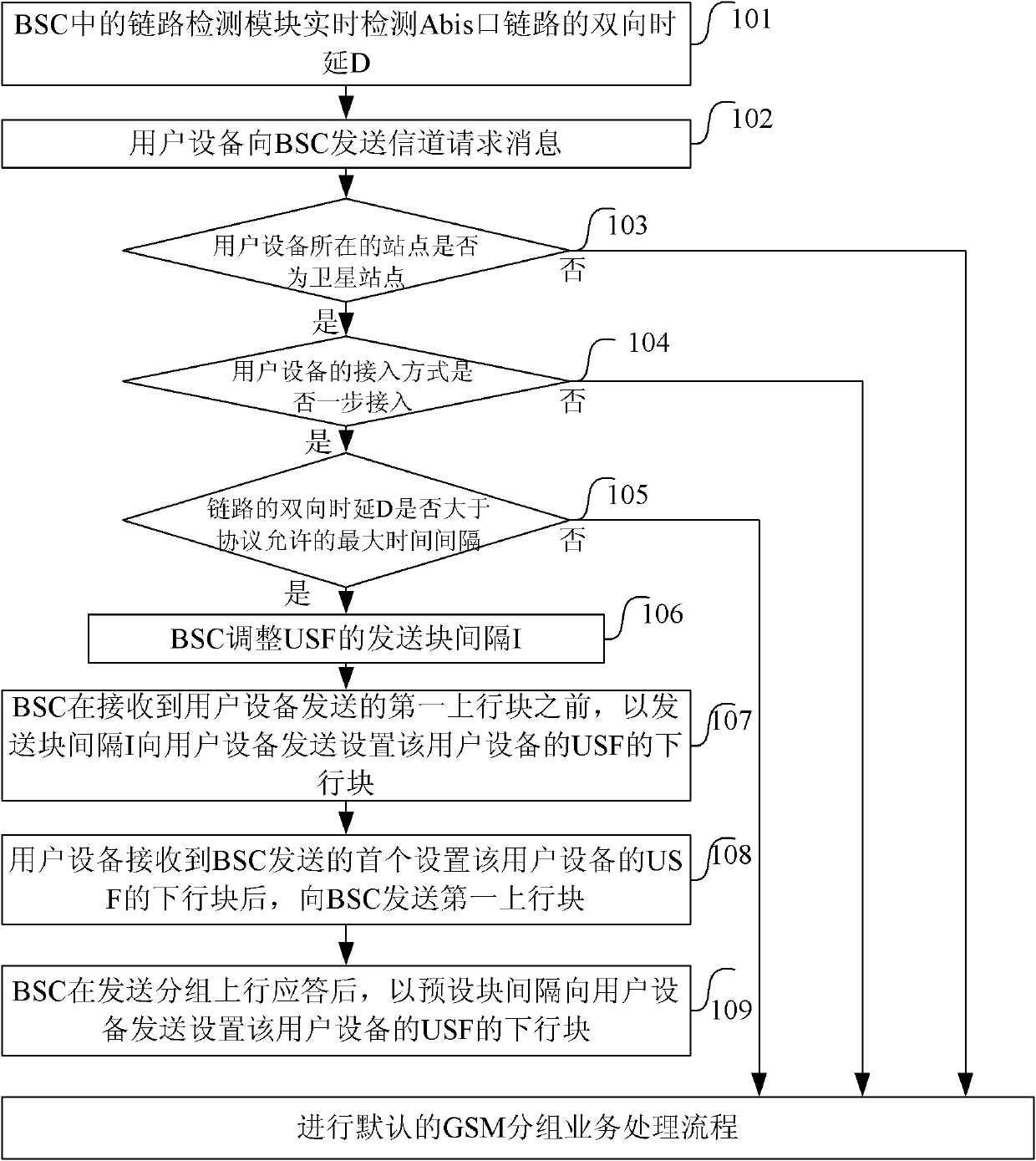
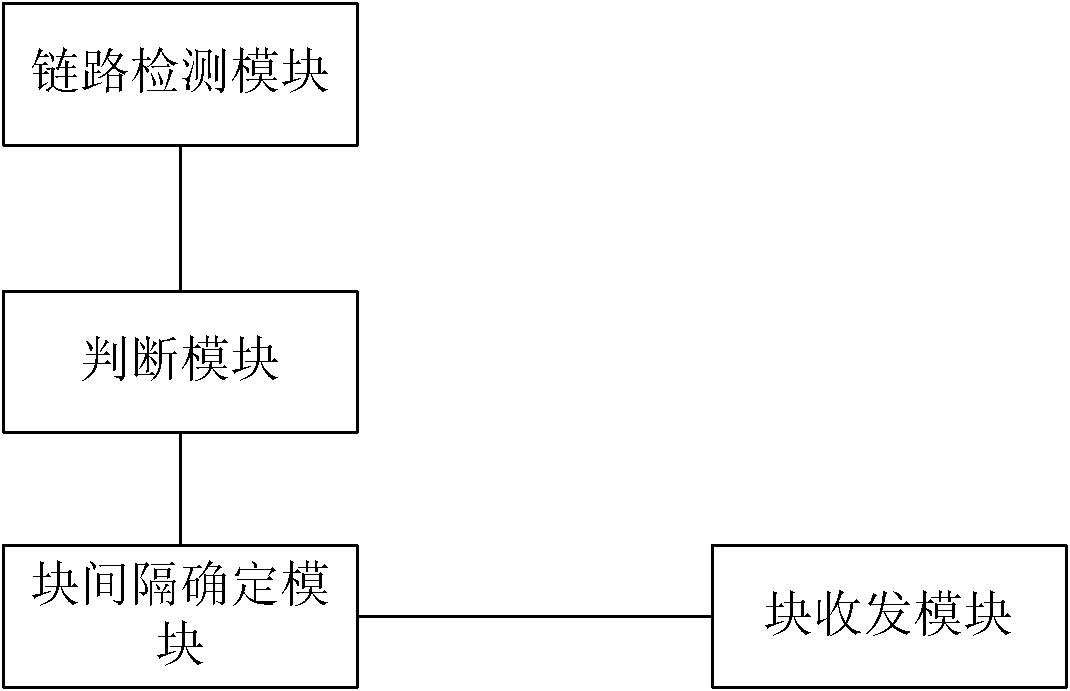
The invention discloses a method and device for realizing one-step access, including: calculating the two-way time delay of the link, judging whether the two-way time delay of the link is greater than the maximum time interval allowed by the protocol; When the delay is greater than the maximum time interval allowed by the protocol, determine the transmission block interval of the downlink block sent to the user equipment to set the user equipment's uplink status flag (USF), wherein the transmission block interval is greater than the two-way link of the link Delay / the maximum time interval allowed by the protocol, sending the downlink block for setting the USF of the user equipment to the user equipment at a certain sending block interval. The present invention adjusts the sending interval of the USF when the two-way delay of the link exceeds the standard of the limited delay, so as to ensure that the uplink can be allocated in time according to the actual situation, and the user equipment will not be forcibly released due to the restriction of one-step access, thereby solving the problem of The problem of inaccessibility caused by the long delay of the link is solved.
Need to check novelty before this filing date? Find Prior Art

Description

technical field

[0001] The present invention relates to the field of communication technology, in particular to a method and device for realizing one-step access. Background technique

[0002] In GSM (Global System for Mobile Communications), there may be many situations in the networking of the Abis port. Among them, a satellite link may be used. The standard two-way delay of the usual high-orbit satellite link is 520ms, plus the landing link router, The processing time of the digital circuit signal multiplication system and the delay of the air interface, etc., the maximum delay may exceed 1100ms or more. At the same time, in the actual network environment, there are still cases where the BTS (base transceiver station) passes through the satellite to the transit router and then passes through the satellite to the BSC (base station controller). It may need to go through multiple satellite links in the middle, so that the entire Abis link The time delay will be greatly incr...

Examples

Embodiment Construction

[0030] This implementation mode proposes a method of allocating uplink block resources according to the time delay to prevent N3104 from reaching the maximum value. In the conflict resolution process, after the BSC obtains the two-way delay D, it determines that the transmission block interval I of the downlink block with the uplink state flag (Uplink StateFlag, USF) set satisfies I>D / the maximum time interval allowed by the protocol, and the protocol allows The maximum time interval of is the product of the maximum count value of N3104 and the time of a single block, and the uplink status flag is used to control multiple user equipments to use the wireless channel in the dynamic allocation mode.

[0031] Assume that after the BSC sets the USF on the downlink block for the first time, after the user equipment receives the downlink block, it sends the first block according to the USF. When the D / 2 time arrives, the BSC replies with the packet uplink response, and after the D / 2 t...