
Testing method of railway vehicle flexibility coefficient
A technology of flexibility coefficient and test method, applied in the direction of railway vehicle testing, etc., can solve the problems of high risk coefficient, easy to produce errors, large deviation, etc., and achieve the effect of accurate test results, short time period and easy implementation.
- Summary
- Abstract
- Description
- Claims
- Application Information
AI Technical Summary
Problems solved by technology
Method used
Image

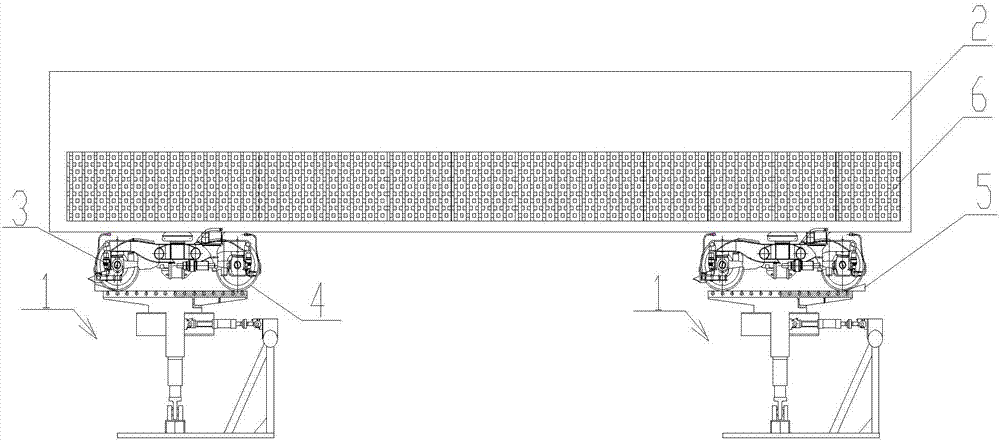
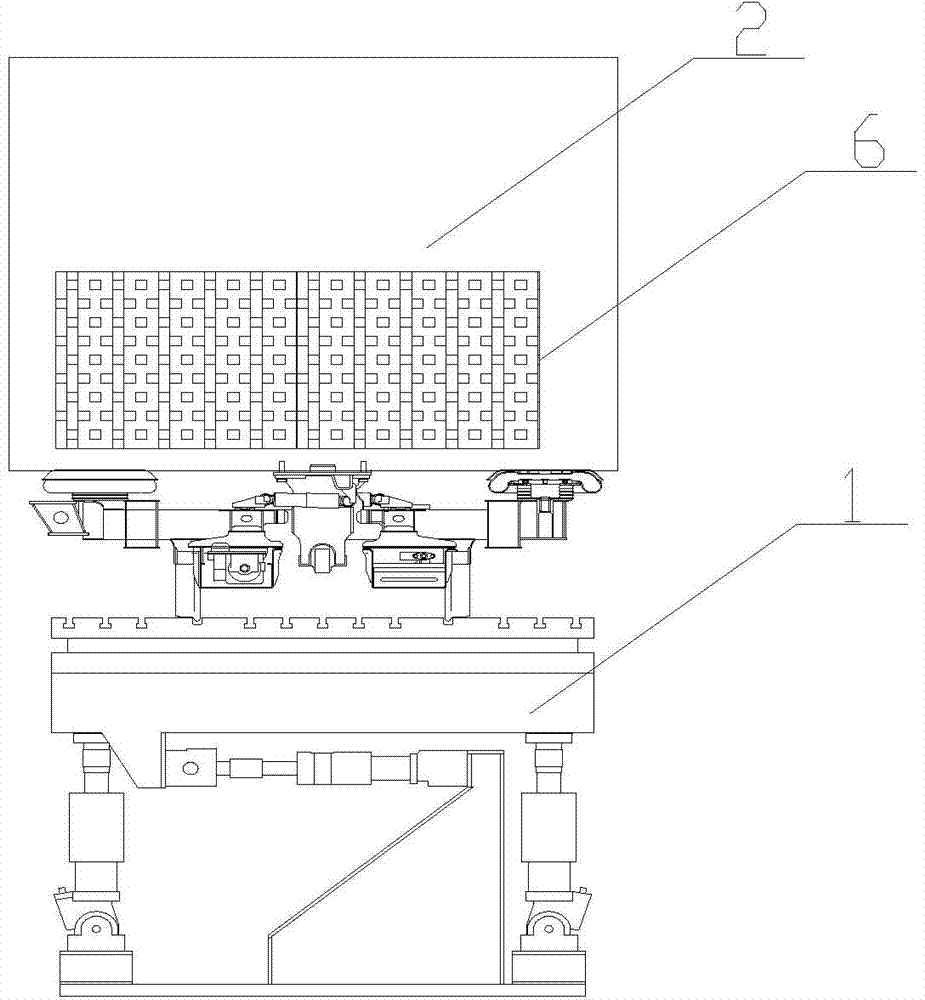
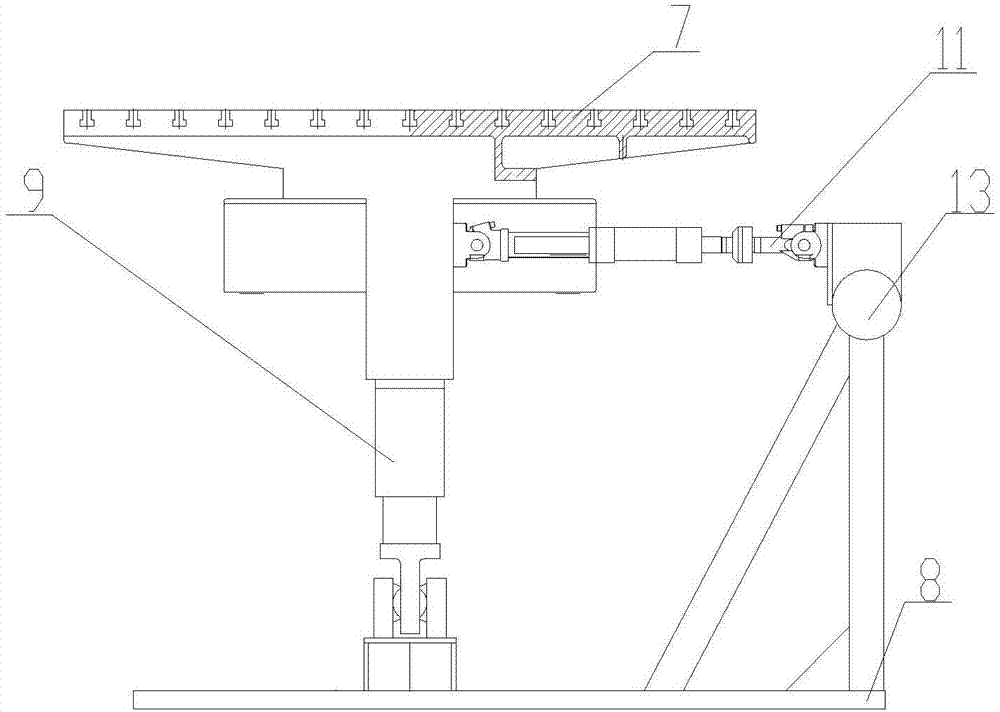
Examples
Embodiment approach
[0051] The specific implementation method is:
[0052] 1) Control the two vertical actuators 9 below the test platform 1 so that the four vertical actuators 9 below the front and rear test platforms 1 maintain the same height. Record the height difference between the left and right sides of the surface of the test platform 1, and calculate the angle δ formed by the test platform 1 in the left and right direction. Measure the angle η formed by the hanging plumb line above the surface of the end of Train 2 and the location marked in Step 3.
[0053] 2) Control the two vertical actuators 9 below the front end test platform 1, so that one vertical actuator 9 moves upward for a certain distance, the other vertical actuator 9 keeps its position unchanged, and the rear end test platform 1 Two vertical actuators 9 below also keep the position unchanged. Record the height difference between the left and right sides of the surface of the test platform 1, and calculate the angle δ form...
PUM
 Login to View More
 Abstract
Description
Claims
Application Information
 Login to View More