
A knitted fabric with moisture absorption and heat generation function and its processing technology
A knitted fabric, moisture absorption and heat generation technology, used in knitting, weft knitting, textiles and papermaking, etc., can solve the problems of alkali resistance, acid resistance, water resistance, poor elasticity, etc., and achieve the effect of high moisture absorption and heat generation performance.
- Summary
- Abstract
- Description
- Claims
- Application Information
AI Technical Summary
Problems solved by technology
Method used
Image

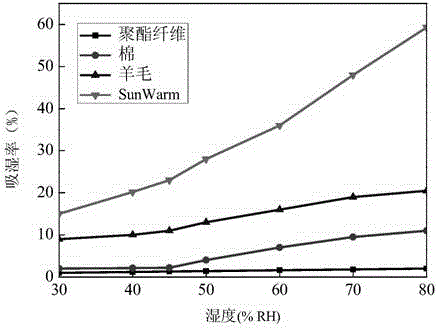
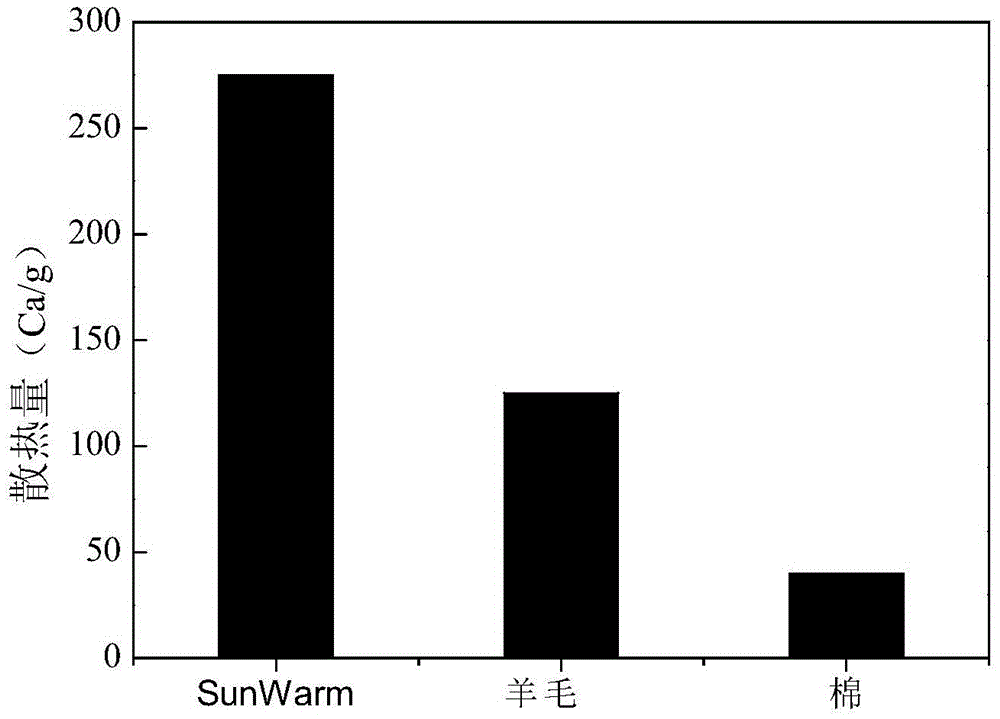
Examples
Embodiment 1
[0020] A knitted fabric with moisture absorption and heating function, comprising 85% by mass of cotton fiber and 15% by mass of polyacrylic acid modified acrylic fiber, the cross-sectional diameter of the cotton fiber is 11.5 μm-12.0 μm , the length is 25mm-30mm, the cross-sectional diameter of the polyacrylic acid modified acrylic fiber is 5.5 μm-7.5 μm, the fiber length is 35mm-40mm, the cotton fiber and the modified acrylic fiber are mixed and spun, spinning The imperial count of the yarn is 40, the spinning method is ring spinning, the structure of the knitted fabric with moisture absorption and heat generation function is a common jersey structure, and the finished product specification is 160cm×200g / m 2 , The large circular knitting machine model for weaving is a single-sided 34-inch 28-needle 102-way.
Embodiment 2
[0022] A knitted fabric with moisture absorption and heating function, comprising 80% by mass of cotton fiber and 20% by mass of polyacrylic acid modified acrylic fiber, the cross-sectional diameter of the cotton fiber is 12.0 μm-13.5 μm , the length is 30mm-35mm, the cross-sectional diameter of the polyacrylic acid modified acrylic fiber is 7.5 μm-8.5 μm, the fiber length is 40mm-45mm, the cotton fiber and the modified acrylic fiber are mixed and spun, spinning The imperial count of the yarn is 60, the spinning method is ring spinning, the structure of the knitted fabric with moisture absorption and heat generation function is a rib structure, and the finished product specification is 150cm×180g / m 2 , The large circular knitting machine model for weaving is single-sided 32-inch 24-needle 102-way.
Embodiment 3
[0024] A processing technology for knitted fabrics with moisture absorption and heating functions. The gray cloth is introduced into the dyeing vat, and the pretreatment, dyeing, shaping, and finished product packaging processes are carried out.
[0025] The pretreatment process is: treat the penetrating agent and caustic soda at 98°C for 30 minutes, and then lower the temperature to 70°C at a rate of 1.5°C / min to drain water; refill the water in an alkaline environment of stabilizer and hydrogen peroxide Treatment, the treatment conditions are 98°C and 30 minutes, and the temperature is reduced to 70°C according to the cooling rate of 1.5°C / min. The cooling rate in minutes is reduced to 70°C for drainage, where the pH value of the drainage is controlled at 6.8;
[0026] The dyeing process is as follows: the dyeing vat is filled with water again, and after adding deoxygenase, the oxygen content is measured to be 0 after 20 minutes at 40°C, and dyeing is started. Specifically, ...
PUM
| Property | Measurement | Unit |
|---|---|---|
| diameter | aaaaa | aaaaa |
| length | aaaaa | aaaaa |
| diameter | aaaaa | aaaaa |
Abstract
Description
Claims
Application Information
 Login to View More