Facet recommendations from sentiment-bearing content

A faceted and emotional technology, applied in speech analysis, natural language translation, natural language data processing, etc., can solve problems such as narrowing of recommendations

CN106663095AActive Publication Date: 2017-05-10MICROSOFT TECH LICENSING LLC
3 Cites 11 Cited by

Patent Information

Authority / Receiving Office
CN · China
Current Assignee / Owner
Publication Date
2017-05-10

Smart Images

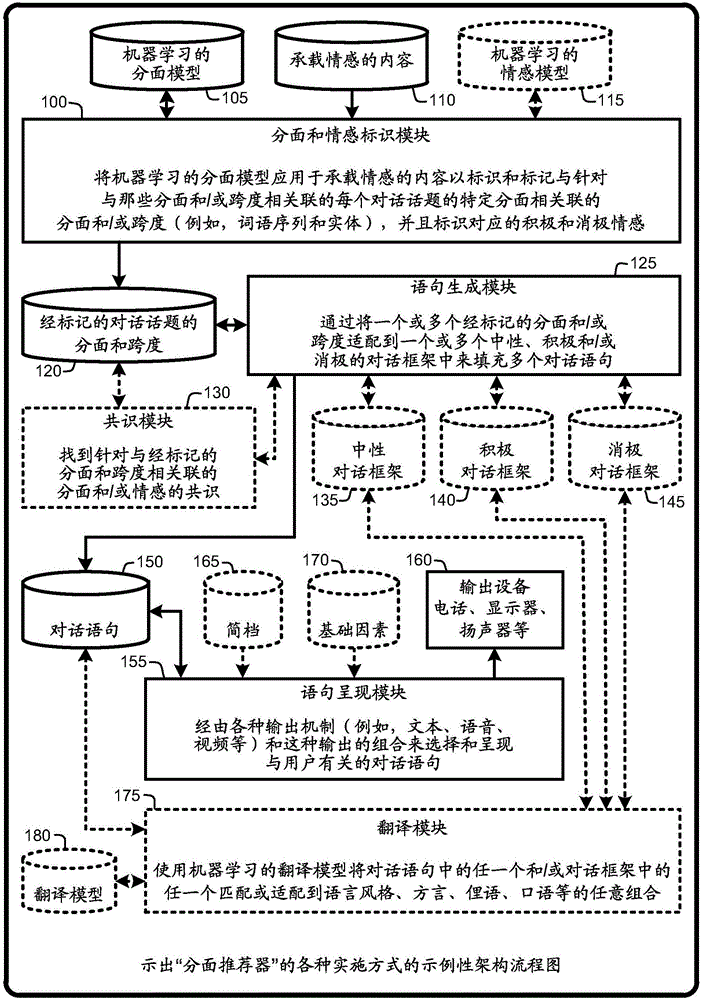
  • Figure 1
    Figure 1
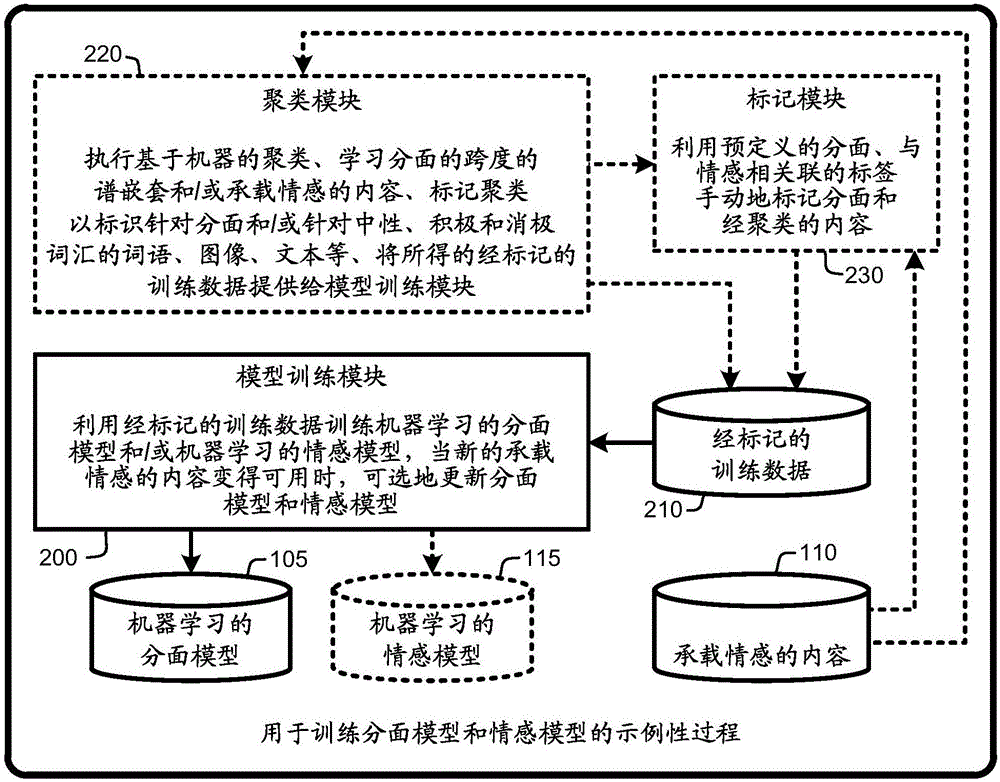
  • Figure 2
    Figure 2
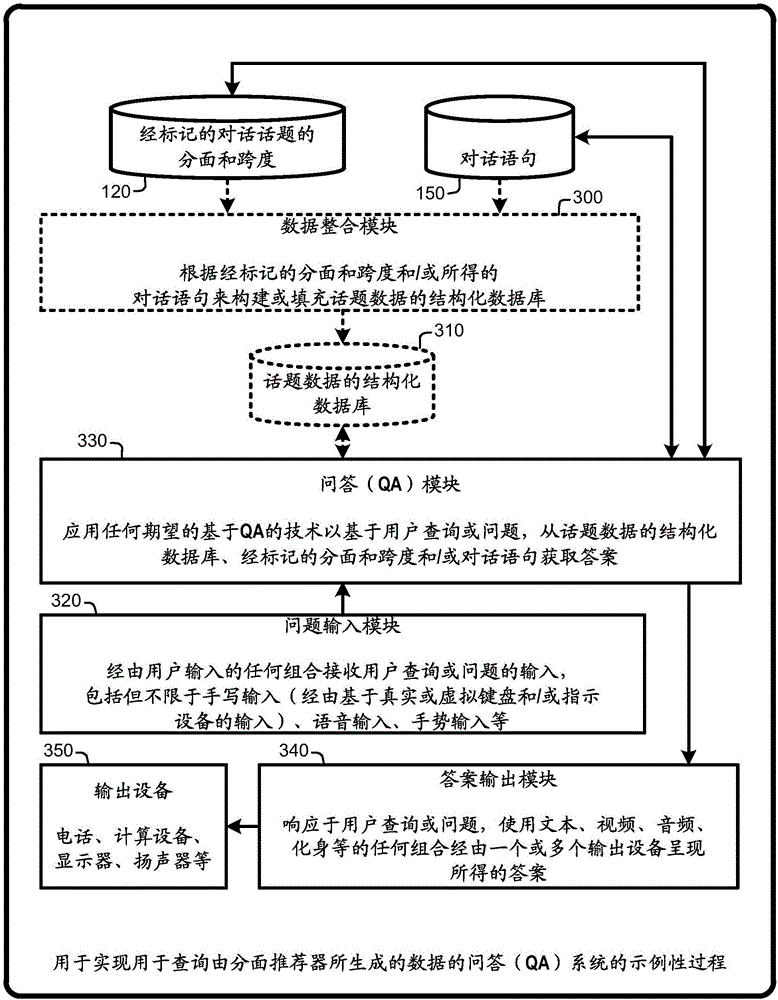
  • Figure 3
    Figure 3
Patent Text Reader

Abstract

A "Facet Recommender" creates conversational recommendations for facets of particular conversational topics, and optionally for things associated with those facets, from consumer reviews or other social media content. The Facet Recommender applies a machine-learned facet model and optional sentiment-model, to identify facets associated with spans or segments of the content and to determine neutral, positive, or negative consumer sentiment associated with those facets and, optionally, things associated with those facets. These facets are selected by the facet model from a list or set of manually defined or machine-learned facets for particular conversational topic types. The Facet Recommender then generates new conversational utterances (i.e., short neutral, positive or negative suggestions) about particular facets based on the sentiments associated with those facets. In various implementations, utterances are fit to one or more predefined conversational frameworks. Further, responses or suggestions provided as utterances may be personalized to individual users.
Need to check novelty before this filing date? Find Prior Art

Description

Background technique

[0001] A typical recommendation system uses various statistical or machine learning techniques, or a combination of such techniques, to filter possible choices to generate recommendations for things (such as movies, books, items to buy, restaurants, etc.). For example, recommender systems often use collaborative filtering or content-based filtering mechanisms to build models for use in making recommendations, and a combination of these two types of filtering may be used.

[0002] Collaborative filtering methods generally build user-based models from information derived from observed user behavior. Examples of behaviors evaluated by building such a model include a priori user choices or purchases, and may also include user ratings for those choices or purchases. The resulting model is then used to predict other things of potential interest to the user.

[0003] Content-based filtering methods generally build models based on item characteristics to recomme...

Examples

Embodiment Construction

[0017] In the following description of various embodiments of a "faceted recommender" reference is made to the accompanying drawings, which form a part hereof, and in which is shown by way of illustration a specific implementation in which a faceted recommender may be practiced Way. It is to be understood that other embodiments may be utilized and structural changes may be made without departing from the scope thereof.

[0018] It should also be noted that, for the sake of clarity, specific terminology will be resorted to to describe the various embodiments described herein, and that the embodiments are not intended to be limited to the specific terminology so chosen. Moreover, it should be understood that each specific term includes all technical equivalents thereof that operate in a broadly similar manner to accomplish a similar purpose. Reference herein to "one embodiment" or "another embodiment" or "exemplary embodiment" or "alternative embodiment" or similar phrases mean...