
Cutaneous sensitization detecting method based on co-culturing mode of three dimensional skin model and dendric cell
A technology for dendritic cells and skin models, which is applied in biochemical equipment and methods, microbial determination/inspection, biological testing, etc., and can solve problems such as single detection methods
- Summary
- Abstract
- Description
- Claims
- Application Information
AI Technical Summary
Problems solved by technology
Method used
Image

Examples
Embodiment 1
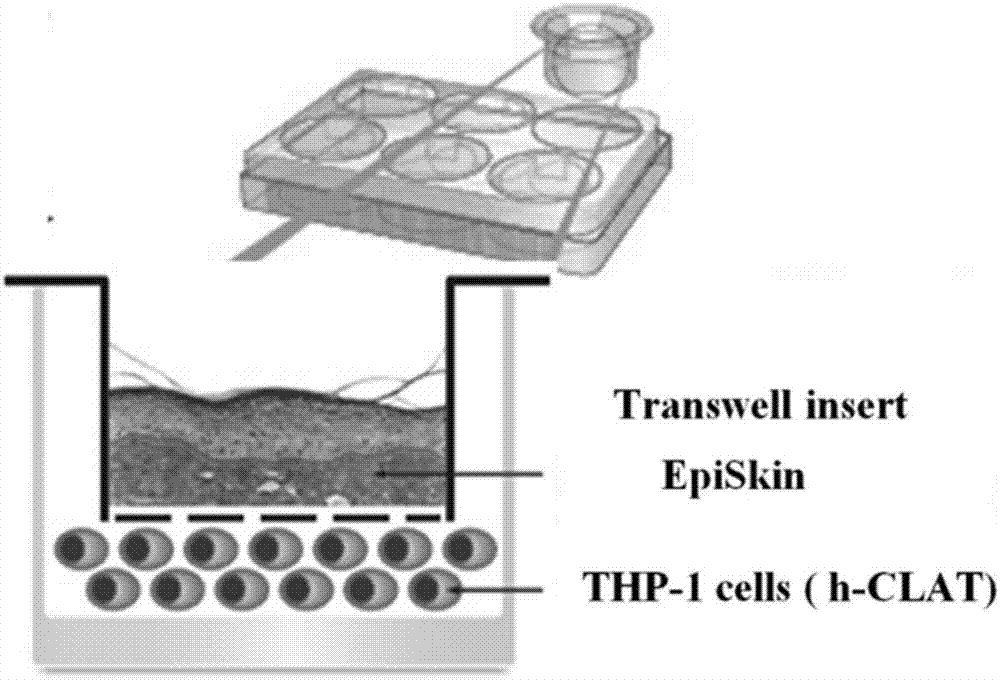
[0134] Example 1 Chemical cinnamaldehyde skin sensitization test based on Episkin skin model and THP-1 cell co-culture
[0135] Include the following steps in turn:
[0136] 1. Skin model incubation
[0137] The commercial three-dimensional skin model Episkin was purchased, and the model of this batch was a 12-well plate. The skin model is transported to the laboratory by the courier company, and the transport temperature is 10-25°C. After the skin model arrives at the laboratory, check whether the outer packaging is intact, and check the temperature monitoring strip in the box to ensure that the transport temperature of the skin model is within the allowable fluctuation range. The outer package of the skin model was sterilized with alcohol and opened. Use tweezers to carefully move the skin model hanging basket into a 12-well culture plate to which 2 mL of phenol red-containing MEM medium had been added. Store at 37°C, 5% CO 2 Incubate for 24 hours under the culture condit...
Embodiment 2
[0169] Example 2 Skin sensitization test of plant extracts based on Altskin skin model and U937 cell co-culture
[0170] Include the following steps in turn:
[0171] 1. Skin model incubation
[0172] Use Altskin, a three-dimensional skin model made in our laboratory, which is a full-thickness skin model in a 24-well plate. The production department is responsible for transporting it to the laboratory, and after the skin model arrives at the laboratory, check whether the outer packaging is intact. Open the outer package of the skin model after disinfecting it with alcohol, use tweezers to carefully move the skin model insert dish into a 24-well culture plate to which 2 mL of phenol red-containing MEM medium has been added, and store at 37°C, 5% CO 2 Incubate for 24 hours under the culture condition of 95% humidity, and conduct the experiment after the activity of the skin model is stable.
[0173] 2. U937 cell culture:
[0174] Take out the EP tube containing U937 cells fr...
Embodiment 3
[0210] Example 3 Based on Epiderm skin model and THP-1 cell co-culture skin sensitization test of petroleum products lubricants
[0211] 1. Skin model incubation
[0212] The commercial three-dimensional skin model Epiderm was purchased, and this batch of models is a 12-well plate epidermis model. The skin model is transported to the laboratory by the courier company, and the transport temperature is 10-25°C. After the skin model arrives at the laboratory, check whether the outer packaging is intact, and check the electronic thermometer in the box to ensure that the transport temperature of the skin model is within the allowable fluctuation range. The outer package of the skin model was sterilized with alcohol and opened. Use tweezers to carefully move the skin model hanging basket into a 12-well culture plate to which 2 mL of phenol red-containing MEM medium had been added. Store at 37°C, 5% CO 2 Incubate for 24 hours under the culture condition of 95% humidity, and conduct...
PUM
 Login to View More
 Abstract
Description
Claims
Application Information
 Login to View More