
Antiskid control method for rail vehicle braking system
A technology for braking systems and rail vehicles, applied in the field of anti-skid control of rail vehicle braking systems, can solve problems such as quantitative calculation or perception of non-stick conditions, and achieve the effects of online parameter identification, skid prevention, and shortened braking distances
- Summary
- Abstract
- Description
- Claims
- Application Information
AI Technical Summary
Problems solved by technology
Method used
Image

Examples
Embodiment Construction
[0047] The present invention will be described in detail below in conjunction with the accompanying drawings and specific embodiments. This embodiment is carried out on the premise of the technical solution of the present invention, and detailed implementation and specific operation process are given, but the protection scope of the present invention is not limited to the following embodiments.
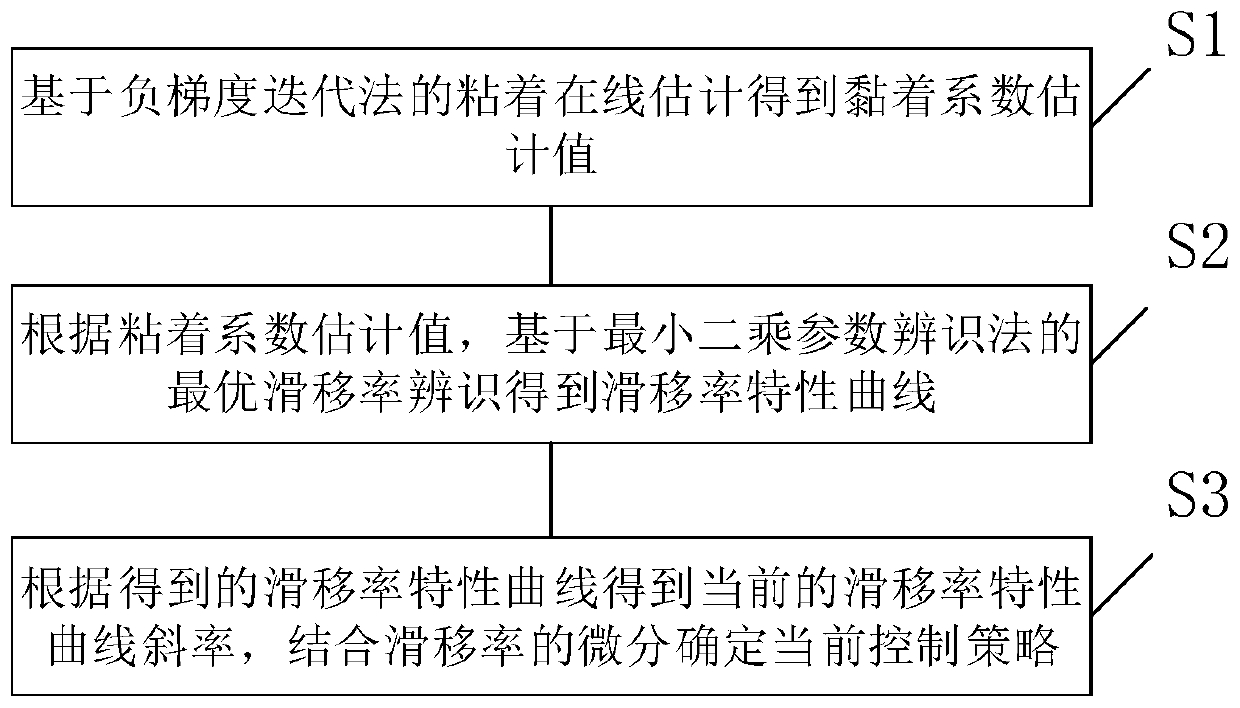
[0048] A method for anti-skid control of a rail vehicle braking system, such as figure 1 shown, including:
[0049] Step S1: Obtain the estimated value of the adhesion coefficient through online estimation of the adhesion based on the negative gradient iterative method, including:
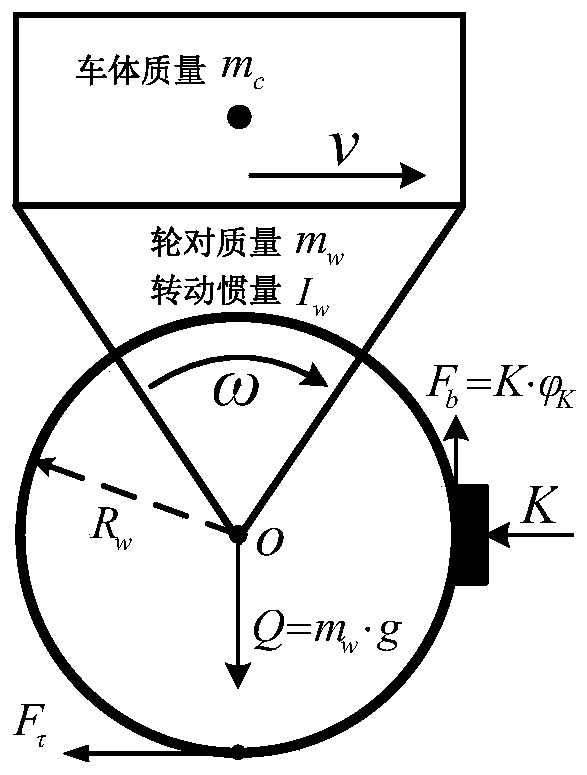
[0050] Step S11: Obtain the braking force K and wheel pair angular velocity ω applied by the braking system at the current moment in real time;
[0051] Step S12: Obtain the estimated value of the adhesion force between the wheel and rail, and continuously update the estimated value of the adhesion force...
PUM
 Login to View More
 Abstract
Description
Claims
Application Information
 Login to View More