
Load mechanical analysis device for knee joint
A load mechanics, knee joint technology, applied in medical science, sensors, diagnostic recording/measurement, etc., can solve problems such as long-term monitoring, the device for monitoring the knee joint is not wearable, and effective prevention cannot be carried out.
- Summary
- Abstract
- Description
- Claims
- Application Information
AI Technical Summary
Problems solved by technology
Method used
Image

Examples
Embodiment Construction
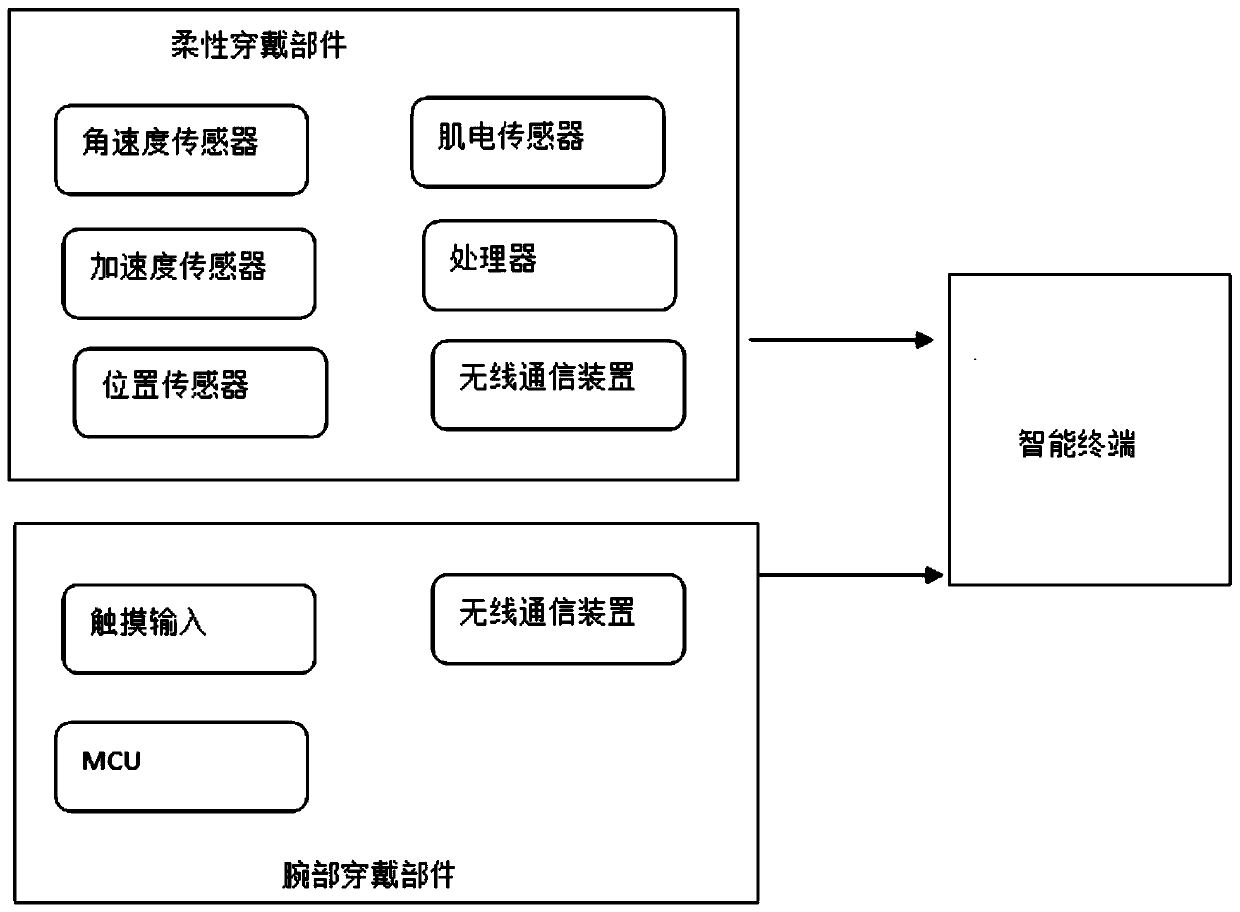
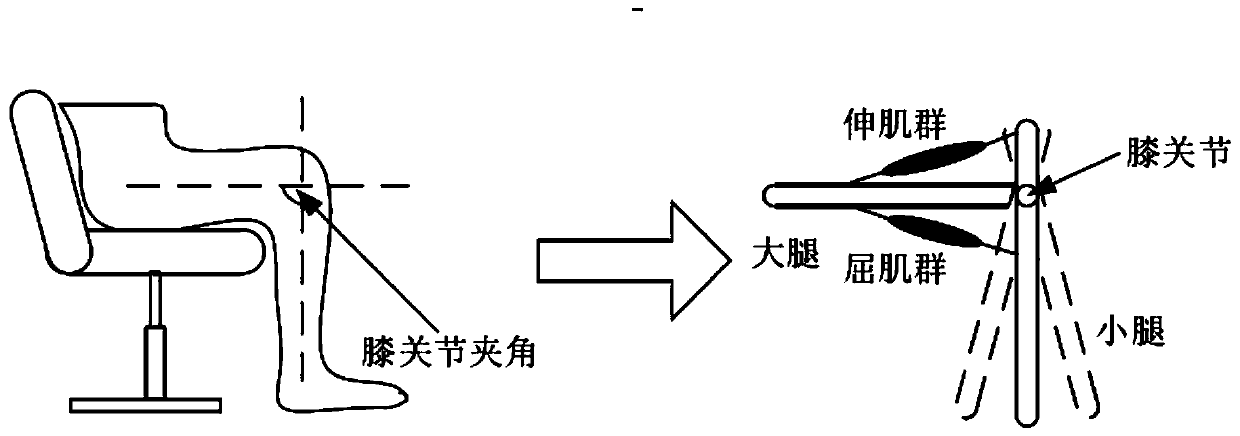
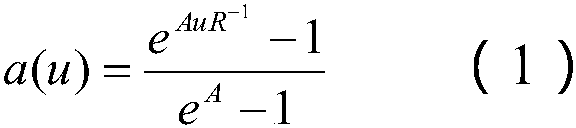
[0036] Such as figure 1 As shown, the knee joint load mechanics analysis device of the present invention is characterized in that it includes an acceleration sensor, an angular velocity sensor, a position sensor, an electromyographic sensor, a flexible wearable component, a wrist wearable component, and an external intelligent terminal. The acceleration sensor, There are at least two sets of angular velocity sensors, myoelectric sensors, and position sensors, which are respectively arranged at the thigh position and the calf position of the human body. The flexible wearable parts can ensure that the normal life of the human body is not affected. The acceleration sensor, angular velocity sensor , a position sensor, and an electromyographic sensor are arranged on the flexible wearable part near the thigh and the calf, and the flexible wearable part also includes a processor, a memory and a wireless communication device inside; the wrist wearable part is provided with a touch disp...
PUM
 Login to View More
 Abstract
Description
Claims
Application Information
 Login to View More