
Mounting tool and mounting method of ship shafting case butt coupling
A technology for installing tooling and couplings, which is applied to ship components, ship construction, transportation and packaging, etc., can solve the problem of affecting the stability of the coupling, the accuracy of the position, the correctness of the posture, and the increase in the labor intensity of trial lifting and trial assembly. Affect the safety of hoisting couplings and other issues to achieve the effect of reducing labor intensity, reducing production costs and improving safety
- Summary
- Abstract
- Description
- Claims
- Application Information
AI Technical Summary
Problems solved by technology
Method used
Image

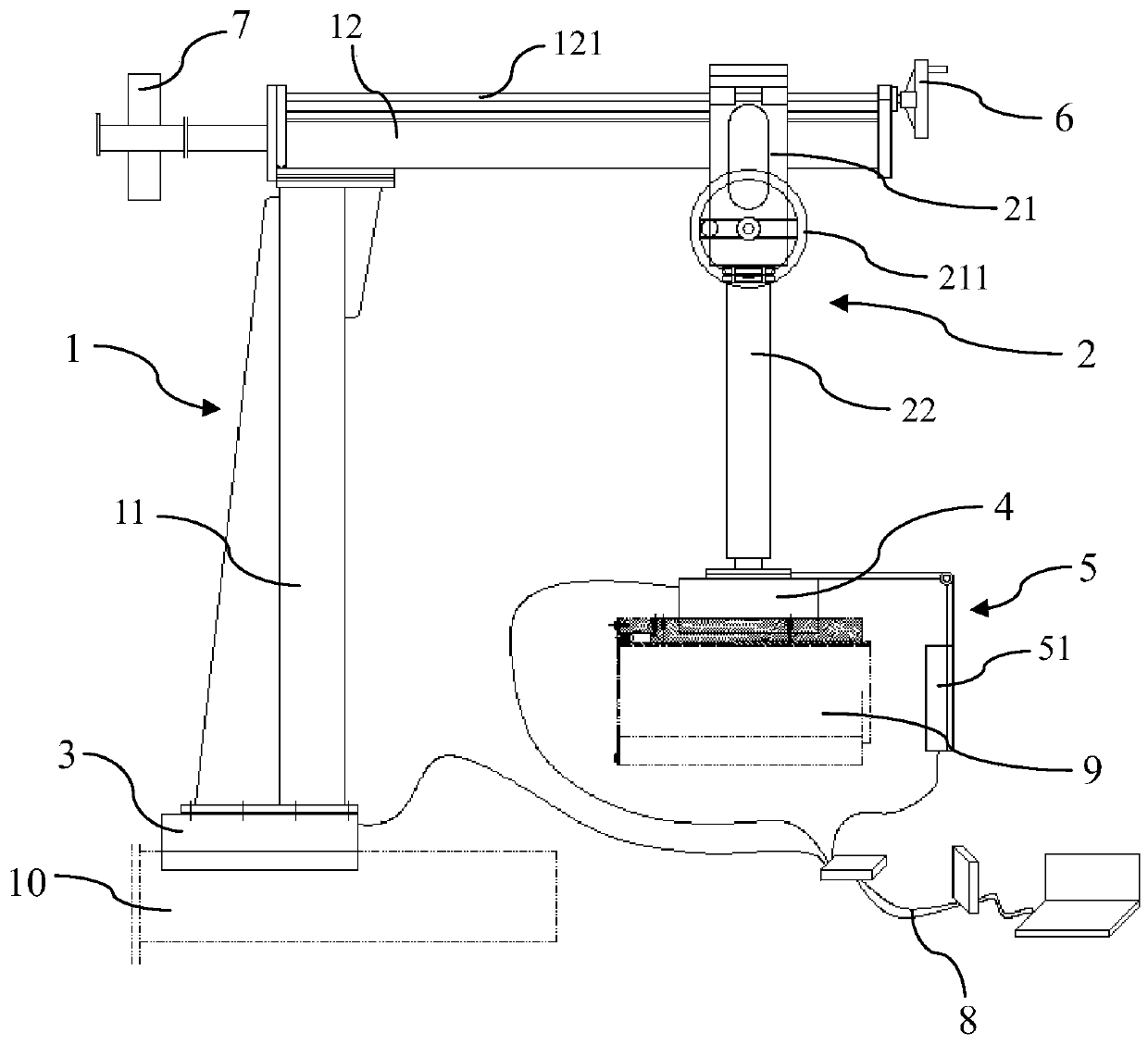
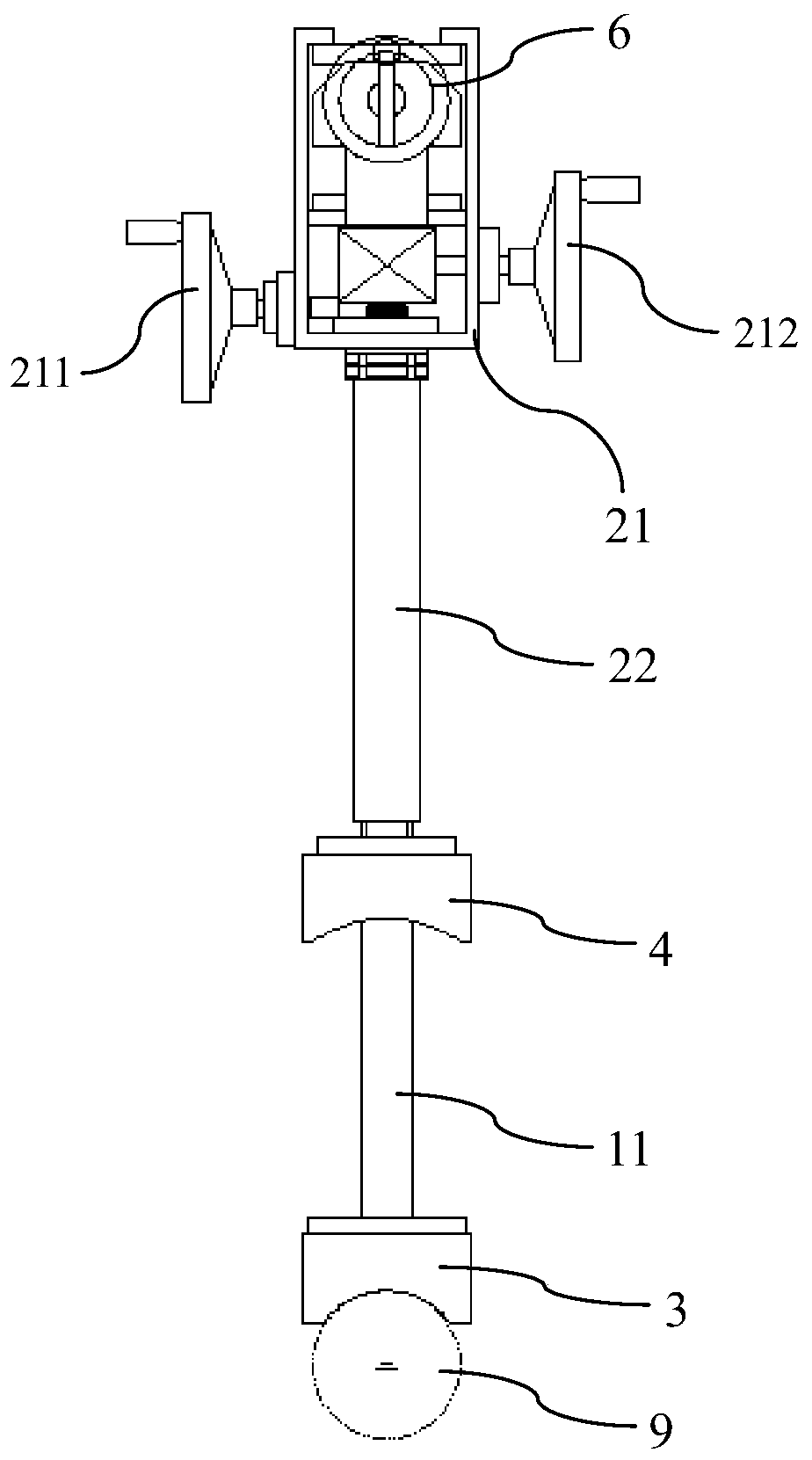
Examples
Embodiment Construction
[0022] In the description of the present invention, it should be noted that the terms "center", "longitudinal", "transverse", "upper", "lower", "front", "rear", "left", "right", " The orientations or positional relationships indicated by "vertical", "horizontal", "top", "bottom", "inner", "outer", etc. are based on the orientation or positional relationships shown in the drawings, and are only for the convenience of describing the present invention and simplifying Describes, but does not indicate or imply that the device or element referred to must have a specific orientation, be constructed in a specific orientation, and operate in a specific orientation, and therefore should not be construed as limiting the invention. In addition, the terms "first", "second", and "third" are used for descriptive purposes only, and should not be construed as indicating or implying relative importance.
[0023] In the description of the present invention, it should be noted that unless otherwi...
PUM
 Login to View More
 Abstract
Description
Claims
Application Information
 Login to View More