

A 3D fluorescence in situ hybridization method of poplar root tips based on paraffin sections
A technique of fluorescence in situ hybridization and paraffin sectioning, which is applied in the field of molecular cytogenetics, can solve the problems of inability to distinguish the real space occupancy and residence of chromosomes in cells, and the inability to visually display the real space occupancy of chromosomes, etc., achieving broad application prospects, Effect of clear FISH signal
- Summary
- Abstract
- Description
- Claims
- Application Information
AI Technical Summary
Problems solved by technology
Method used
Image

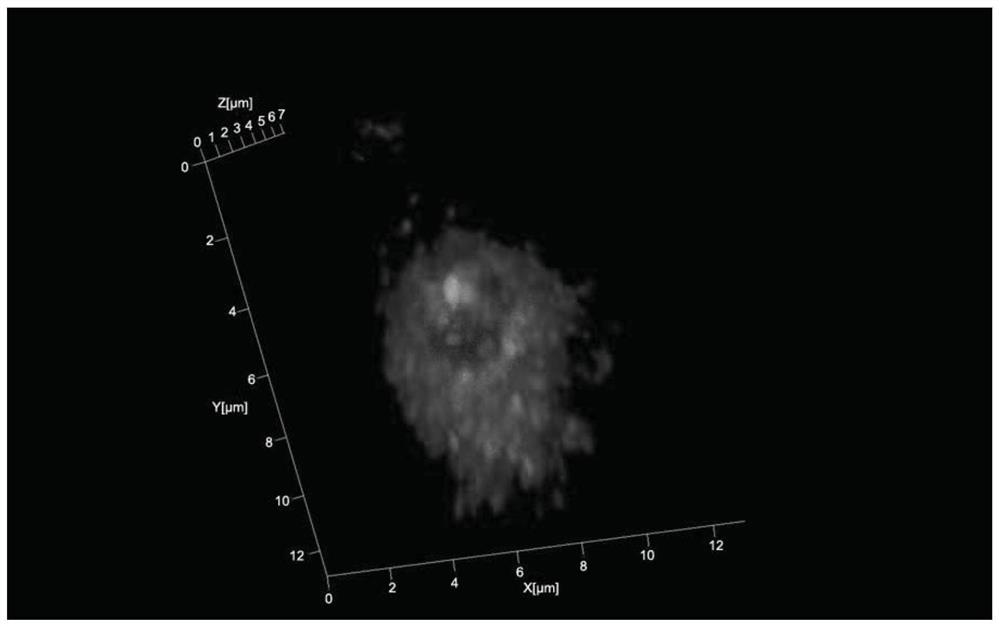
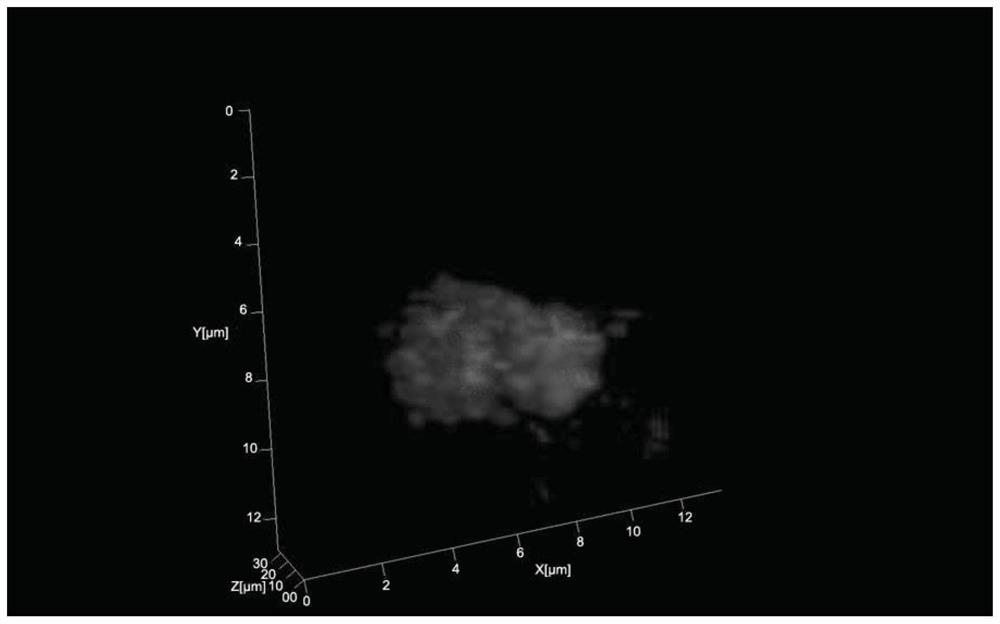
Examples
Embodiment 1
[0059] 1. Root tip fixation and dehydration
[0060] Young poplar root tips with a length of about 3 mm were intercepted and immediately immersed in Carnot's fixative solution (volume ratio of absolute ethanol to glacial acetic acid 3:1) to fix for more than 1 h.
[0061] The fixed root tips were washed twice with pure water for 15 min each time to wash away Carnot's fixative. Then use the n-butanol gradient solution in the following table to dehydrate step by step (the proportions of each gradient solution are volume ratios).
[0062] grade I II III IV V VI Pure water (mL) 50 30 15 5 0 0 Absolute ethanol (mL) 40 50 50 40 25 0 Butanol (mL) 10 20 35 55 75 100 Dehydration time(min) 30 30 30 30 30 60 (2 times)
[0063] 2. Waxing and embedding
[0064] The dehydrated root tips were immersed in a solution of n-butanol:paraffin = 1:1, and placed in a 37°C incubator overnight to allow the paraffin to gradually pen...
PUM
| Property | Measurement | Unit |
|---|---|---|
| thickness | aaaaa | aaaaa |
Abstract
Description
Claims
Application Information
 Login to View More