
Plant-microorganism comprehensive contaminated soil and underground water remediation system
A technology for groundwater systems and polluted soils, which is applied in the field of plant-microbe comprehensive restoration of polluted soils and groundwater systems, and can solve problems such as the inability to solve soil and groundwater pollution, the inability to change the tailing effect of extraction and treatment, and the single type of pollutants. , to avoid tailing effect, improve repair efficiency, and promote plant growth.
- Summary
- Abstract
- Description
- Claims
- Application Information
AI Technical Summary
Problems solved by technology
Method used
Image

Examples
Embodiment
[0029] Using birch as restoration plants, the following experiments were carried out.
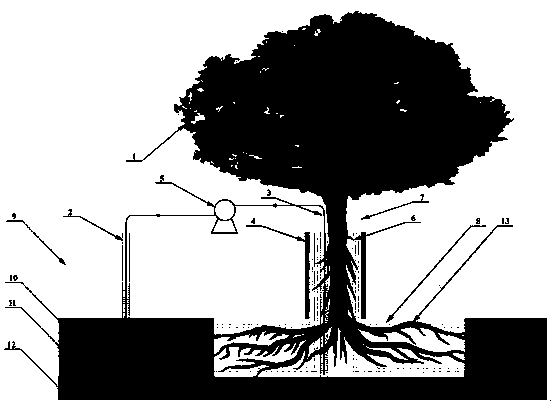
[0030] A remediation system for remediating polluted groundwater with plant-microorganism joint, specifically comprising the following steps:
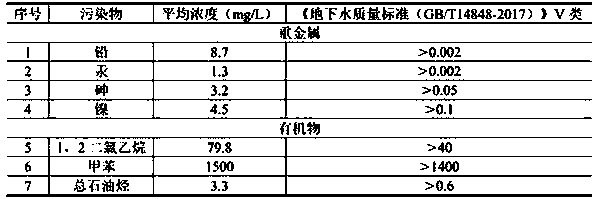
[0031] S1: Focusing on pollution sources, investigate the types, concentrations, pollution depths and flow directions of groundwater pollutants;
[0032] S2: Select the pollution point with a groundwater pollution depth of 10-15m, and use large-diameter auger technology to excavate a well with a diameter of 1m and a depth at the groundwater level of the pollution point ±0.5m;
[0033] S3: Use the horizontal drilling process to excavate the channel in the contaminated area, and place the nutrients and microorganisms (Streptomyces convolusus Act12 and biochar) required for plant growth in the channel to form a nutrient and microbial filling area;
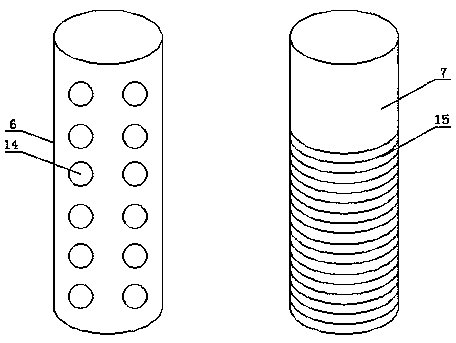
[0034] S4: Set a polylactide restriction layer around the well, close to the inside of the well, with t...
PUM
 Login to View More
 Abstract
Description
Claims
Application Information
 Login to View More