An automatic driving decision-making method for road conditions of cross-sea bridges

A cross-sea bridge and automatic driving technology, applied in the direction of neural learning methods, external condition input parameters, biological neural network models, etc., can solve the difficulty of taking into account the complex and changeable environmental state transfer, and cannot satisfy the real-time performance of automatic driving vehicles in complex environments and accuracy to ensure applicability and stability

CN113386790BActive Publication Date: 2022-07-12YANGZHOU UNIV
9 Cites 0 Cited by

Patent Information

Authority / Receiving Office
CN · China
Patent Type
Patents(China)
Current Assignee / Owner
Publication Date
2022-07-12

Smart Images

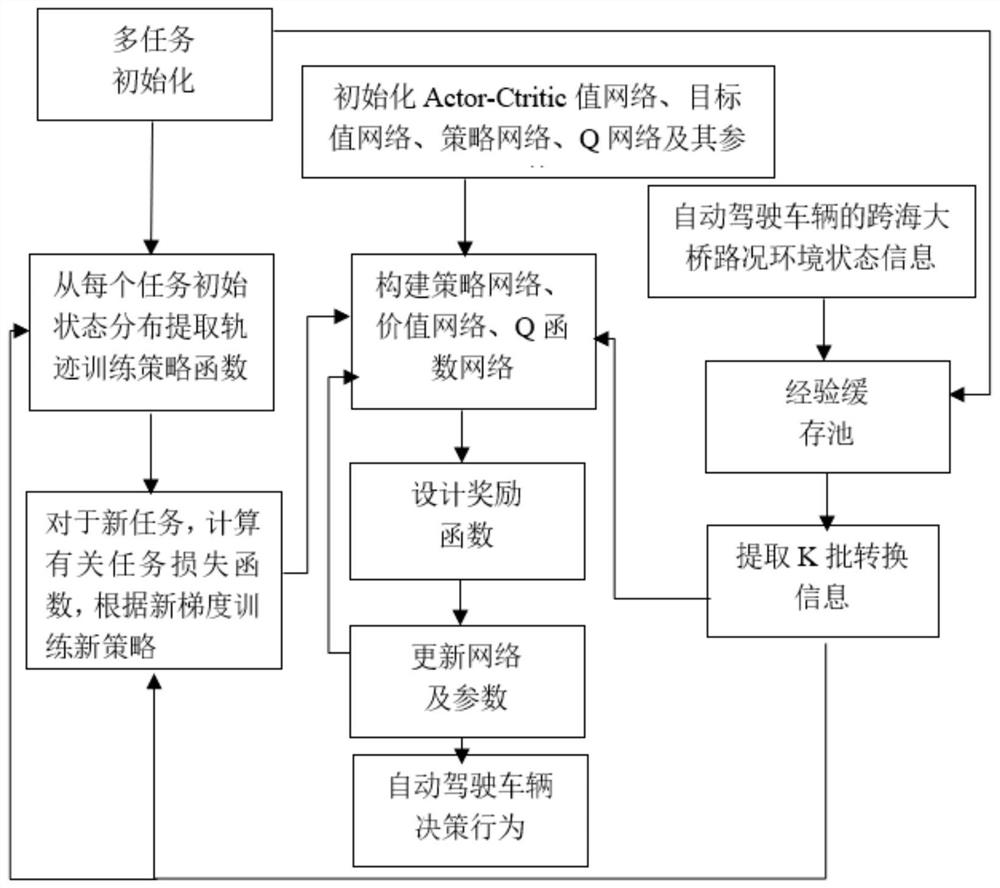
  • Figure 1
    Figure 1
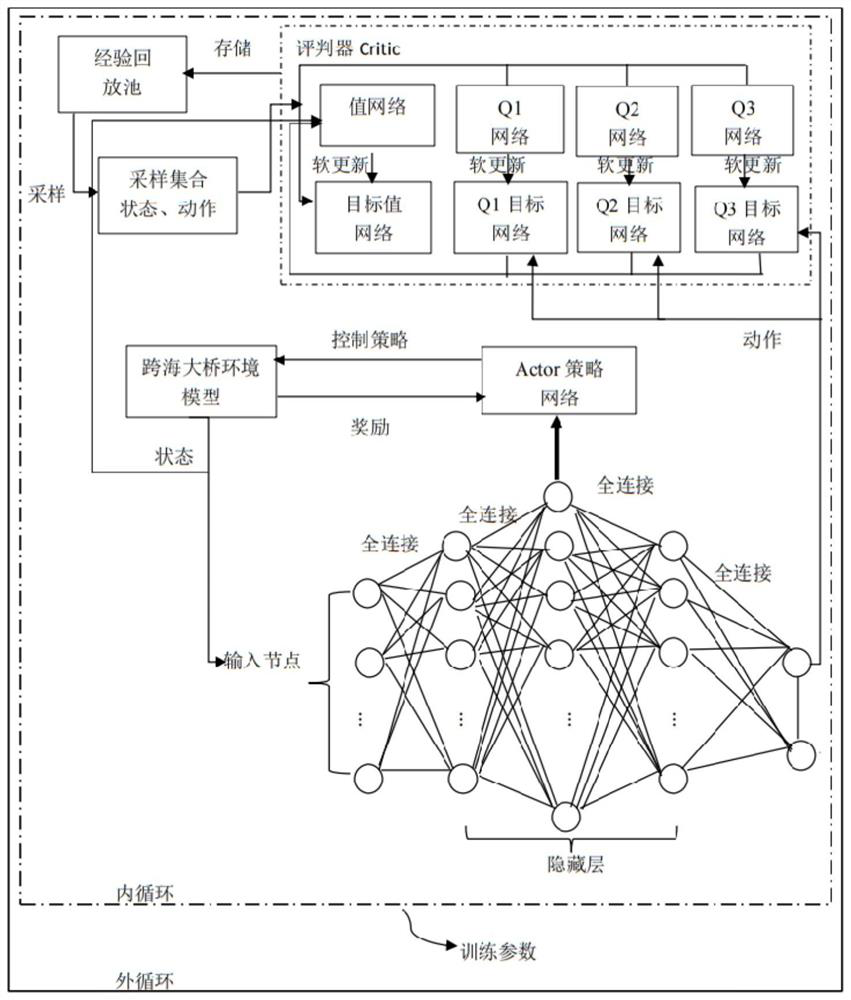
  • Figure 2
    Figure 2
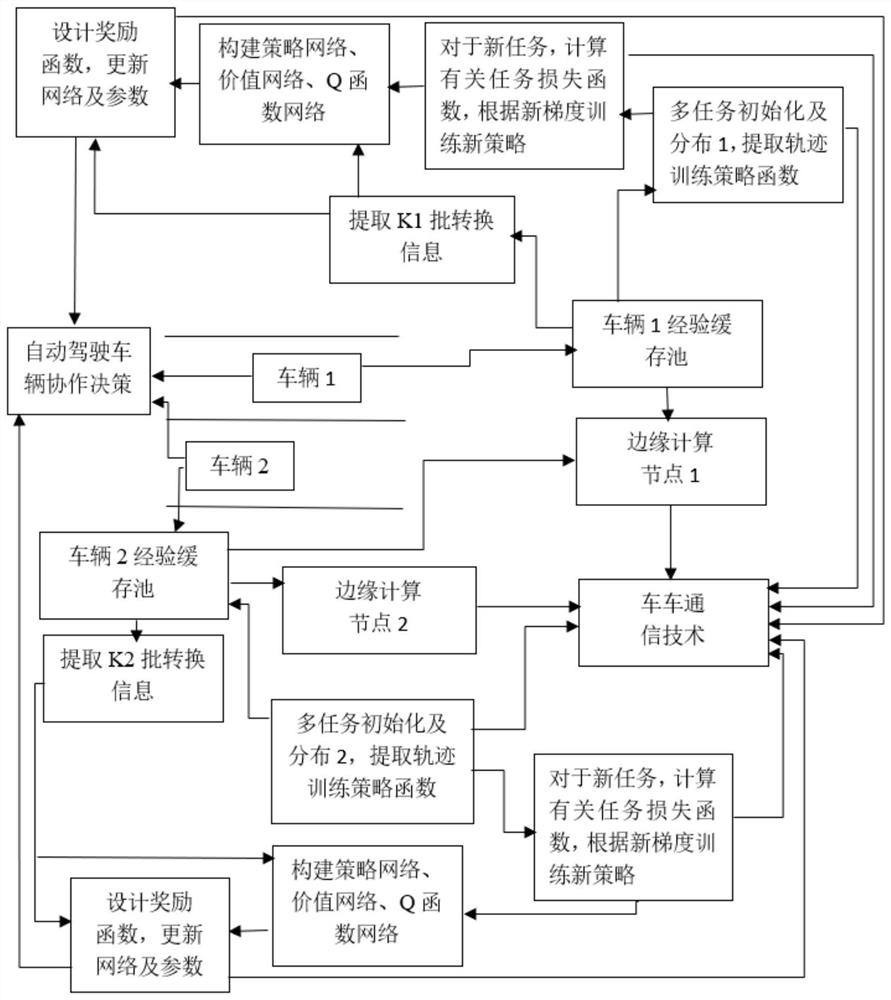
  • Figure 3
    Figure 3
Patent Text Reader

Abstract

The invention discloses an automatic driving decision-making method oriented to the road conditions of a cross-sea bridge, including a decision-making process for a single-vehicle self-driving vehicle on the road condition environment of a cross-sea bridge, and a multi-vehicle cooperative automatic driving vehicle for decision-making on the road condition environment of a cross-sea bridge Process; by combining meta-learning with multi-task features and Soft Actor-Critic algorithm for policy gradient-based reinforcement learning decision-making, it is helpful to realize autonomous driving vehicles in the environment of uncertain cross-sea bridge road conditions The adaptability and stability of the multi-vehicle cooperation; for the multi-vehicle cooperative autonomous driving vehicle passing the cross-sea bridge road conditions, the meta-reinforcement learning method is used to make vehicle decision based on the multi-vehicle policy gradient, and the distributed mobile edge computing nodes and vehicles are used. The vehicle communication method realizes the data sharing of multi-vehicle cooperative driving, so as to further adjust the network parameters and ensure the safe passage of vehicles on the road conditions of the cross-sea bridge.
Need to check novelty before this filing date? Find Prior Art

Description

technical field

[0001] The invention relates to the field of automatic driving, in particular to an automatic driving decision-making method oriented to the road conditions of a cross-sea bridge. Background technique

[0002] Under complex road conditions and severe weather conditions of cross-sea bridges, autonomous vehicles are prone to bridge deck vibrations caused by slippery roads, low visibility, and strong wind interference, causing vehicle models and tire models to fall into uncertainty and limit states. Instability phenomena such as side slip, roll and yaw are caused to the vehicle, the vehicle cannot make accurate decisions and it is difficult to realize the safety control of the vehicle. Traditional decision-making and control methods for autonomous vehicles are difficult to take into account the state transition of complex and changeable environments, and cannot meet the real-time and accuracy of autonomous vehicles in complex environments. Control is the main m...

Examples

Embodiment Construction

[0040] The present invention will be further described below in conjunction with specific embodiments. The following examples are only used to illustrate the technical solutions of the present invention more clearly, and cannot be used to limit the protection scope of the present invention.

[0041] As mentioned above, the existing autonomous driving decision-making technology is difficult to take into account the state transition of complex and changeable environments, and cannot meet the real-time and accuracy of autonomous vehicles for complex environments.

[0042] In order to solve the above technical problems, the present invention provides an automatic driving decision-making method oriented to the road conditions of a cross-sea bridge. Implement a meta-reinforcement learning-based decision-making method for autonomous driving. Meta-reinforcement learning combines meta-learning and reinforcement learning to enable agents to quickly learn new tasks, especially for compl...