Polygene vector system and application thereof

A carrier system and multi-gene technology, applied in the field of molecular biology, can solve problems such as many side reactions, inability to perform reactions in vitro, and high requirements for experimental experience

CN114457098AActive Publication Date: 2022-05-10INST OF VEGETABLES GUANGDONG PROV ACAD OF AGRI SCI
7 Cites 1 Cited by

Patent Information

Authority / Receiving Office
CN · China
Patent Type
Applications(China)
Current Assignee / Owner
Publication Date
2022-05-10

Smart Images

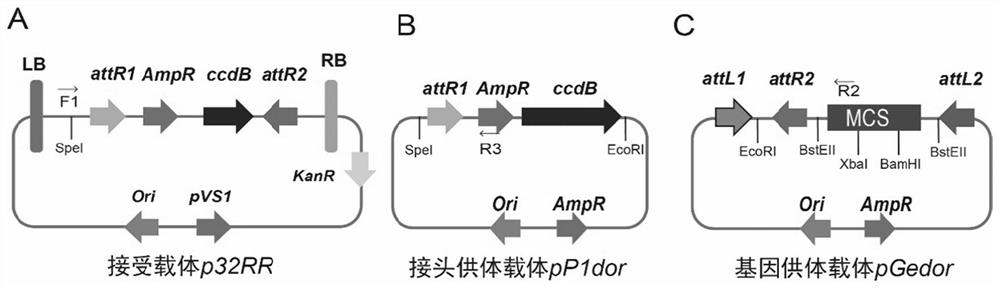
  • Figure 1
    Figure 1
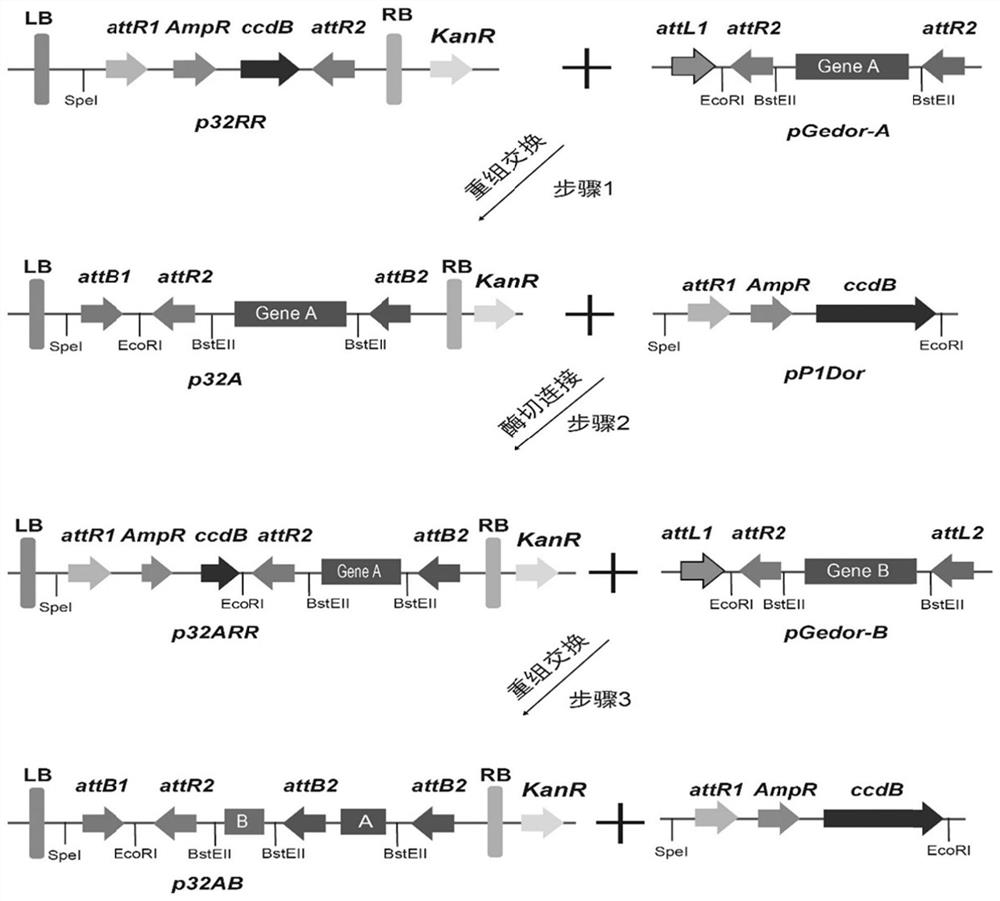
  • Figure 2
    Figure 2
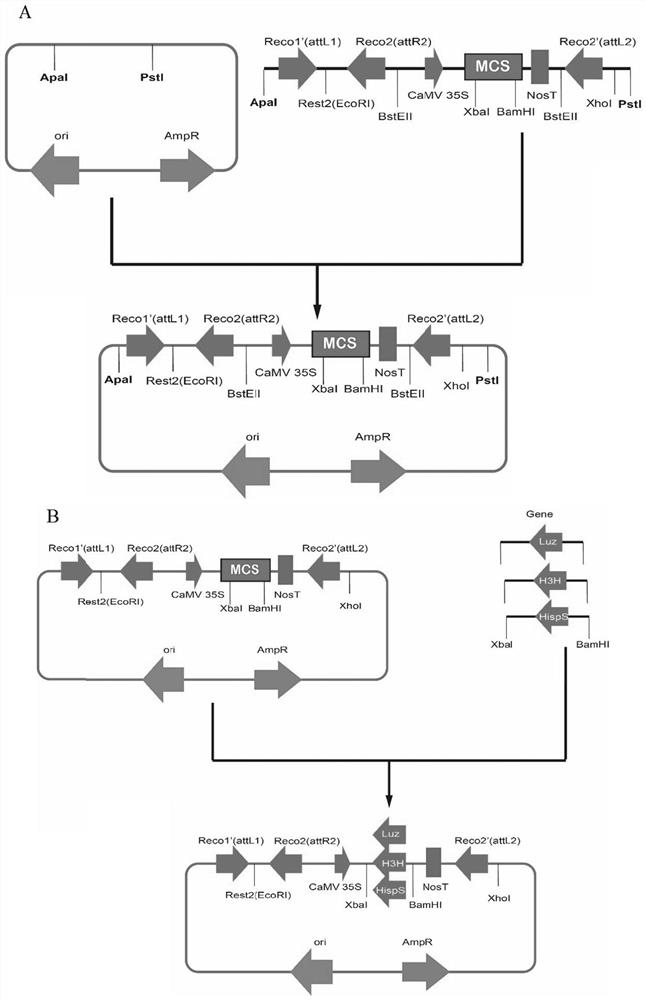
  • Figure 3
    Figure 3
Patent Text Reader

Abstract

The invention belongs to the field of molecular biology, and discloses a polygene vector system and application thereof. The multi-gene vector system comprises a receiving vector p32RR, a linker donor vector pP1dor and a gene donor vector pGemor, BP or LR clonase recombinase is utilized to catalyze gene recombination exchange reaction between the gene donor vector and the receiving vector, and a target gene is exchanged to the receiving vector; and performing enzyme digestion and connection on the joint donor vector and the accepting vector containing the target gene by using restriction enzyme digestion and ligase, forming paired joints recognized by BP or LR clonase recombinase by the connected accepting vector containing the target gene, and performing a second round of recombination exchange reaction on the accepting vector containing the target gene and the gene donor vector. The steps are repeated in a circulating manner, so that any multiple target genes can be connected to the receiving carrier in series.
Need to check novelty before this filing date? Find Prior Art

Description

technical field

[0001] The invention belongs to the field of molecular biology, and in particular relates to a multigene carrier system and its application. Background technique

[0002] Gene carrier is one of the important tools of genetic engineering. Traditional vector construction methods include restriction endonuclease and DNA ligase enzyme-cut ligation vector construction method; recombinase-catalyzed homologous recombination exchange construction method.

[0003] The enzyme-cut ligation vector construction method relies on the multiple cloning sites on the vector. Only when the multiple cloning sites on the vector and the target gene match, can the target gene and the vector be ligated after enzyme digestion. However, the number of multiple cloning sites on the vector is limited, so the enzyme-cut ligation method can only meet the vector assembly of a single or a few genes. Homologous recombination methods include λ-att system and Cre-LoxP system. The att site in ...

Examples

Embodiment 1

[0174] The construction of embodiment 1 multigene carrier

[0175] 1. Construct the gene donor vector pGedor containing the target genes H3H, LuZ, and HispS respectively

[0176] 1) Construction of gene donor vector pGedor containing CaMV 35S promoter and NosT terminator

[0177] The schematic diagram of the construction of the gene donor vector pGedor containing 35S promoter and NOS terminator is as follows: image 3 Shown in A: Synthesis of Reco1'(attL1, SEQ ID NO.1)-Rest2(EcoRI, the sequence is GAATTC)-Reco2(attR2,SEQ ID NO.2)-CaMV 35S(SEQ ID NO.3)-NosT(SEQ ID NO.4)-Reco2'(attL2,SEQ ID NO.5) sequence, when synthesizing the sequence, ApaI (sequence is GGGCCC), PstI (sequence is CTGCAG) enzyme cutting sites are synthesized at both ends respectively, in CaMV 35S and A polyclonal fragment MCS (SEQ ID NO.17) containing XbaI (sequence: TCTAGA) and BamHI restriction site (sequence: GGATCC) was synthesized between NosT, and both ends of MSC have the same restriction site MCST (Bs...