Patient support system for standing position CT (Computed Tomography) diagnosis

A stent system and patient technology, applied in the field of medical stents, can solve the problems of small human safety detection range, etc., and achieve the effect of increasing the human safety detection range and increasing the detection range.

CN114748088APending Publication Date: 2022-07-15辽宁开影医疗有限公司
0 Cites 0 Cited by

Patent Information

Authority / Receiving Office
CN · China
Patent Type
Applications(China)
Current Assignee / Owner
Publication Date
2022-07-15

Smart Images

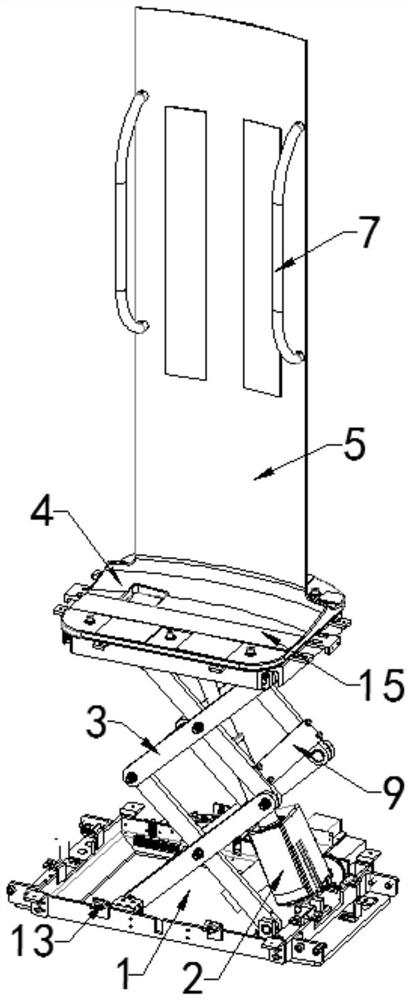
  • Figure 1
    Figure 1
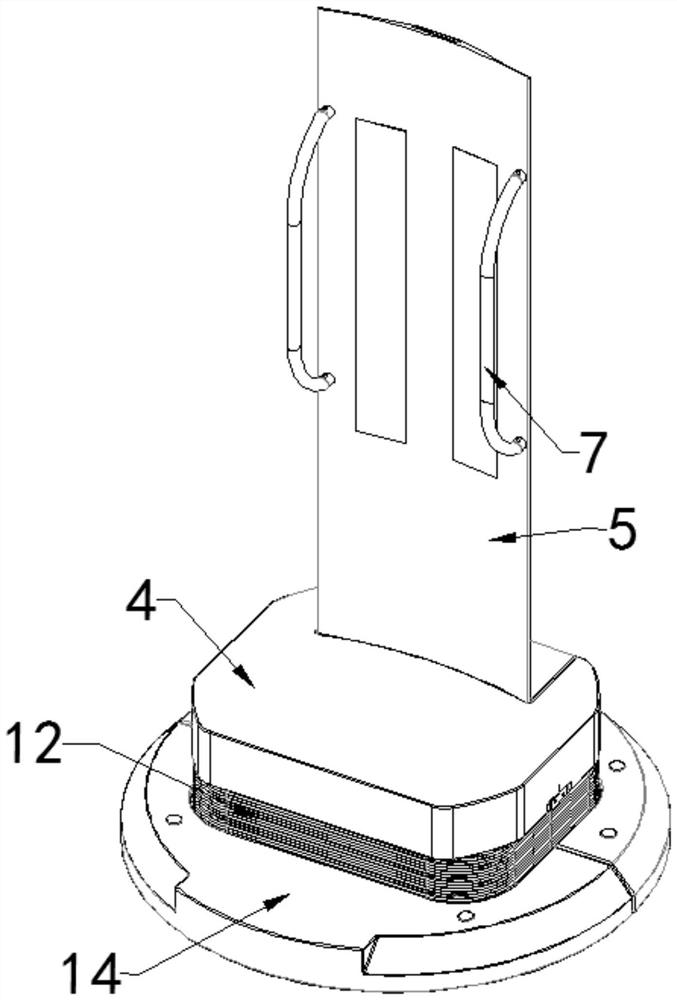
  • Figure 2
    Figure 2
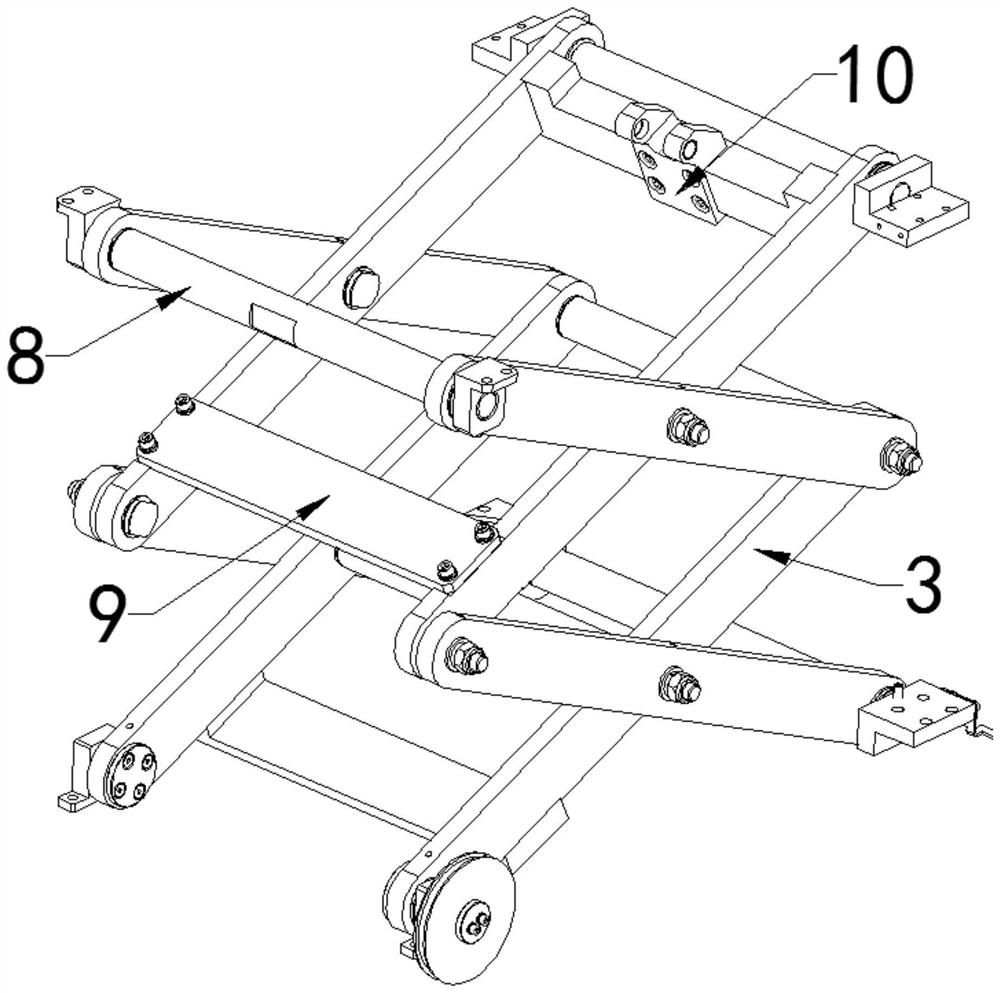
  • Figure 3
    Figure 3
Patent Text Reader

Abstract

The invention relates to a patient support system for standing position CT diagnosis, and belongs to the technical field of medical supports, the patient support system comprises a base and an upper seat for a patient to stand, and the upper seat is installed on the base in a lifting mode through a scissor arm system; the fixed end of the electric telescopic rod is installed on the base, and the electric telescopic rod is connected with the scissor arm system to drive the scissor arm system to stretch out and draw back; the back plate assembly is detachably and fixedly installed on the upper seat and used for a patient standing on the upper seat to lean on. Through the structure, the patient support system enlarges the human body detection range through the lifting upper seat, and is reasonable in structure and high in practicability.
Need to check novelty before this filing date? Find Prior Art

Description

technical field

[0001] The invention belongs to the technical field of medical brackets, and particularly relates to a patient bracket system for standing CT diagnosis. Background technique

[0002] A CT scanner is a device that uses precisely collimated X-rays, gamma rays, ultrasound, etc., together with highly sensitive detectors, to perform tomographic scans around a certain part of the human body. Related diseases will only show related changes when sitting or standing. A vertical CT scanner is needed to solve the scanning inspection of the disease. Most of the existing vertical CT scanners use the human body to stand still and scan. The scanner moves up and down on the fixed rail to achieve partial scanning of the human body. This type of scanner is often limited by the size and position of the scanner, and the standing position is too low to scan the lower parts of the human body, and the standing position is too high. Moving, brings a lot of inconvenience to scanning...

Examples

Embodiment 1

[0029] This embodiment provides a patient support system for standing CT diagnosis, which is used to solve the technical problem that the vertical CT scanner in the prior art has a small human safety detection range. The patient support system includes a base 1, an upper base 4, a scissor arm system 3, an electric telescopic rod 2 and a backboard assembly 5, wherein:

[0030] Both the base 1 and the upper seat 4 for patient standing are cast parts, and the upper seat 4 is mounted on the base 1 by lifting and lowering the scissor arm system 3. Adjust the distance between the upper and lower ends of the scissor arm system 3 according to the cross angle.

[0031] The fixed end of the electric telescopic rod 2 is installed on the base 1 , and the electric telescopic rod 2 is connected with the scissor arm system 3 to drive the scissor arm system 3 to extend and retract. Specifically, the electric telescopic rod 2 is hinged on the fixed position of the base 1 .

[0032] The back p...