
Environment-friendly type power cable plastic protecting tube
A power cable, environmentally friendly technology, applied in the field of plastic protection pipes, can solve problems such as precipitation and environmental pollution, and achieve the effect of mechanical properties.
Active Publication Date: 2006-05-03
SHANGHAI MUNICIPAL ELECTRIC POWER CO +1
View PDF1 Cites 10 Cited by
- Summary
- Abstract
- Description
- Claims
- Application Information
AI Technical Summary
Problems solved by technology
This kind of protective tube is buried in the soil and soaked by groundwater for a long time, and the heavy metals in it will be precipitated, which will make the heavy metal content of the nearby soil far exceed the standard value, thus causing pollution to the environment
Method used
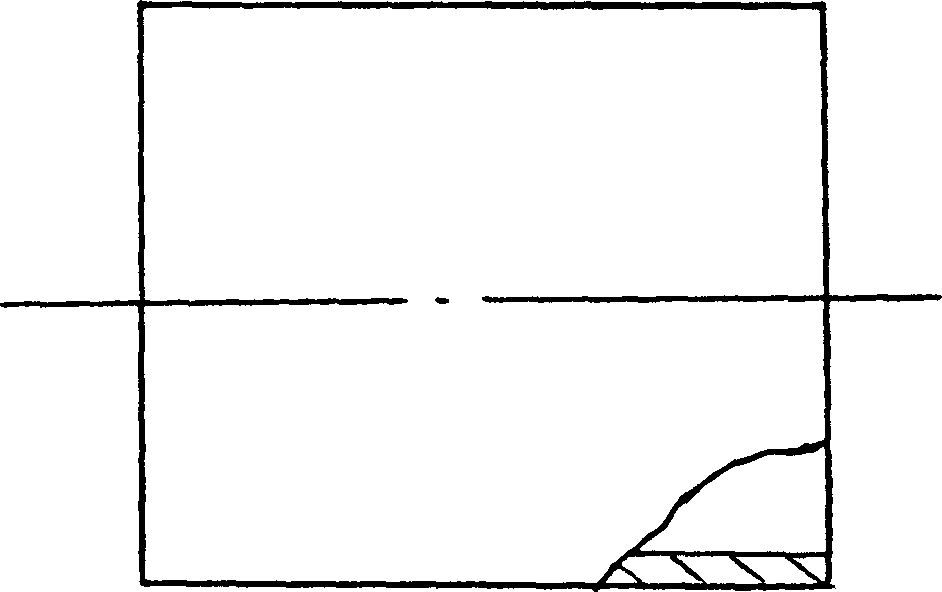
the structure of the environmentally friendly knitted fabric provided by the present invention; figure 2 Flow chart of the yarn wrapping machine for environmentally friendly knitted fabrics and storage devices; image 3 Is the parameter map of the yarn covering machine
View moreImage
Smart Image Click on the blue labels to locate them in the text.
Smart ImageViewing Examples

Examples
Experimental program
Comparison scheme
Effect test
Embodiment Construction
[0018] The present invention will be further described below in conjunction with the accompanying drawings and embodiments.
[0019] figure 1 In this embodiment, the wall thickness is 8.0 0 +0.3 mm, density 1490~1650kg / m 3 , volume resistance ≥ 1.0×10 13 Ω·cm, inner wall friction coefficient ≤0.35. The processing technology of this embodiment is to mix the powdery raw material formula and heat it to ≤110°C for about 3 minutes, and then enter the cold kneading pot with more than twice the volume for mixing, and the cold mixing time is about 2 to 3 minutes. After sieving, it is sent to a twin-screw extruder for extrusion molding. If the casing needs to be flared, it should be flared and formed on the flare machine immediately.
the structure of the environmentally friendly knitted fabric provided by the present invention; figure 2 Flow chart of the yarn wrapping machine for environmentally friendly knitted fabrics and storage devices; image 3 Is the parameter map of the yarn covering machine
Login to View More PUM
 Login to View More
 Abstract
The invention discloses an environmental friendly type power cable plastic preserving pipe. It comprises: chlorinated polyvinyl chloride, polyvinyl chloride, methacrylic acid, butadiene, styrene ternary polymerization resin, heavy calcium carbonate and so on. It adds nontoxic compound calcium zinc stabilizer, stearic acid, chlorinated polyvinyl chloride, epoxy soya oil, ceresin and white oil and so on and the macromole compound.
Description
Technical field [0001] The invention relates to power cable technology, in particular to a plastic protective tube for power cables. Background technique [0002] Power development and power grid transformation require the use of a large number of cables, but it can be found that the most used cable protection tubes so far are plastic protection tubes made of heavy metal stabilizers, such as the power cable plastic protection tube with patent No. ZL95111671.1. This kind of protective pipe is buried in the soil and soaked by groundwater for a long time, and the heavy metals in it will be precipitated, which will make the heavy metal content of the nearby soil far exceed the standard value, thus causing pollution to the environment. Contents of the invention [0003] The object of the present invention is to provide an environment-friendly plastic protection tube for electric power cables, which has no precipitation of heavy metals, especially no heavy metals that endanger t...
Claims
the structure of the environmentally friendly knitted fabric provided by the present invention; figure 2 Flow chart of the yarn wrapping machine for environmentally friendly knitted fabrics and storage devices; image 3 Is the parameter map of the yarn covering machine
Login to View More Application Information
Patent Timeline
 Login to View More
 IPC IPC(8): H02G9/06
Inventor陈东浩张刚强陈伟信秦斌姚玮峻俞来意张宇
OwnerSHANGHAI MUNICIPAL ELECTRIC POWER CO