Image forming method

US10627734B2Active Publication Date: 2020-04-21KONICA MINOLTA INC
5 Cites 0 Cited by

Patent Information

Authority / Receiving Office
US · United States
Current Assignee / Owner
Publication Date
2020-04-21

Smart Images

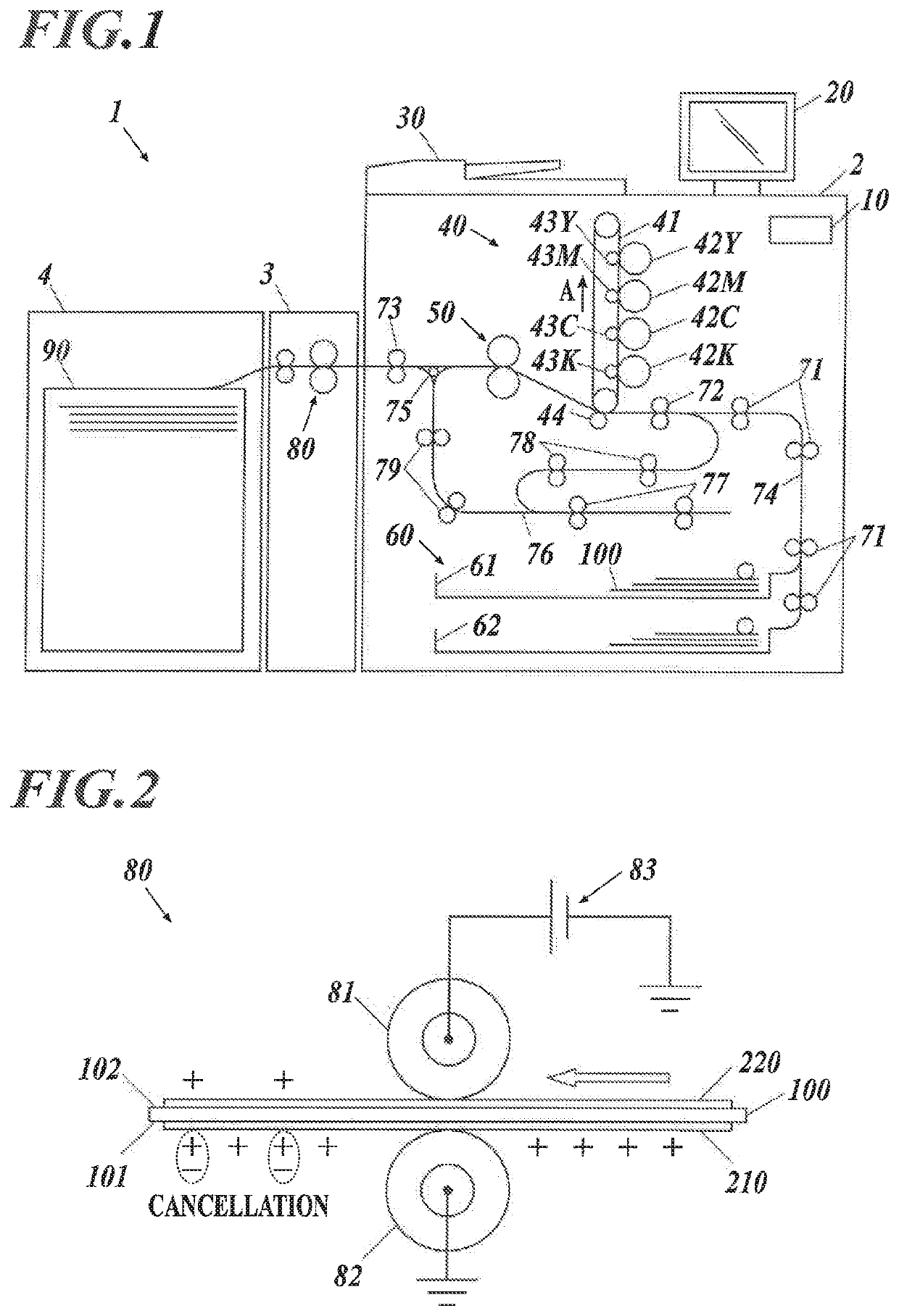
  • Figure 1
    Figure 1
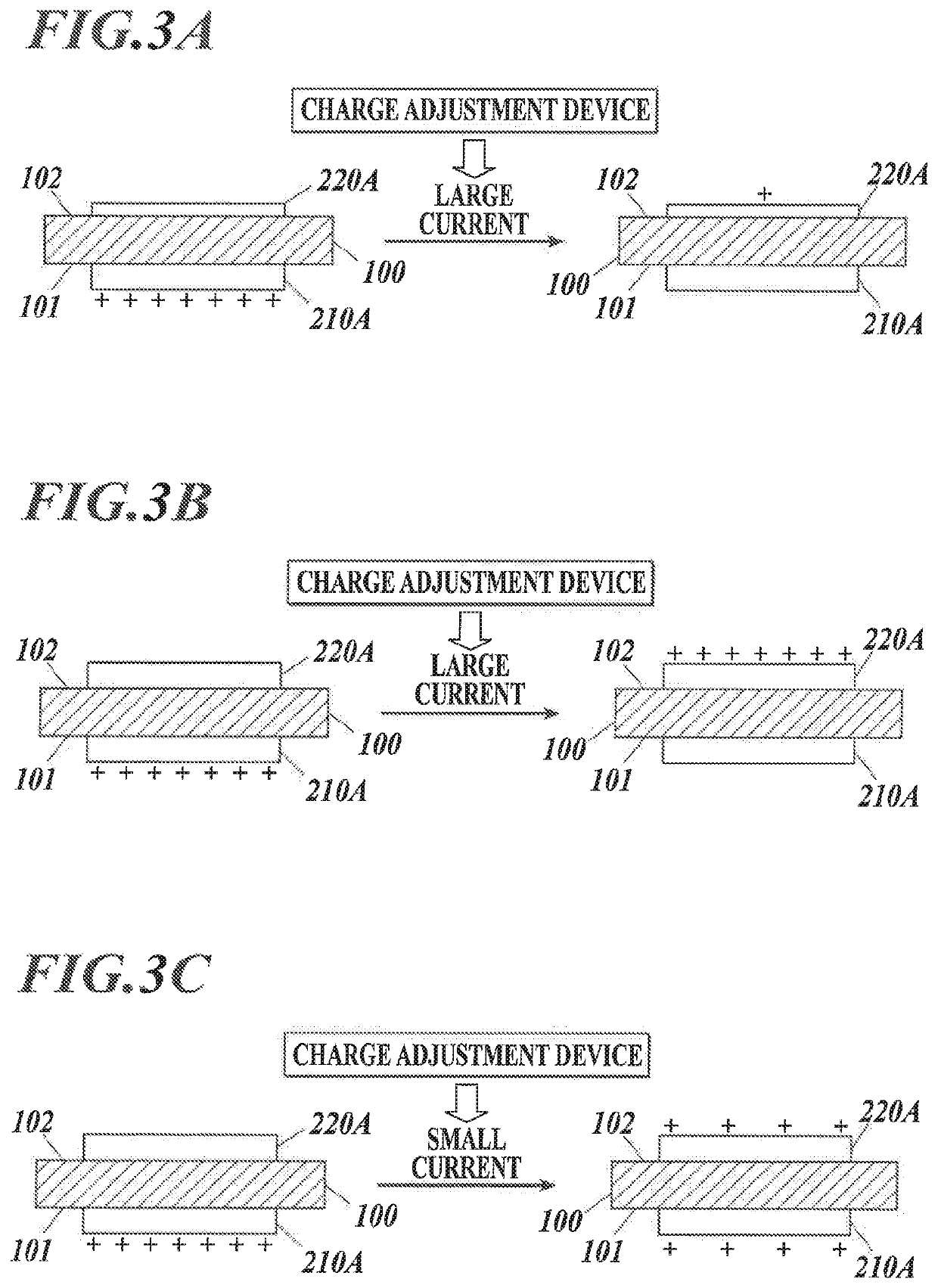
  • Figure 2
    Figure 2
  • Figure 3
    Figure 3
Patent Text Reader

Abstract

In an image forming method according to the present invention, an image is formed by removing residual charge from the image on an image recording medium. The image forming method includes formation of an image for forming a toner image by fixing a toner on the image recording medium and application of voltage from a voltage applier, the voltage having a polarity reverse to a polarity of a surface potential of the toner image. The toner includes toner base particles and an external additive. The toner base particles include a crystalline polyester resin.
Need to check novelty before this filing date? Find Prior Art

Description

CROSS-REFERENCE TO RELATED APPLICATIONS

[0001] Japanese Patent Application No. 2017-228493 filed on Nov. 29, 2017, including description, claims, drawings, and abstract of the entire disclosure is incorporated herein by reference in its entirety.BACKGROUNDTechnological Field

[0002] The present invention relates to an image forming method. Particularly, the present invention relates to an image forming method using a high-speed apparatus capable of suppressing adhesion of output image recording media without controlling voltage application in detail, even when high coverage images are printed on both sides of each of the image recording media.Description of the Related Art

[0003] Conventionally, a heat roller fixing system is widely used in an electrophotographic image forming method for forming a visible image by an electrophotographic method. In the heat roller fixing system, a toner image is formed on a recording medium such as a sheet of paper with a toner for developing an electrostat...

Examples

examples

[0325]The present invention will now be described in detail by way of examples, which should not be construed to limit the present invention.

[0326]Into a reaction vessel provided with a stirrer, an inlet for nitrogen gas, a temperature sensor, and a fractionator, 200 parts by mass of dodecanedioic acid and 102 parts by mass of 1,6-hexanediol were fed The temperature of the reaction system was raised to 190° C. over 1 hour. After confirming that the reaction system was uniformly stirred, 0.3 part by mass of titanium tetrabutoxide as a catalyst was fed. The temperature of the reaction system was raised from 190° C. to 240° C. over 6 hours while distilling the generated water away. Further, while maintaining the temperature at 240° C., the dehydration condensation was continued for 6 hours to proceed polymerization reaction. A crystalline polyester resin [c1] was thereby obtained.

[0327]The obtained crystalline polyester resin [c1] had a weight average molecular weight of 14,500 and a m...